Book a free demo
Oops! Something went wrong while submitting the form.
March 13, 2026
Food delivery has become an essential revenue stream for restaurants, especially as more customers prefer ordering from home. However, determining the right delivery fee can be challenging. If the fee is too high, customers may abandon their orders. If it’s too low, restaurants may struggle to cover operational costs.
Understanding how to calculate the delivery fee for food orders helps restaurants maintain a balance between profitability and customer satisfaction. A well-planned delivery pricing strategy ensures you cover expenses such as driver wages, fuel costs, packaging, and logistics.
In this guide, we’ll break down the factors that influence delivery fees, explain how to calculate them, and share practical strategies restaurants can use to create fair and sustainable delivery pricing.
A delivery fee is the charge customers pay for having food delivered from a restaurant to their location. This fee covers the costs associated with delivery operations, including drivers, transportation, and order handling.
For restaurants offering delivery services, this fee plays a critical role in ensuring that the business remains profitable while maintaining a convenient service for customers.
Delivery fees can vary depending on several factors such as distance, demand, order value, and delivery time. In fact, last-mile delivery can account for up to 53% of total shipping costs, making it the most expensive part of the delivery process for many businesses.
This is why restaurants must carefully structure delivery fees to balance operational expenses with customer expectations.
Setting delivery fees without a clear strategy can quickly impact a restaurant’s profitability. Delivery involves multiple operational costs such as driver wages, fuel, packaging, and logistics. Without a structured pricing approach, restaurants may end up absorbing these expenses or charging customers unfairly.
Key reasons restaurants need a proper delivery fee strategy include:
By implementing a well-structured delivery fee strategy, restaurants can maintain profitability while continuing to offer convenient and reliable delivery services to their customers.
Suggested read: 10 Food Delivery Optimization Tactics Every Restaurant Needs
Calculating delivery fees requires more than simply adding a flat charge to every order. Restaurants must evaluate operational costs, market pricing, and customer expectations before determining a sustainable delivery fee. A well-structured delivery pricing model ensures restaurants recover delivery expenses while remaining competitive.
Below are the key steps restaurants can follow to calculate delivery fees effectively.
Before calculating internal costs, restaurants should understand what customers in their area typically pay for delivery. Pricing that is significantly higher than competitors' may discourage orders, while pricing that is too low can lead to losses.
Research local restaurants and delivery platforms to determine:
Example: Local competitors charge $3–$5 for delivery within 3 miles. Setting a delivery fee within this range helps remain competitive while covering costs.
Understanding market expectations provides a baseline for your delivery pricing strategy.
The delivery model you choose directly affects how fees should be calculated.
Next, determine the fixed costs required to maintain delivery operations. These costs exist regardless of the number of orders.
Examples include:
Why this step matters: Fixed costs must be distributed across all deliveries to ensure the delivery service remains financially sustainable.
Variable costs increase with each delivery order.
Common variable costs include:
Example
Total variable delivery cost = $5.75 per order
Understanding this cost helps restaurants determine the minimum delivery fee required.
Suggested read: Effective Strategies to Control Food Costs in Restaurants
Distance is one of the most important factors affecting delivery costs. Longer distances require more fuel, time, and driver availability.
Restaurants often use:
Example:
This pricing model ensures distant deliveries remain profitable.
Delivery fees can also be structured based on the total order value.
Restaurants commonly use strategies such as:
Example
This approach encourages customers to increase their order size.
Delivery demand increases significantly during lunch, dinner, weekends, and special events. During these periods, drivers may be limited, and operational pressure increases.
Some restaurants introduce dynamic delivery pricing during peak times.
Example
This helps balance driver availability and maintain efficient delivery service.
Tips are a common part of food delivery services and can influence how restaurants structure delivery fees.
Restaurants typically:
While tips generally go to drivers rather than the restaurant, they help ensure fair driver compensation without increasing delivery fees significantly.
Once the delivery fee structure is set, restaurants should monitor delivery performance and adjust pricing if necessary.
Key metrics to review include:
Regular reviews help ensure the delivery service remains sustainable.
A well-calculated delivery fee should balance operational costs, market expectations, and customer convenience. By considering factors such as distance, order value, delivery model, and peak demand, restaurants can create a delivery pricing strategy that supports both profitability and customer satisfaction.
Suggested read: How the Use of AI in Restaurants Cuts Bottlenecks and Protects Margins
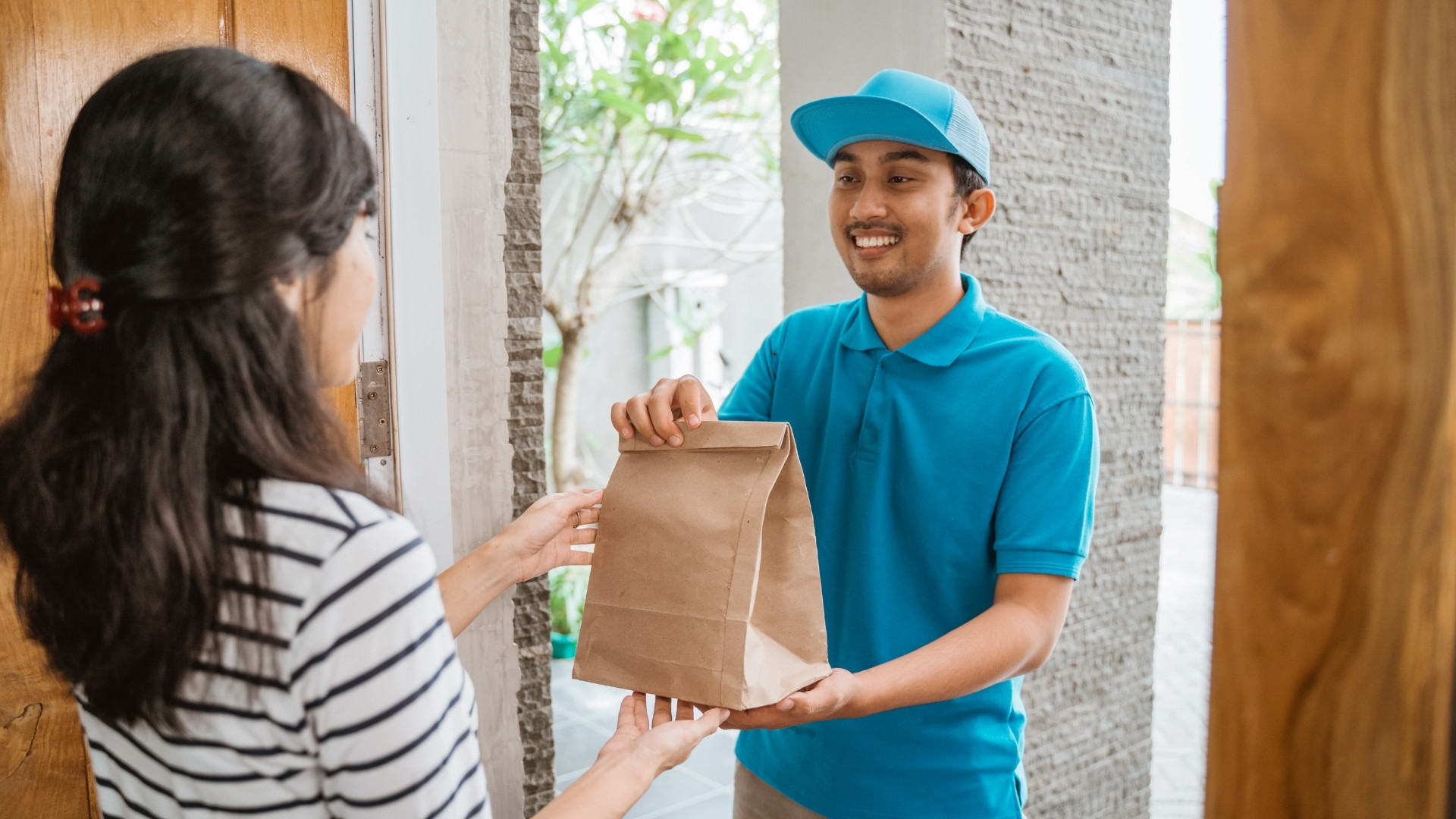
For many customers, the delivery experience is just as important as the food itself. Even if the meal is great, issues such as unclear delivery fees, delayed orders, or lack of updates can lead to frustration. These negative experiences often discourage customers from ordering again.
Most delivery-related complaints usually come down to poor communication or a lack of transparency. Customers don’t necessarily expect free delivery, but they do expect clear information about costs, delivery times, and order progress.
Below are two effective ways restaurants can manage customer expectations and improve delivery satisfaction.
One of the most common reasons customers abandon their orders during checkout is unexpected fees or unclear delivery information. When delivery policies are not clearly explained, customers may hesitate to complete their purchase.
In fact, studies show that around 64% of customers look for delivery or shipping costs on the product page before deciding to add an item to their cart. Displaying delivery fees upfront helps eliminate surprises during checkout and increases the likelihood of completing the order.
Restaurants should clearly communicate:
This information should be easy for customers to find on your website or ordering platform.
Transparent pricing and clear delivery terms reduce uncertainty and build trust with customers.
Suggested read: Smart Ways to Analyze Restaurant Customer Feedback in 2025
Customers value convenience and reliability when ordering food online. Knowing when their order will arrive and being able to track it in real time significantly improves the customer experience.
Restaurants can improve predictability by providing customers with clear updates throughout the delivery process.
Useful updates include:
Providing these updates keeps customers informed and reduces frustration caused by uncertainty. When customers can track their orders and know exactly when to expect delivery, they feel more confident ordering again.
Also read: How Restaurants Can Use Customer Insights to Boost Sales
Delivery services can significantly increase a restaurant’s reach, but they can also raise operational expenses if not managed efficiently. Costs related to fuel, driver wages, packaging, and routing can quickly add up.
Here are four practical tips restaurants can use to reduce delivery costs:
Restaurants can lower delivery costs by grouping nearby orders and assigning them to the same trip. Instead of sending drivers out for each order separately, batching deliveries by location allows for more efficient route planning and better use of driver time.
How it helps: This approach reduces the number of trips needed, cuts down on fuel consumption, minimizes travel time, and helps drivers complete more deliveries in a shorter period. As a result, restaurants can improve delivery efficiency while lowering labor and transportation costs.
The long-haul delivery is a profit killer. If a trip takes a driver 15+ minutes one way, that driver is effectively out of commission for 30+ minutes for a single order.
How it helps: Capping your radius ensures a high orders-per-hour rate for your fleet, keeping labor costs low and food quality high.
Packaging can have a direct impact on delivery costs, especially when it is oversized, heavy, or not suited to the food being transported. Reviewing packaging materials and redesigning them where needed can help restaurants lower expenses without compromising food quality or customer experience.
How it helps: Smarter packaging choices can reduce material costs, lower weight-related delivery expenses, prevent spills or damage, and improve space utilization during transport.
Manual dispatching is prone to human favoritism or simple errors that lead to backtracking. Use a system that automates route planning based on real-time traffic data.
How it helps: Automation removes the guesswork, ensuring that the most efficient route is always taken, which reduces idle time and prevents expensive delivery delays.
By implementing these strategies, restaurants can streamline delivery operations, lower operational expenses, and maintain a profitable delivery service while continuing to provide convenience for their customers.
Suggested read: Understanding and Applying Customer Sentiment Analysis
As restaurants expand their delivery services, having the right infrastructure becomes essential. Platforms like iOrders help restaurants simplify online ordering, manage delivery operations, and maintain full control over their brand and revenue.
Instead of relying on third-party marketplaces that charge high commissions, iOrders allows restaurants to build their own delivery ecosystem.
Operational efficiency improves when delivery, ordering, and payments operate within a centralized system:
With commission-free ordering and delivery tools, restaurants can increase profitability while maintaining a seamless customer experience.
Setting the right delivery fee is essential for restaurants that want to offer delivery services without sacrificing profitability. By understanding operational costs, delivery distance, order value, and market expectations, restaurants can create a pricing strategy that balances customer convenience with sustainable margins.
A well-calculated delivery fee not only helps recover logistics costs but also improves transparency and trust with customers. When delivery pricing is clear and predictable, customers are more likely to complete their orders and return for future purchases.
To simplify delivery operations and avoid high third-party commissions, restaurants can use platforms like iOrders to manage online ordering, delivery, payments, and customer data in one centralized system. Book a demo with iOrders today.
1. How do restaurants calculate delivery fees for food orders?
Restaurants typically calculate delivery fees by considering factors such as driver wages, fuel costs, packaging expenses, delivery distance, and operational overhead. These costs are combined to determine a base delivery fee that ensures the service remains profitable.
2. What is the average delivery fee for food orders?
Delivery fees usually range between $2 and $6, depending on the distance, location, and restaurant pricing strategy. Some restaurants may also offer free delivery for orders above a certain value.
3. Do delivery fees depend on distance?
Yes. Many restaurants use distance-based pricing where delivery fees increase as the delivery location gets farther from the restaurant. This helps cover additional fuel and driver time.
4. Can restaurants offer free delivery and still make a profit?
Yes. Many restaurants offer free delivery when customers reach a minimum order value. This encourages larger orders, which helps offset delivery costs.
5. How can restaurants reduce delivery costs?
Restaurants can reduce delivery costs by optimizing delivery routes, limiting delivery zones, grouping nearby orders, and using delivery management tools to improve efficiency.
6. Do delivery tips go to the restaurant or the driver?
In most cases, delivery tips go directly to the driver as compensation for their service. Tips are separate from the delivery fee charged by the restaurant.
.png)