March 4, 2026
You close the month with solid sales, yet your bank balance feels tight. Food costs stayed steady. Labor did not spike. Still, profits look thinner than expected.
The answer usually sits inside a few core revenue drivers for a restaurant. Your average check size. Your repeat visit rate. Your mix of direct versus third-party orders. Your menu pricing strategy. Your ability to turn first-time guests into regulars.
When these drivers are weak, revenue stalls even during busy weeks. When you strengthen them, growth becomes predictable. Let’s break down the revenue drivers you can measure, control, and improve inside your restaurant.
Revenue drivers are the measurable inputs that determine how much money your restaurant actually generates. They are not marketing ideas or seasonal promotions. They are the numbers that move every time a guest places an order.
Many restaurants feel busy but still struggle with profit. A full dining room does not guarantee strong margins. If your average check is low, commissions eat into delivery orders, or guests rarely return, high traffic alone will not protect your bottom line.
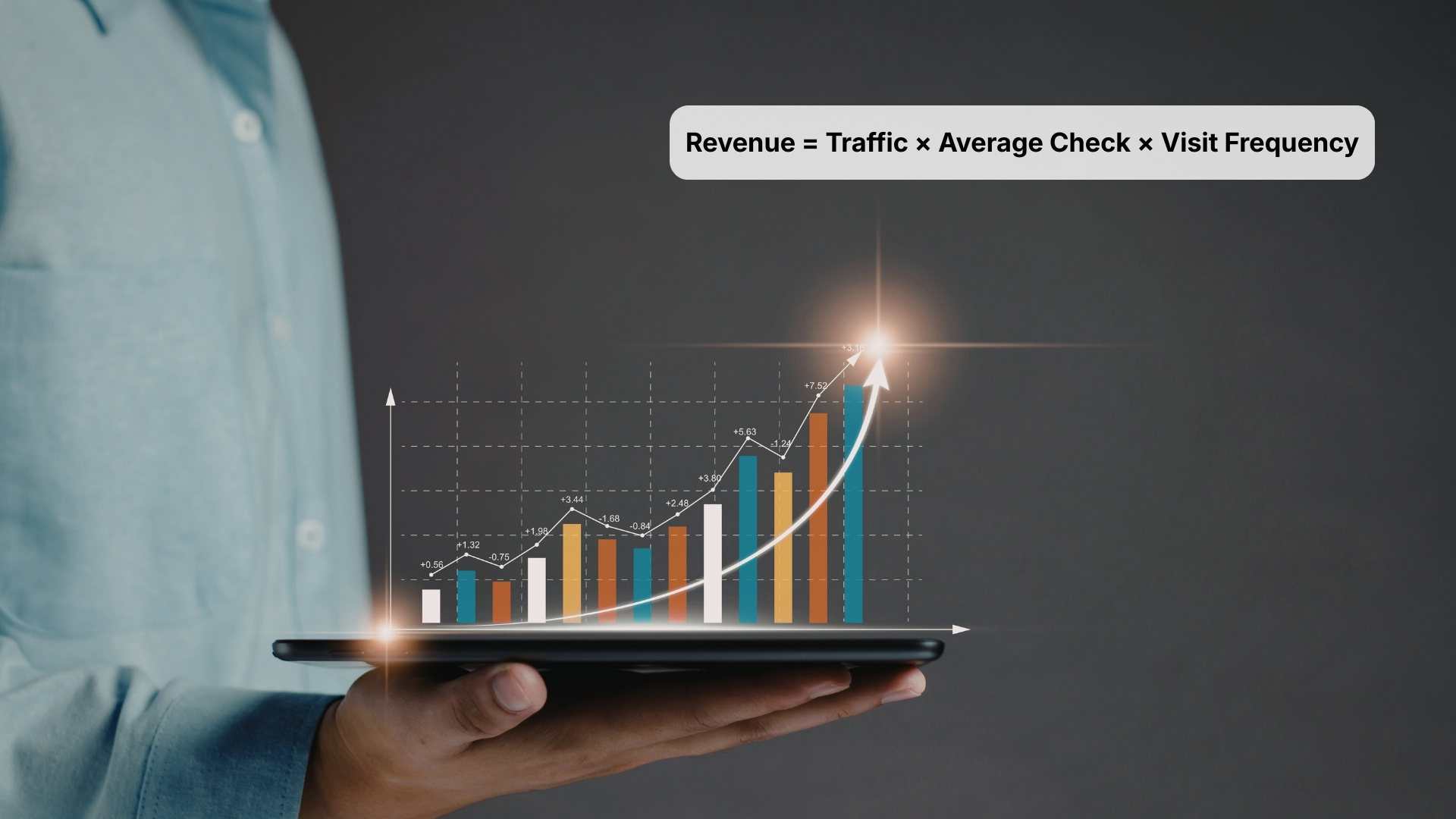
At its core, restaurant revenue follows a simple formula:
Revenue = Traffic × Average Check × Visit Frequency
You can increase traffic, you can increase how much each guest spends, and you can increase how often they return. Each of these is measurable and adjustable.
Owners often focus on surface-level indicators such as:
These numbers are important, but they do not tell the full story. The real revenue drivers sit deeper inside your daily workflow:
When these drivers are strong, revenue grows predictably. When they weaken, profit slips even during busy weeks.

Your revenue moves when specific numbers inside your restaurant move. When you increase average check size, reduce commission-heavy orders, or bring guests back more often, revenue climbs. When those numbers stall, growth slows, even during busy seasons.
The revenue drivers below are measurable, controllable, and tied directly to how your restaurant runs each day.
1. Average Check Size (Your Revenue Multiplier)
Average check size determines how much each guest spends per visit. When it stays flat, you depend entirely on bringing in more traffic to grow revenue.
In many restaurants, upselling happens randomly. Servers forget to suggest add-ons during peak hours. High-margin items sit buried in the middle of the menu. Combo options are unclear, so guests order items individually instead of upgrading. During a rush, speed takes priority, and add-ons disappear from conversations.
You can strengthen this driver with structure:
Even small add-ons increase revenue without increasing traffic.
2. Direct vs. Third-Party Order Mix
Your order source has a direct impact on profit. A high sales day loses its strength when a large portion flows through third-party apps, charging 20–30% commission.
Many restaurants rely heavily on aggregators because guests default to familiar apps. There is often no push toward direct ordering. QR codes are missing from tables. Packaging does not promote ordering from your own website. Over time, this habit shifts both revenue and customer data away from you.
To improve your order mix:
You can use platforms like iOrders to set up commission-free direct ordering and strengthen your control over both margins and customer data.
3. Repeat Visit Frequency
Revenue becomes unstable when most guests visit once and never return. You end up chasing new traffic every month instead of building predictable repeat business.
This often happens because guest data is not captured. There is no follow-up after a visit. Promotions attract discount-driven customers who do not come back. Without a structured loyalty system, there is no clear reason for guests to choose you again.
You can increase visit frequency by:
Higher repeat rates, lower acquisition costs, and stabilize monthly revenue.
4. Menu Mix and Pricing Control
Not every popular item drives profit. Some dishes sell well but leave little margin, while higher-margin items remain under-ordered.
Menus often grow over time without review. Pricing remains unchanged despite rising costs. Low-margin bestsellers dominate sales. Items stay on the menu out of habit rather than performance. Without regular analysis, revenue increases in volume but not in profit.
You can regain control by:
Better menu control expands margins without raising traffic.
5. Order Flow and Speed of Service
Revenue also depends on how many orders you can process during peak hours. Slow order flow limits growth even when demand is strong.
Manual order re-entry wastes time and creates errors. Multiple tablets divide attention at the counter. Kitchen tickets lack clarity during rush periods. Small delays stack up, reducing how many guests you can serve in an hour.
You can improve throughput by:
Faster service increases orders per hour and improves table turnover.
6. Guest Retention Through Reviews and Feedback
Online reviews influence where new guests choose to eat. Ignoring feedback weakens trust and reduces conversion from search results.
Many restaurants struggle to keep up with reviews across platforms. Responses feel generic or delayed. Recurring complaints go unnoticed. Missed service recovery opportunities push potential guests toward competitors.
You can strengthen this driver by:
Stronger ratings improve visibility and increase conversions from search to order.
Knowing the core revenue drivers is important, but working on all of them at once can stretch your team thin. The real gains come from choosing the right lever based on your current numbers.

Identifying your revenue drivers is one thing. Improving them in the right sequence is what protects your margins. Many restaurants rush into promotions or paid ads before fixing internal gaps. That may increase order volume, but it does not always strengthen profitability.
Use the steps below to prioritize correctly.
Start with a simple review of the metrics that directly impact revenue. You do not need complex reporting. You need clarity.
Look at:
Write these numbers down. Compare them month over month. If your direct orders are low and commission spend is high, that is a priority. If traffic is strong but the average check is stagnant, focus there first.
It is tempting to increase traffic through ads or discounts. However, sending more guests into a system with weak margins multiplies the problem.
If 30% of delivery revenue goes to commissions, improve your order mix first. If servers skip add-ons during rush, improve the average check structure before running promotions. If most guests never return, build retention before paying to acquire more customers.
Fixing margin leaks creates a stronger base. Then every new guest becomes more valuable.
Revenue drivers weaken when they rely only on memory or manual effort. Structure creates consistency.
Instead of hoping staff upsell, use prompts and bundles. Instead of relying on guests to return on their own, use loyalty and targeted follow-ups. Instead of manually reviewing feedback, centralize and respond consistently.
When systems support your revenue drivers, results compound over time. You stop reacting to slow months and start building predictable growth inside your restaurant.
Recommended: How Is Restaurant Profitability Determined? A Complete Guide.
Once you’ve decided which drivers to focus on, the next challenge is execution. Improvements should not add more manual work or disrupt daily operations.
Improving revenue drivers should not mean adding more tools, more logins, or more work for your staff. If every improvement requires manual tracking or extra training, it will fade during the next busy week. The goal is to strengthen revenue inside your existing workflow.
Many restaurants struggle because their systems are fragmented. Online orders sit on separate tablets. Loyalty runs on another platform. Reviews live across multiple sites. Staff spend time switching between tools instead of focusing on guests.
A connected system reduces manual effort while reinforcing revenue every day. It should help you:
When direct ordering, loyalty, and feedback management work together, revenue drivers become habits rather than extra tasks.
The right system supports your team during peak hours, not just during planning meetings. It protects margins, increases repeat visits, and keeps your brand in control, without adding complexity to your daily shift.
Improving revenue drivers requires structure, not extra manual work. If your team still re-enters orders, tracks loyalty in spreadsheets, or switches between delivery tablets, revenue gaps will continue during peak hours.
iOrders supports the revenue drivers discussed above by strengthening direct ordering, retention, order flow, and review management inside one connected system. It helps you protect margins while keeping full control over your guest relationships.
Here is how iOrders supports each core revenue driver:
When your ordering, loyalty, delivery, and review systems work together, revenue drivers become part of your daily flow instead of separate tasks. If you are ready to strengthen your restaurant’s revenue with a connected system, book a demo with iOrders today!
Stronger revenue starts with strengthening the numbers that shape it. Your average check, direct order share, repeat visits, and menu margins influence profit far more than total sales alone. When these drivers rely on manual effort or scattered tools, consistency slips during busy shifts. Staff focus on managing orders instead of reinforcing growth.
Begin with a clear audit. Identify your largest margin leak and correct it first. Then put structure behind direct ordering, loyalty, and guest engagement so improvements hold week after week.
A connected platform like iOrders supports these drivers through commission-free online ordering, built-in loyalty, and centralized review management.
Ready to take control of your restaurant’s growth? Connect with our team to get started!
1. How long does it take to see results after improving revenue drivers?
Most restaurants see early improvements within 30–60 days when they focus on one driver at a time. For example, structured upselling can increase average check size almost immediately, while loyalty programs typically show impact over 2–3 months as repeat visits increase. The key is consistent tracking and weekly review of performance metrics.
2. What is the most overlooked revenue driver for a restaurant?
Direct order mix is often ignored. Many operators focus on growing total sales but do not track how much revenue is lost to third-party commissions. Shifting even 10–15% of orders to direct channels can significantly improve margins without increasing traffic.
3. Should small restaurants prioritize revenue drivers differently from large chains?
Yes. Independent restaurants should focus first on controllable drivers such as average check size, direct ordering, and repeat frequency. Large chains may have stronger brand traffic, but smaller operators benefit more from improving margin retention and customer data ownership.
4. How often should restaurant owners review their revenue metrics?
Core revenue metrics should be reviewed weekly. Monthly reviews are too slow to catch issues like declining repeat visits or rising commission costs. A simple weekly dashboard tracking direct order %, average check, repeat rate, and commission spend is usually sufficient.
5. Can technology alone improve restaurant revenue drivers?
No. Technology supports revenue growth, but execution drives results. Staff training, menu strategy, and guest experience still matter. The right system simply makes it easier to reinforce upselling, loyalty, direct ordering, and review management consistently.