A restaurant can look completely fine on the surface and still have operational problems building quietly underneath.
This is exactly why restaurant audits exist.
Strong restaurants do not rely on assumptions to maintain consistency. They use structured audits to verify that food safety, service standards, compliance, and operational procedures are actually being followed the same way every day.
In 2026, restaurant audit tools have become far more advanced than paper checklists taped to a clipboard. Modern platforms help operators track recurring problems, standardize inspections across locations, assign corrective actions instantly, and maintain clearer visibility into how operations are performing in real time.
In this blog, you’ll learn what restaurant audits actually cover, the most important features to look for in a restaurant audit tool, the best restaurant audit platforms in 2026, and the best practices that help audits improve day-to-day restaurant operations.
Quick Overview
Restaurant audits help identify operational problems early by checking food safety, cleanliness, service standards, compliance records, and staff execution consistently.
Modern restaurant audit tools replace paper checklists with mobile inspections, corrective action tracking, real-time reporting, and multi-location visibility.
The best audit platforms support offline access, photo evidence, customizable checklists, analytics dashboards, and automated follow-up workflows.
Effective restaurant audits focus on recurring operational patterns, not isolated mistakes, helping restaurants improve long-term consistency across shifts and locations.
iOrders helps restaurants maintain cleaner ordering workflows and more organized customer touchpoints, reducing the operational gaps that often contribute to service inconsistencies and avoidable audit issues.
What Is a Restaurant Audit?
A restaurant audit is a structured process used to inspect, evaluate, and verify whether daily restaurant operations are being carried out correctly and consistently. These audits help restaurants monitor food safety, sanitation, service quality, equipment maintenance, staff procedures, and operational compliance across the business.
In simple terms, audits help restaurants identify problems before they become larger operational, financial, or compliance risks.
Traditionally, restaurants relied on paper checklists and manual inspections. In 2026, most modern restaurant audits are handled digitally through restaurant audit tools that allow managers to complete inspections through mobile devices, track recurring issues, assign corrective actions, and store audit-ready records automatically.
Audits can be performed daily, weekly, monthly, or during scheduled inspections depending on the operational area being reviewed.
Why Restaurant Audits Matter More in 2026?
Restaurant operations move fast, and small mistakes often go unnoticed until they create larger problems. A missed temperature check, an incomplete cleaning task, inconsistent service standards, or poor storage practices can quickly affect food safety, customer experience, and operational reliability.
Restaurant audits help prevent these issues by creating accountability and visibility across daily operations.
They are important because they help restaurants:
maintain food safety and HACCP compliance
reduce operational inconsistencies between shifts and locations
identify recurring problems before they escalate
improve staff accountability and task completion
prepare for health inspections and compliance reviews
reduce food waste and equipment failures
maintain consistent customer experiences
create documented operational records for management visibility
For multi-location restaurants, audits become even more important because they standardize operations across every store. Without structured audits, each location often develops different habits, workflows, and service standards over time.
In 2026, restaurant audits are no longer just compliance exercises. They are operational systems that help restaurants run more consistently, reduce risk, and improve day-to-day execution across the business.
Understanding why audits matter is only part of the picture. The next step is knowing what restaurants should actually inspect during an audit.
Stop losing 20-30% of every order to third-party apps
The Restaurant Margin Playbook shows you how to build a direct ordering channel, own your customer relationships, and reclaim the margins delivery platforms are quietly taking.
A restaurant audit evaluates whether your operations are being followed consistently across food safety, service, cleanliness, compliance, and daily execution. The goal is not just to complete a checklist, but to identify operational gaps before they turn into health violations, customer complaints, or financial losses.
Here are the most important areas every restaurant audit should cover:
Food safety controls and temperature compliance: Audits should verify cold holding, hot holding, cooling, reheating, and thermometer calibration under real operating conditions. Managers should also review temperature logs, corrective actions, and how staff respond when food falls outside safe temperature ranges.
Cleaning, sanitization, and cross-contamination prevention: Restaurants should inspect cleaning schedules, sanitizer usage, dishwashing procedures, high-touch surfaces, and separation between raw and ready-to-eat food tools. Cross-contamination risks often increase during busy shifts when shortcuts happen.
Labeling, date marking, and inventory rotation: Every stored or prepared item should have clear labels, prep dates, expiry dates, and consistent naming. Audits should also check FIFO rotation practices, allergen labeling accuracy, and storage discipline to reduce food waste and safety risks.
Front-of-house standards and guest-facing operations: Dining rooms, restrooms, service stations, staff presentation, table cleanliness, and side work completion should all be reviewed regularly. Small front-of-house inconsistencies often lead directly to negative reviews and customer dissatisfaction.
Operational documentation and compliance records: Restaurants should audit whether critical records remain updated and accessible, including temperature logs, cleaning reports, staff training records, pest control documentation, equipment maintenance logs, and corrective action tracking.
Staff compliance and process consistency: Audits should evaluate whether employees consistently follow operational procedures like handwashing, glove use, prep routines, opening and closing checklists, and shift handoff processes. Inconsistent execution between shifts is one of the biggest causes of operational breakdowns.
Equipment condition and maintenance checks: Refrigerators, freezers, ovens, fryers, POS hardware, ventilation systems, and food prep equipment should be inspected regularly for performance, cleanliness, and maintenance issues that could affect safety or service quality.
Health and workplace safety compliance: Restaurants should also review workplace safety procedures involving slips and falls, chemical storage, emergency exits, fire safety equipment, and staff injury prevention standards to reduce operational risk.
Customer experience and service flow: Audits increasingly evaluate wait times, order accuracy, delivery coordination, pickup efficiency, and communication quality because digital ordering and online reviews now directly influence restaurant reputation.
Corrective action follow-through: A strong audit process does not stop at identifying problems. Restaurants should verify whether previous audit issues were actually resolved, documented properly, and prevented from recurring over time.
If you manage multiple restaurant locations, using the same audit format, scoring system, and checklist structure across every store helps maintain consistency and makes performance tracking much easier long term.
Once audit requirements become more complex, paper checklists and manual tracking quickly become difficult to manage consistently.
The Most Important Features in a Restaurant Audit Tool
The best restaurant audit tools in 2026 are built to support real restaurant operations, not just replace paper checklists. A strong platform helps restaurants maintain food safety, operational consistency, staff accountability, and compliance across every shift and location.
Here are the features that matter most:
Offline access: Audits often happen in kitchens, walk-in coolers, storage areas, or locations with weak internet signals. Offline functionality allows staff to continue inspections without interruption and sync data automatically once the connection returns.
Corrective action workflows: Strong audit tools automatically create follow-up tasks when a check fails. This helps restaurants assign responsibilities, set deadlines, and ensure issues are resolved instead of forgotten.
Photo and video evidence: The ability to attach photos, videos, timestamps, and geolocation data improves accountability and creates reliable records for food safety, sanitation, maintenance, and compliance audits.
Analytics dashboards and trend reporting: Good audit software identifies recurring operational problems by tracking patterns across locations, teams, and shifts. This helps restaurants spot issues before they become larger operational failures.
Mobile-first functionality: Restaurant audits happen on the floor during active service. Tools designed for smartphones and tablets make inspections faster, easier, and more practical for managers and staff.
Customizable audit checklists: Different restaurant types require different workflows. Flexible platforms allow operators to create custom inspections for food safety, opening procedures, delivery operations, cleaning standards, and staff performance.
Real-time reporting and visibility: Managers need immediate visibility into failed inspections, incomplete tasks, and operational risks. Real-time reporting helps leadership monitor performance without waiting for end-of-week summaries.
Integration with operational systems: Modern audit tools increasingly connect with task management, food safety logs, temperature monitoring systems, and reporting platforms to create more connected restaurant operations.
Automated reminders and scheduling: Scheduled audits and automatic reminders help teams stay consistent with recurring inspections, cleaning procedures, and compliance requirements without relying on manual follow-ups.
Multi-location oversight: For restaurant groups and franchises, centralized dashboards make it easier to compare performance across locations and maintain consistent operational standards system-wide.
The right audit software can simplify inspections, improve accountability, and give operators better operational visibility across the business.
Best Restaurant Audit Tools for 2026
Restaurant audit tools have evolved far beyond simple digital checklists. In 2026, operators need platforms that help maintain food safety, operational consistency, compliance tracking, corrective action management, and visibility across locations without creating extra manual work.
The best tools are the ones that fit naturally into how restaurants already operate during busy shifts.
iOrders
iOrders is not a dedicated restaurant audit platform, but it helps restaurants create cleaner operational workflows that indirectly support consistency, customer experience, and issue tracking across ordering channels.
For many restaurants, operational problems that later appear in audits or customer complaints often start with disconnected ordering systems, unclear communication, or inconsistent order handling. iOrders helps reduce some of those workflow gaps by organizing order flow more clearly across channels.
Key features:
QR ordering and customer touchpoints: QR ordering creates more structured customer interactions and reduces ordering confusion during busy service periods.
Cleaner order tracking: Website orders, QR orders, and direct ordering workflows stay more organized, making it easier to track order accuracy and operational consistency.
Simplified follow-up workflows: Organized order records help restaurants handle customer issues, refunds, or service follow-ups more efficiently.
More consistent guest experiences: Cleaner operational workflows reduce common service mistakes that often lead to complaints, poor reviews, or operational inconsistencies.
Natural feedback collection moments: QR systems create smoother opportunities for customers to leave reviews or operational feedback after completing their experience.
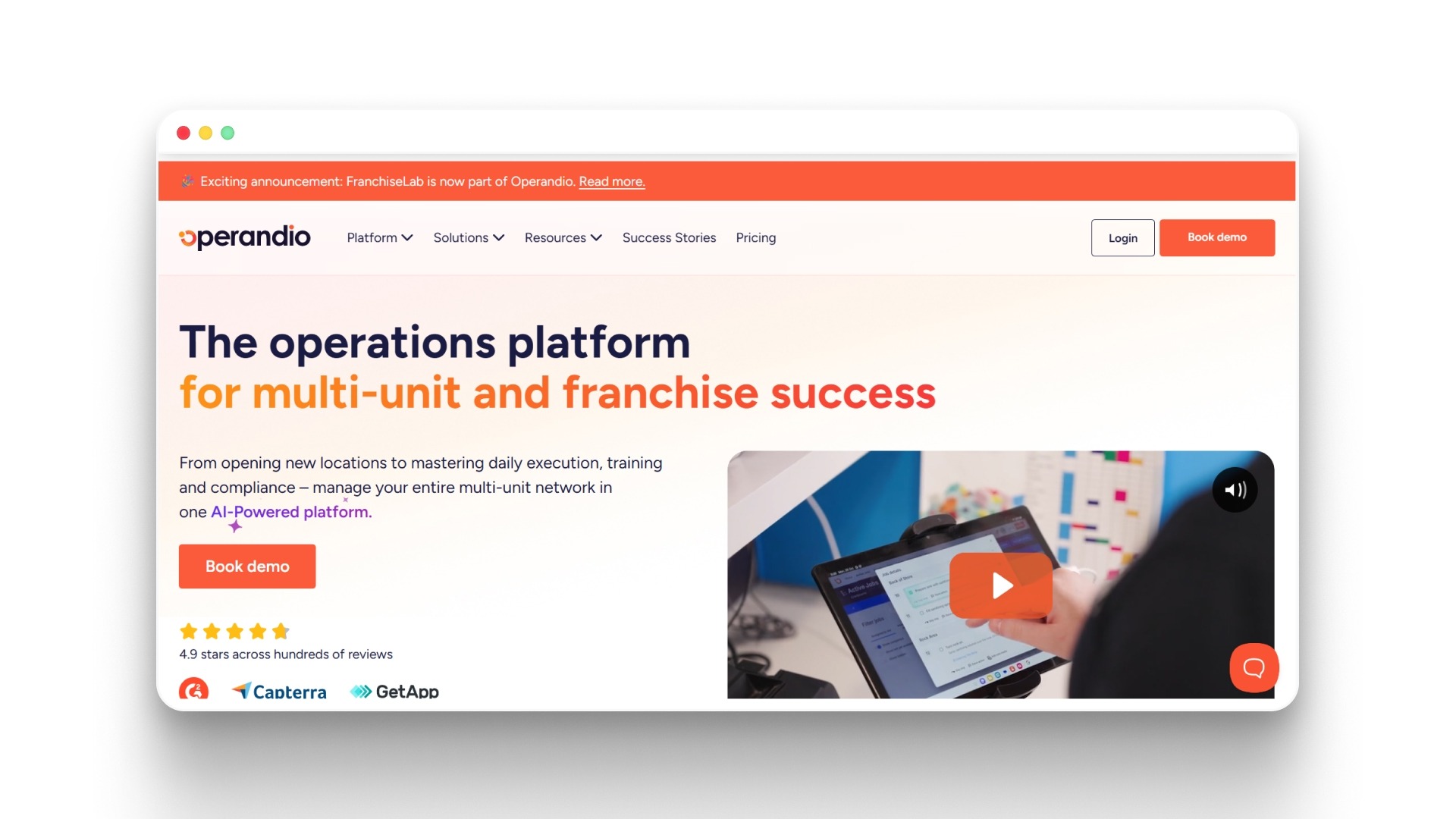
Operandio
Operandio is designed primarily for multi-location restaurant groups and franchise operations that need standardized digital audits, compliance management, and operational oversight across locations.
Key features:
Digital audit checklists: Replaces paper inspections with structured mobile workflows.
Automated compliance records: Creates audit-ready documentation across locations.
Temperature monitoring: Tracks food safety compliance with automated alerts.
Multi-location visibility: Gives head office centralized operational oversight.
Task and corrective action management: Helps managers follow up on failed inspections quickly.
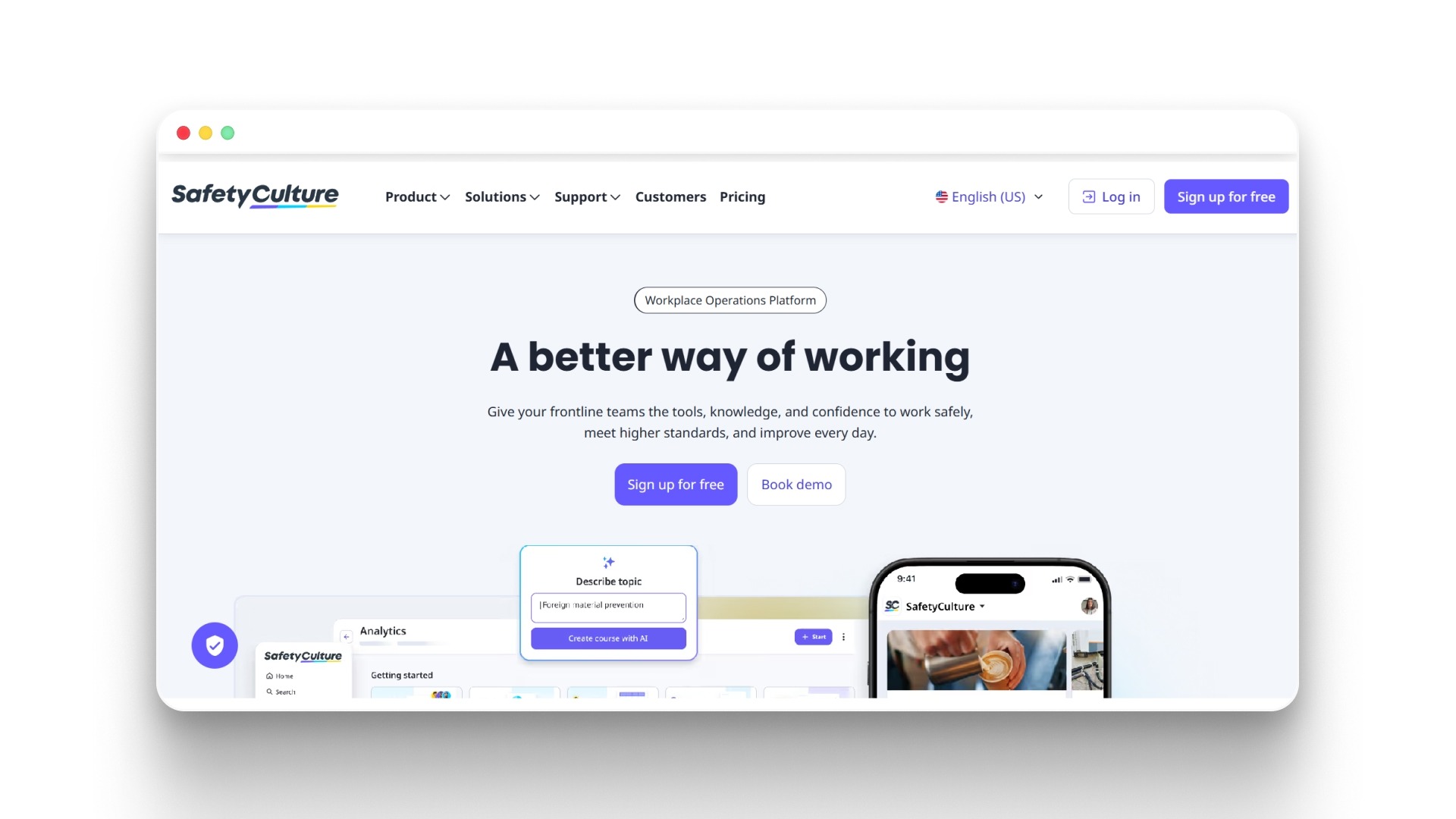
SafetyCulture
SafetyCulture is one of the most widely used mobile inspection and audit platforms for restaurants, food safety teams, and operations managers. It focuses heavily on customizable inspections and operational reporting.
Key features:
Offline audit functionality: Allows inspections in kitchens, coolers, and low-signal areas.
Customizable inspection templates: Supports food safety, sanitation, and operational audits.
Corrective action workflows: Automatically assigns follow-up tasks after failed checks.
Photo evidence capture: Adds visual proof to inspection records.
Cross-location reporting: Tracks recurring operational issues across sites.
GoAudits
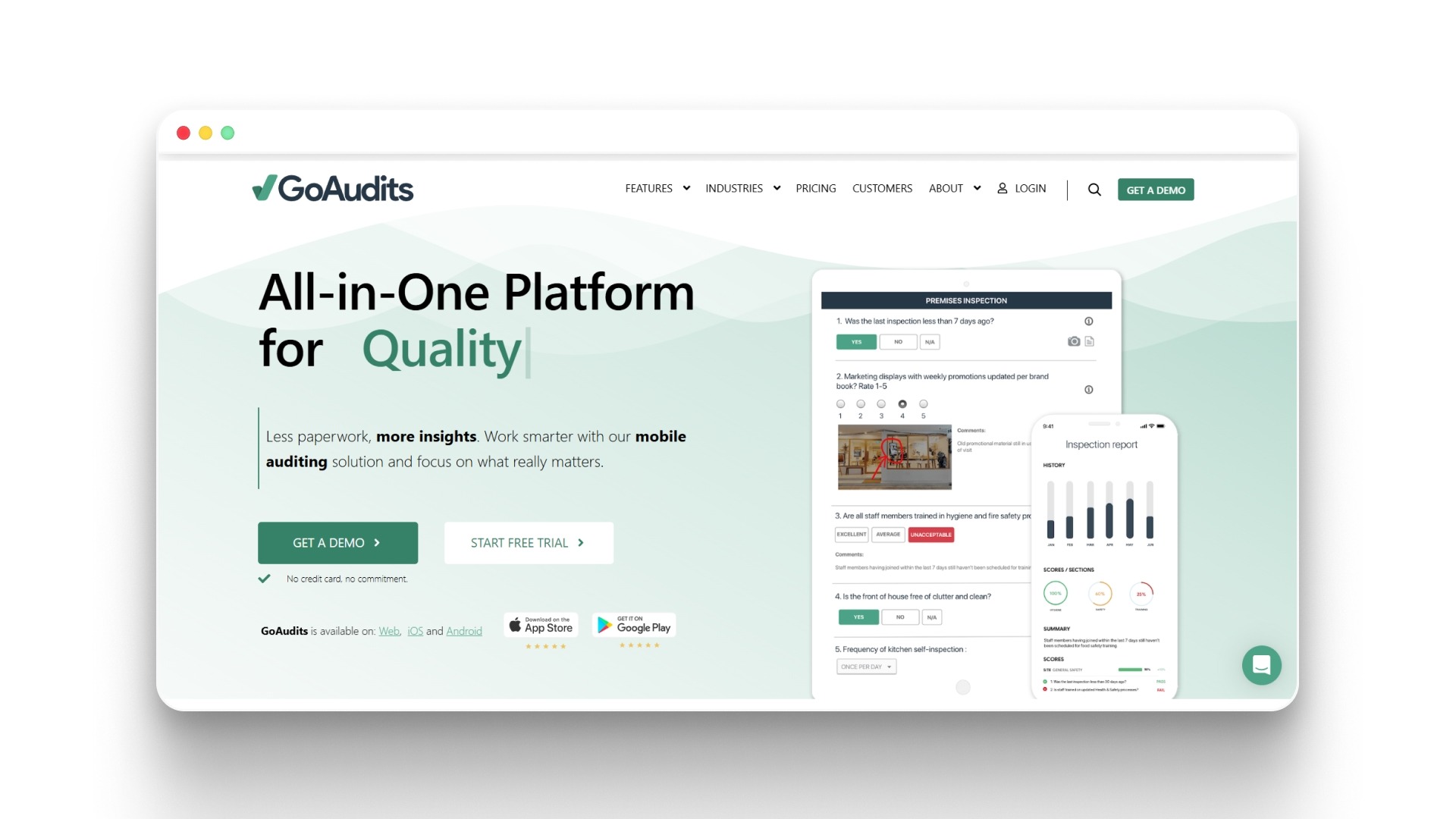
GoAudits is a mobile-first inspection platform built for hospitality, food service, and multi-location operations teams that need fast inspections and centralized visibility.
Key features:
Mobile inspections with offline support: Enables audits without relying on stable internet.
Instant report generation: Automatically creates inspection summaries and scoring reports.
Corrective action tracking: Assigns follow-ups with deadlines and accountability.
Custom checklist builder: Allows restaurants to adapt inspections to their workflows.
Multi-site dashboards: Helps managers compare compliance across locations.
Jolt
Jolt focuses heavily on food safety, daily task management, and operational accountability for small and mid-sized restaurants.
Key features:
Digital food safety checklists: Simplifies daily operational inspections.
Temperature monitoring integration: Tracks food storage and prep temperatures.
Task reminders and alerts: Helps staff complete recurring operational checks on time.
Employee accountability tracking: Uses photos, signatures, and timestamps for verification.
Even the best audit software will not improve operations if the audit process itself is inconsistent or poorly managed.
10 Best Practices While Conducting a Restaurant Audit
A restaurant audit only works when it reflects how the operation actually runs day to day. If audits become rushed, inconsistent, or treated like paperwork exercises, they stop improving anything operationally.
The goal is not simply to “pass” an inspection. It is to identify weak points early, improve consistency, and prevent larger operational problems from developing over time.
Here are the best practices restaurants should follow when conducting audits.
Conduct audits during real operating hours: Audits should happen during active shifts whenever possible, not only before inspections or during slow periods. This reveals how teams actually handle pressure, food safety, service flow, and operational discipline in real conditions.
Use the same checklist format consistently: Standardized audit templates make it easier to compare results across shifts, managers, and locations. Consistency also prevents important inspection areas from being skipped accidentally.
Focus on recurring patterns, not isolated mistakes: One missed label may not indicate a serious problem. Repeated labeling failures across shifts usually point to a process issue, training gap, or accountability problem that needs operational attention.
Include both front-of-house and back-of-house operations: Many restaurants focus heavily on kitchen audits while overlooking customer-facing areas. Dining room cleanliness, wait times, order accuracy, and restroom conditions influence customer trust just as much as food safety.
Document issues with photo evidence: Photos improve accountability and make follow-up easier, especially for maintenance problems, sanitation issues, equipment failures, or recurring operational inconsistencies.
Assign corrective actions immediately: Identifying a problem without assigning ownership usually leads to repeat failures. Every failed audit item should include a responsible team member, a deadline, and a follow-up process.
Avoid turning audits into punishment exercises: Audits work best when staff see them as operational improvement tools rather than disciplinary traps. Teams become more honest and cooperative when the focus stays on consistency and problem-solving.
Review previous audit failures regularly: One of the biggest operational mistakes is fixing issues temporarily without tracking whether they return later. Reviewing historical audit trends helps restaurants identify deeper operational weaknesses.
Train managers on how to audit properly: Poorly trained auditors create inconsistent scoring and unreliable reports. Managers should understand food safety standards, operational procedures, compliance requirements, and how to evaluate real-world execution accurately.
Use audit data to improve operations continuously: Audits should feed directly into operational decisions involving staffing, training, prep systems, cleaning schedules, inventory handling, and customer experience improvements.
Even the strongest audit process becomes harder to manage when operational data is scattered across disconnected systems. Order mistakes, communication gaps, delayed follow-ups, and inconsistent workflows often create the same operational problems audits later uncover.
That’s where organized systems help.
iOrders helps restaurants maintain cleaner ordering workflows across website orders, QR ordering, and direct customer touchpoints, making operations easier to track and manage consistently. Cleaner workflows reduce the small operational gaps that often lead to customer complaints, service inconsistencies, and avoidable audit issues over time.
If you want smoother operational visibility and more organized order management across your restaurant, book a demo with iOrders and explore how it fits into your workflow.
FAQs
1. How often should a restaurant conduct internal audits?
Most restaurants conduct different audits at different frequencies depending on the operational area. Food safety and cleaning checks may happen daily, while larger operational or compliance audits are often conducted weekly or monthly.
2. Who is usually responsible for conducting restaurant audits?
Restaurant audits are commonly handled by general managers, operations managers, food safety managers, or regional supervisors. Multi-location brands often assign dedicated audit teams to maintain consistency across stores.
3. Can small independent restaurants benefit from audit tools?
Yes. Smaller restaurants often benefit significantly because digital audit tools reduce manual paperwork, improve accountability, and help operators catch operational issues before they become expensive problems.
4. What is the biggest mistake restaurants make during audits?
One of the most common mistakes is treating audits as one-time inspection exercises instead of ongoing operational improvement systems. Problems often return when corrective actions are not followed consistently after the audit ends.
5. Are restaurant audits only focused on food safety?
No. Modern restaurant audits also evaluate customer experience, operational consistency, equipment maintenance, staff procedures, cleanliness, delivery operations, workplace safety, and overall service execution.


.png)

.webp)