May 21, 2026
A few years ago, customers mostly judged restaurants after visiting them. Today, they judge them before they even walk in.
Most people now scan reviews the same way they scan a menu. They look at ratings, recent customer photos, delivery complaints, management responses, and even how active the restaurant feels online before deciding where to spend money.
That creates a very different challenge for restaurants. Reputation is no longer built only through food and service inside the dining room. It is shaped continuously across Google, delivery apps, social media, and every customer interaction tied to your brand.
In this blog, we’ll break down how restaurant reputation management works, what actually influences customer perception in 2026, and the practical strategies restaurants use to protect and strengthen their reputation across every customer touchpoint.
Restaurant reputation management is the process of monitoring, managing, and improving how customers perceive your restaurant across online and offline channels. It involves tracking guest feedback, responding to reviews, maintaining accurate business information, and improving the customer experience based on what people are consistently saying.
Today, a restaurant’s reputation is built long before a customer walks through the door. Guests form opinions through Google reviews, Yelp ratings, delivery app feedback, Instagram posts, TikTok videos, Reddit discussions, and even how management responds to complaints publicly.
This makes reputation management an ongoing operational responsibility.
A strong reputation comes from consistently delivering good experiences and actively managing the conversations happening around your restaurant.
In 2026, reputation management directly influences visibility, customer trust, repeat business, and even how well your restaurant ranks in local search results.

A restaurant’s reputation affects far more than public perception. It directly influences customer decisions, operational performance, and long-term revenue growth.
Reputation management impacts restaurants in several ways:
Over time, reputation management becomes a competitive advantage.
Also read: 7 Digital Transformation Risks for Restaurants in 2026: What Can Go Wrong and How to Avoid It
To manage your reputation properly, you first need to understand what customers are actually judging when they interact with your restaurant.
The Restaurant Margin Playbook shows you how to build a direct ordering channel, own your customer relationships, and reclaim the margins delivery platforms are quietly taking.
Download the eBook →.png)
A restaurant’s reputation is rarely built from one single experience. Customers form opinions based on a combination of small interactions across dine-in service, online ordering, delivery, communication, and overall consistency.
In 2026, these experiences become public almost immediately through Google reviews, social media posts, delivery app ratings, and local recommendation groups. That means operational details that customers once discussed privately now directly influence your public reputation.
Here are the areas that shape how customers perceive your restaurant most strongly.
Food remains the foundation of restaurant reputation management. Customers expect meals to look, taste, and arrive the same way every time they order.
Even one inconsistent experience can quickly lead to:
Consistency matters just as much as quality itself. Restaurants that maintain stable portion sizes, presentation, temperature, and flavor tend to build stronger long-term trust with customers.
Customers often remember how they were treated more clearly than the food itself.
Long wait times, poor communication, inattentive staff, or rushed service frequently appear in online reviews because they directly affect how valued customers feel during the experience.
On the other hand:
can turn average dining experiences into highly positive reviews.
For many restaurants, reputation is now heavily shaped outside the dining room.
Customers judge restaurants based on:
A perfectly cooked meal still creates a bad experience if:
As online ordering grows, digital operations now influence reputation as much as in-person hospitality.
Cleanliness strongly affects customer trust, especially after the industry-wide hygiene awareness shifts of recent years.
Customers notice:
Even small cleanliness issues often appear in reviews because customers associate them with food safety and operational quality overall.
Incorrect information creates frustration before the customer even arrives.
Outdated:
can lead to poor experiences that damage trust immediately.
Keeping your Google Business Profile, website, delivery apps, and social channels updated consistently is now a basic part of reputation management.
Customers pay attention to how restaurants communicate publicly.
An active social presence that:
helps build credibility and familiarity.
Silence or defensive public responses often create the opposite effect, especially when complaints become visible online.
Many customers judge restaurants not only by reviews themselves, but by how management responds to them.
Professional, calm, and timely responses signal that the restaurant:
Ignoring reviews completely can make customers feel their concerns are unimportant, especially when negative reviews remain unanswered for long periods.
Also read: 8 Restaurant Menu Optimization Tips to Increase Order Value
In reality, reputation management is simply the public reflection of how consistently your restaurant operates behind the scenes.
Once you understand what shapes customer perception, the next step is building systems that help you manage that perception consistently across every channel.

Restaurant reputation management works best when it becomes part of your daily operations instead of something you only react to after a bad review appears. The goal is not just to protect your image online. It is to create a consistent customer experience that naturally leads to better reviews, stronger trust, and more repeat business.
These strategies help restaurants manage customer perception more proactively across reviews, social media, online ordering, and public feedback channels.
Your reputation exists across multiple platforms at the same time. If those platforms are outdated, ignored, or inconsistent, customers notice quickly.
Make sure your restaurant information stays accurate across:
Incorrect hours, outdated menus, or broken reservation links create frustration before customers even visit.
Many restaurants only check Google reviews occasionally while missing feedback on delivery apps, Yelp, or reservation platforms.
Build a consistent monitoring workflow by:
The faster you spot issues, the easier they are to fix before they damage your reputation further.
Not all customer feedback appears in formal reviews anymore. Many customers post experiences through:
Tracking these conversations helps you understand how customers actually talk about your restaurant publicly.
One isolated complaint may not mean much. Repeated complaints usually signal an operational problem.
Pay attention to recurring patterns involving:
This turns reputation management into an operational improvement system instead of just damage control.
Dormant review profiles reduce trust. Customers notice when restaurants stop responding or appear inactive online.
Consistent engagement signals that:
Even simple responses improve public perception significantly over time.
Monitoring feedback only matters if you actively encourage customers to leave it in the first place.
Many satisfied customers never leave reviews unless the process feels easy and natural. Restaurants that consistently generate positive feedback usually make review collection part of the guest experience itself.
Timing matters.
The best time to encourage reviews is:
Customers are far more likely to leave feedback when emotions are positive and recent.
QR codes reduce friction dramatically.
Place them on:
The easier the process becomes, the higher the likelihood customers will actually complete the review.
Guests respond better to conversational requests than scripted ones.
Instead of forcing staff into awkward review pitches, encourage natural moments like:
Simple and genuine works better than overly promotional language.
Digital orders create strong opportunities for automated feedback collection.
Use:
The timing should feel close enough to the experience that customers still remember it clearly.
Fake reviews create long-term risk.
Platforms actively penalize:
Authentic customer feedback builds trust. Artificial reviews damage credibility once customers recognize the pattern.
Even great restaurants receive negative reviews occasionally. What matters most is how professionally and calmly you respond when they happen.
Negative reviews are unavoidable in restaurant operations. What customers pay attention to is whether management responds thoughtfully or defensively.
Try to respond within 24 to 48 hours whenever possible.
Fast responses show:
Avoid emotional or impulsive replies, especially when criticism feels unfair.
Also read: How to Increase Restaurant Ratings with 7 Practical Steps
Customers want to feel heard before they want explanations.
Start responses with empathy:
This immediately lowers tension publicly.
Defensive responses usually damage reputation more than the original complaint itself.
Public arguments:
Professionalism matters more than “winning” the interaction.
Not every complaint requires compensation, but some situations benefit from resolution attempts.
Examples include:
The goal is accountability without creating abuse incentives.
Some reviews may be inaccurate, exaggerated, or fraudulent.
When this happens:
Aggressive responses usually create more reputational damage than the fake review itself.
The most valuable reviews are often the uncomfortable ones.
Repeated complaints reveal operational blind spots involving:
Restaurants that treat reviews as operational feedback tend to improve faster than restaurants that treat reviews purely as marketing problems.
Once review management becomes consistent, the next challenge is scaling it without manually checking every platform throughout the day.
Managing restaurant reputation manually becomes difficult once reviews, customer messages, delivery feedback, and social mentions start coming in from multiple places at once. The right tools help restaurants stay organized, respond faster, identify recurring service problems, and maintain a more consistent guest experience across every touchpoint.

iOrders positions itself as a non-marketplace solution, meaning restaurants own their customer data, their assets, and their customer relationships directly, with all payments going straight to the restaurant's account.
iOrders operates on a flat monthly subscription model rather than per-order commissions. Unlike traditional delivery platforms that charge up to 30% per order, restaurants pay a fixed rate and keep 100% of their online order revenue, which includes a branded website, mobile app, and delivery management tools.
The full suite of services includes:
Outcomes iOrders Delivers:
Pros
Cons
Best For: Independent restaurants, fast casual operators, cafés, and growing multi-location brands, particularly those in Canada, that want to cut third-party commission costs, own their customer relationships directly, and replace fragmented ordering and marketing tools with one integrated system.
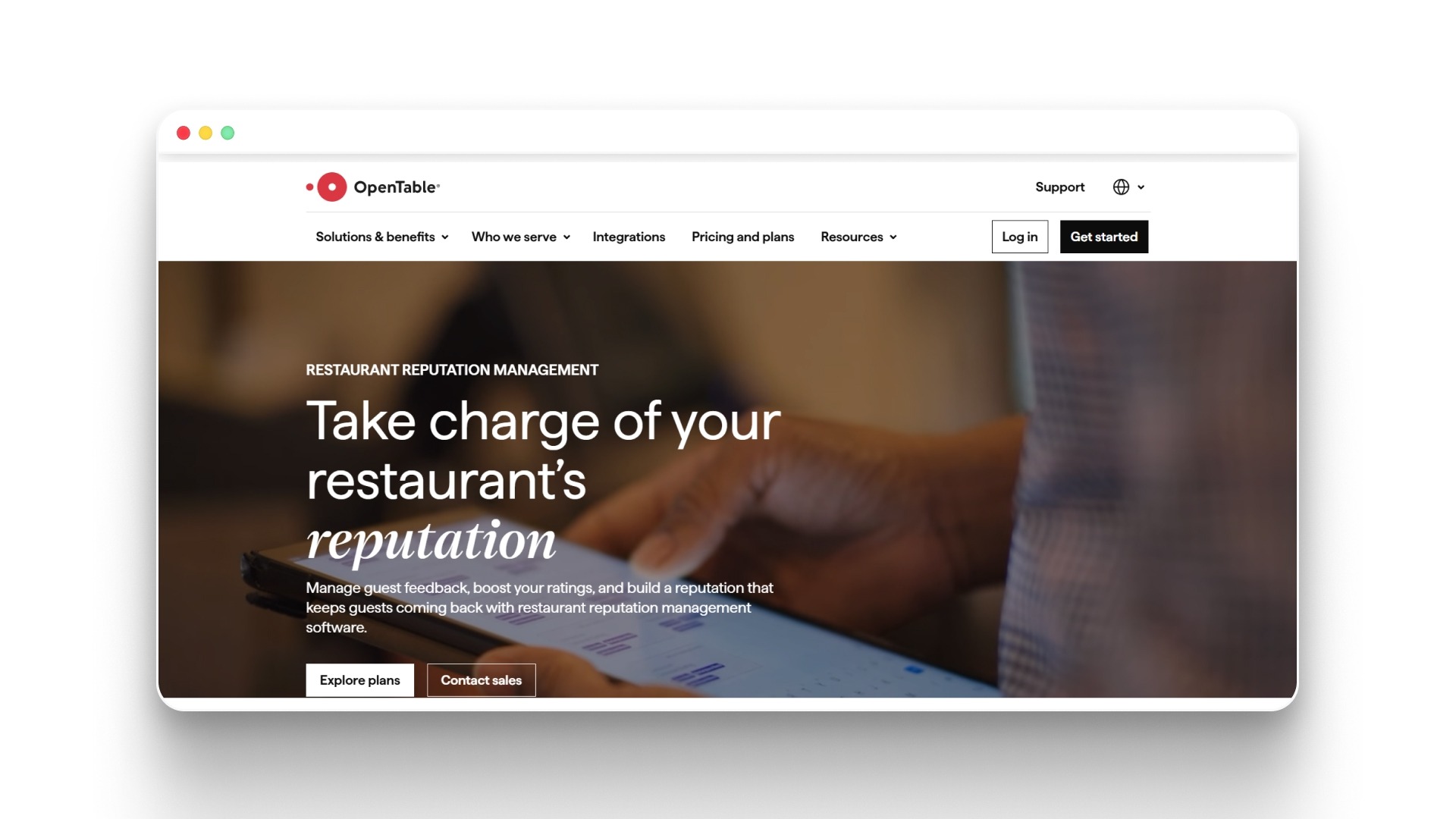
From a reputation standpoint, OpenTable aggregates and manages reviews across popular review sites in one place and allows restaurants to create custom post-dining surveys, giving them both reactive visibility and proactive feedback collection after each visit.
The platform's restaurant management app lets operators keep tabs on the floor to seat VIPs, update table status, block tables, and manage the floor plan across all devices. All guest data is organized in one place through a guestbook feature.
OpenTable captures and tracks guest behaviors and preferences, including average spend, frequent orders, and dining patterns. By recognizing returning diners and personalizing experiences based on collected data, restaurants can enhance guest loyalty and deliver tailored experiences that encourage repeat visits.
Pros
Cons
Best For: Full-service, fine dining, and upscale casual restaurants that rely on reservations, want verified post-dining feedback tied to actual guest visits, and are willing to invest in a premium platform for the network visibility it provides.
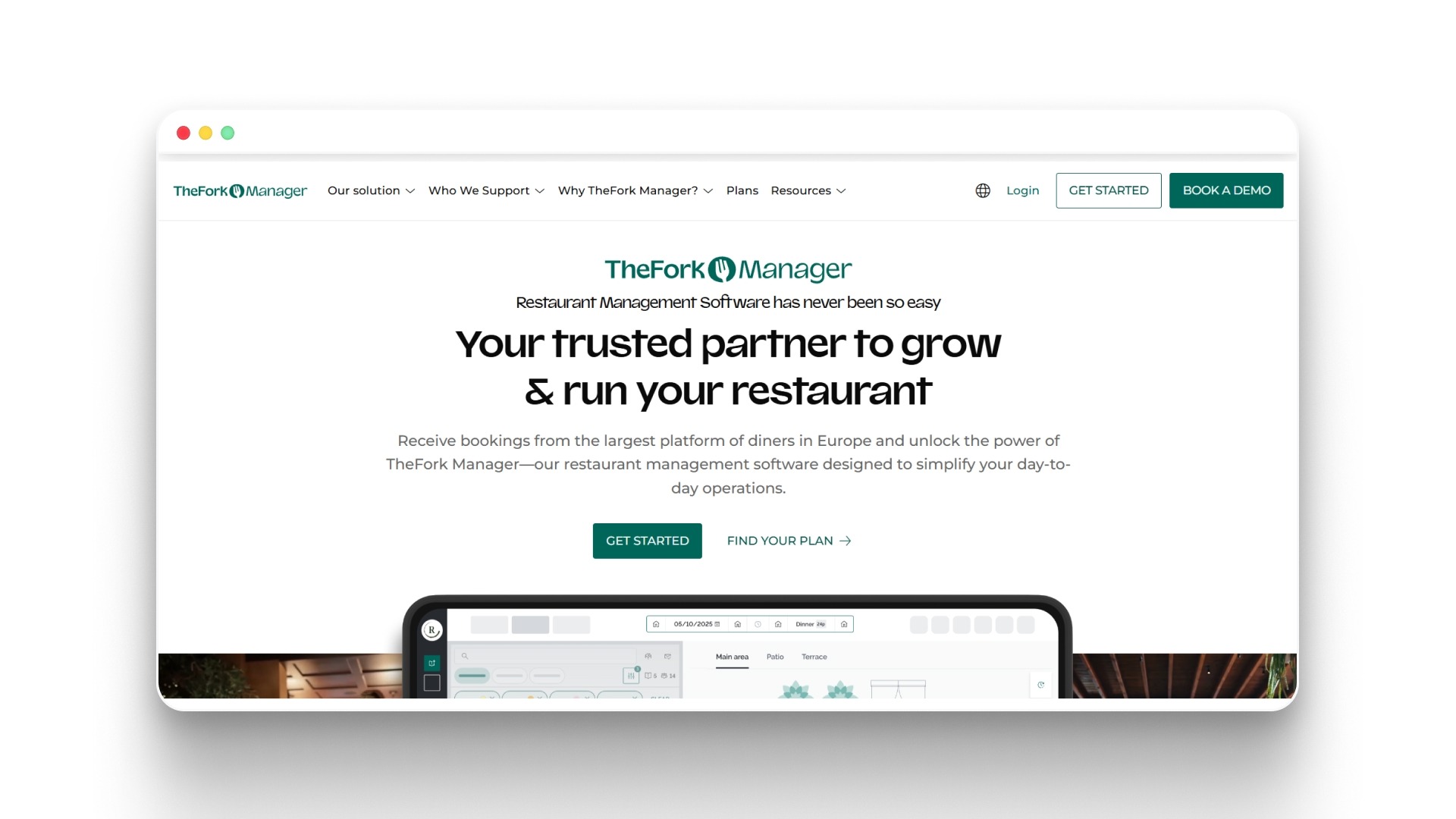
TheFork Manager centralises all reservations in one place from TheFork itself, to partner channels including Google, TripAdvisor, and Michelin, as well as the restaurant's own website and social media. With intelligent table and seating management, real-time availability, and automated workflows, restaurants can maximize occupancy, reduce wait times, and optimize service efficiency.
TheFork Manager also includes marketing and CRM tools to engage diners with personalised promotions, strengthen guest loyalty, and support data-driven decisions through clear performance insights. The platform is mobile-accessible, allowing teams to manage the restaurant anytime, anywhere — and is designed to be adaptable to all types and sizes of restaurants, from new establishments to Michelin-starred venues and restaurant groups.
Pros
Cons
Best For: Restaurants that want to centralise multi-channel reservations, access a large local dining community, and manage guest relationships through a single platform built specifically for hospitality.
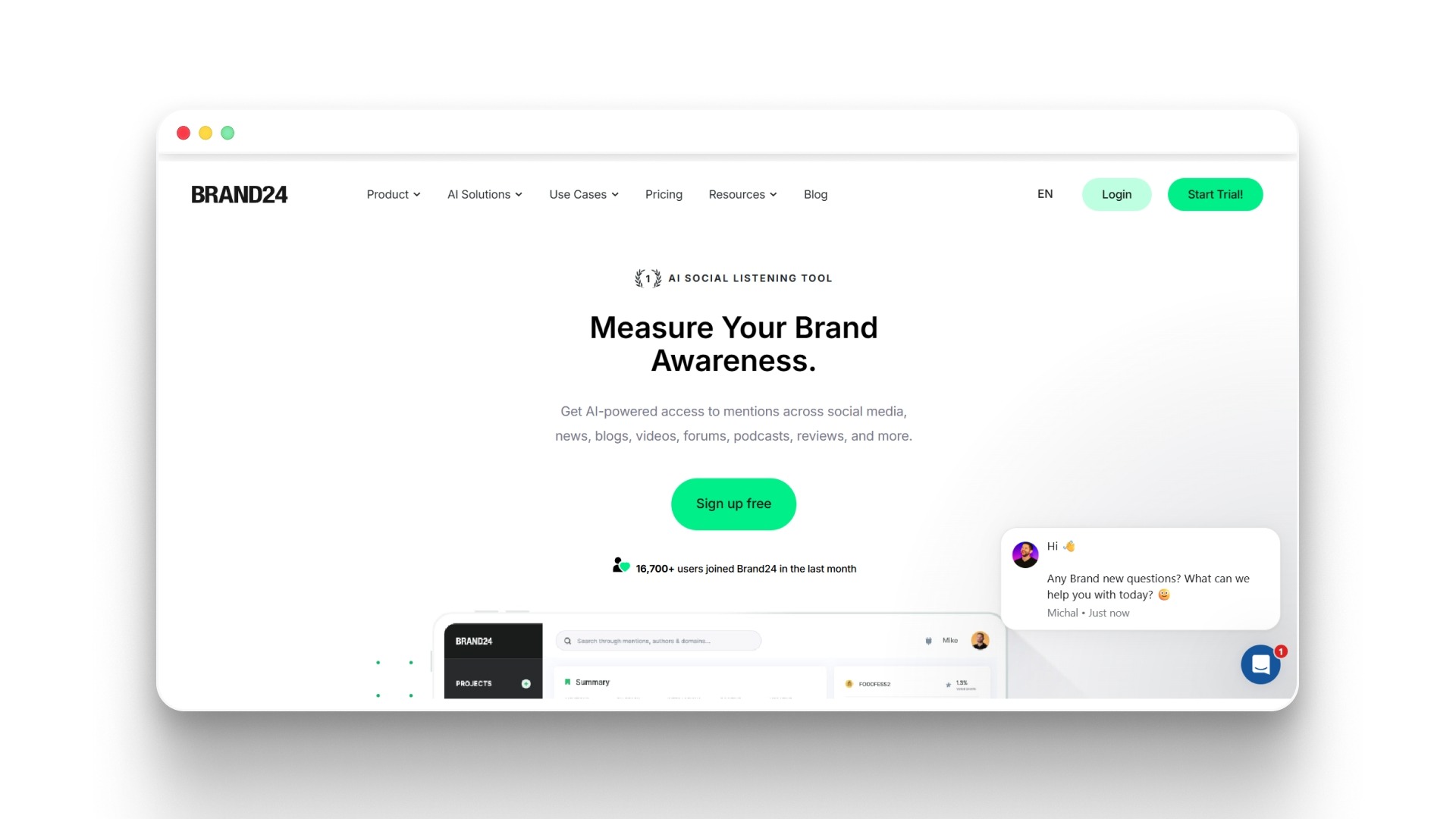
Brand24 is a social listening and online monitoring platform. It solves a problem the others don't: tracking what people are saying about your restaurant across the entire internet, not just on review platforms where you've claimed a profile.
Brand24 continuously monitors the web for keywords, brand names, product names, competitor mentions, campaign hashtags, or industry terms and surfaces mentions in a real-time feed that can be filtered by source, sentiment, influence score, and more.
Brand24 monitors over 25 million online sources in real time. For restaurants, that means conversations happening on Reddit threads, local Facebook groups, food blogs, podcasts, and niche review forums, places a restaurant owner would never manually check — are all surfaced in one feed.
Pros
Cons
Best For: Restaurant groups, franchise brands, and multi-location operators with significant social media presence or PR exposure who need to monitor brand conversations at scale across many internet sources simultaneously and who have a marketing or communications team to act on the data.
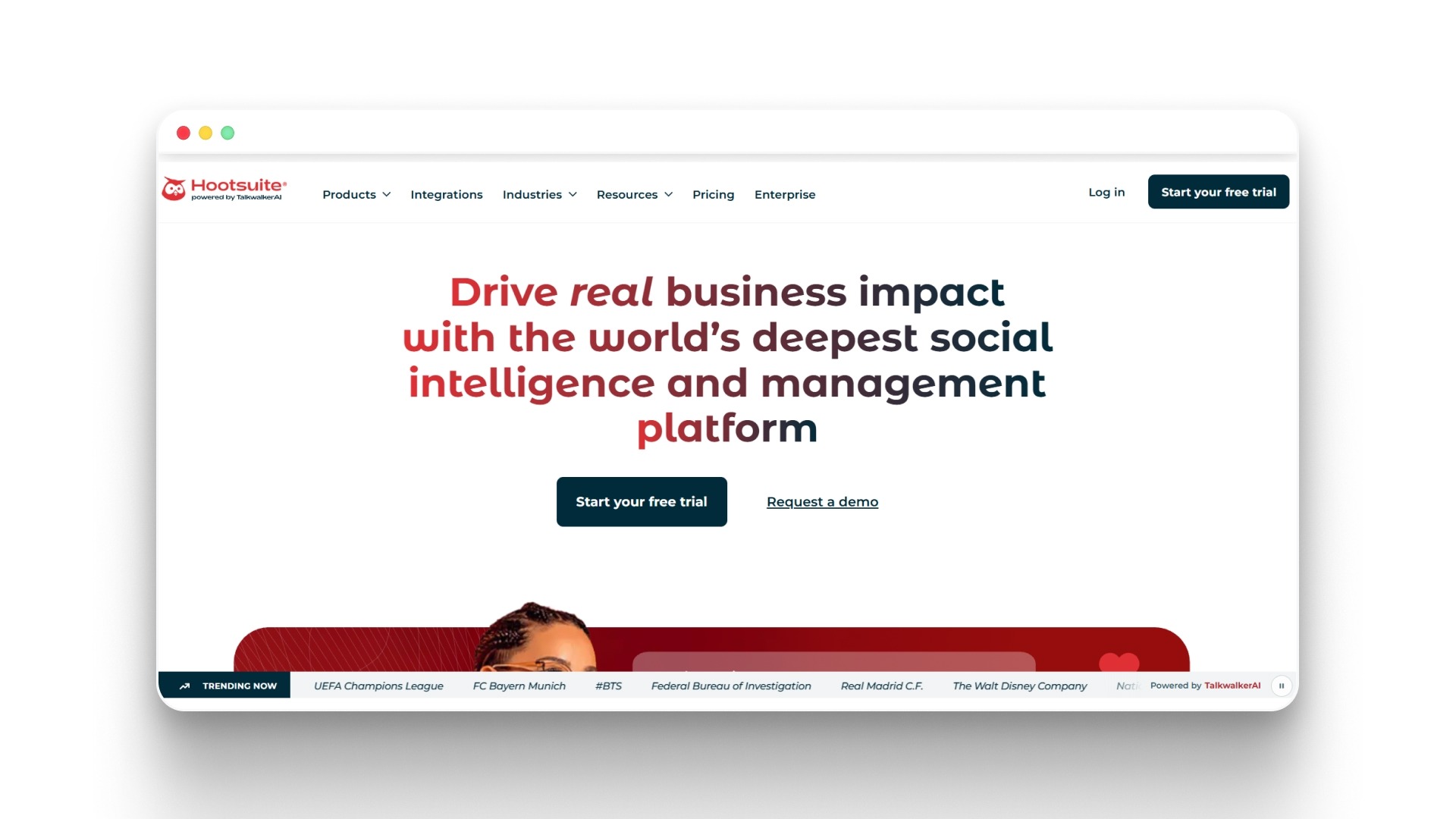
Hootsuite is the world's most widely used social media management platform, built for teams that need to manage, schedule, monitor, and report on content across multiple social channels from one dashboard. For restaurants, its value is less about reputation management in the traditional sense and more about maintaining an active, consistent, and responsive social presence, which indirectly shapes how customers perceive the brand before they ever walk in the door.
Notable capabilities relevant to restaurants:
Pros
Cons
Best For: Restaurants with dedicated marketing staff or social media managers who are actively building a brand presence across multiple platforms and need to manage scheduling, community engagement, and social listening efficiently at scale.
The biggest long-term advantage of reputation management is that it often improves operations behind the scenes, not just public perception online.
Restaurant reputation management does more than improve public perception. It helps restaurants identify operational problems before they grow into larger customer experience issues.
When restaurants monitor feedback consistently, they can spot patterns early and improve operations faster. This creates a direct connection between guest feedback and day-to-day service improvements.
Reputation management also improves internal accountability. Teams become more aware of how customer experiences translate into public reviews, which often leads to stronger consistency across service, delivery, and communication.
Over time, better operational consistency naturally leads to:
That operational consistency becomes much easier when your ordering workflows stay organized across every customer touchpoint.
With iOrders, restaurants can create cleaner ordering flows through QR ordering, direct website ordering, and centralized order management that reduces the gaps often responsible for negative reviews. Cleaner operations lead to smoother customer experiences, and smoother customer experiences build stronger reputations over time.
If you want to improve customer experience while keeping your ordering workflows more consistent and manageable, book a demo with iOrders and see how it fits into your restaurant operations.
.webp)
1. How often should restaurants check online reviews and customer feedback?
Restaurants should ideally monitor reviews daily or at minimum several times per week. Fast response times help prevent unresolved complaints from damaging customer trust publicly.
2. Which review platform matters most for restaurant reputation management?
Google Business Profile usually has the biggest impact because it directly affects local search visibility, Google Maps rankings, and customer first impressions during restaurant searches.
3. Can small restaurants compete with larger chains through reputation management?
Yes. Smaller restaurants often build stronger reputations by responding more personally, engaging with local communities actively, and delivering more consistent customer experiences.
4. What is the biggest mistake restaurants make with online reviews?
Ignoring reviews completely is one of the biggest mistakes. Customers notice inactive management quickly, especially when negative feedback remains unanswered for long periods.
5. Why do operational problems often become reputation problems?
Issues like delayed orders, poor communication, missed modifiers, or inconsistent service quickly appear in public reviews today. Operational consistency directly shapes how customers describe your restaurant online.