April 14, 2026

You’ve added online ordering, your menu is live, and orders are coming in. Yet, your restaurant's online sales feel stuck. The volume grows, but profit doesn’t follow at the same pace.
A big part of the problem sits behind the scenes. High commissions cut into every order, repeat customers drift back to third-party apps, and you have little control over how guests experience your brand online.
If you can’t influence how customers order, what they add, or how often they return, your online sales will plateau, no matter how many orders you receive. This guide breaks down practical ways to increase your restaurant's online sales while keeping more control over your revenue and customer relationships.
Online order volume can increase while revenue stays flat. The issue often comes from gaps in how orders are captured, processed, and converted into repeat business.
Here are the most common breakdowns that limit your restaurant's online sales:
You’re not losing orders, but losing control over how those orders flow, convert, and contribute to your revenue.

Most restaurants already have the basics in place: online menus, delivery options, and multiple ordering channels. The challenge is not access, but conversion and retention. Orders come in, but average ticket sizes stay low, repeat rates remain inconsistent, and margins shrink with every third-party transaction.
Improving online sales starts with identifying where value drops across the ordering journey. The focus should be on capturing more direct orders, increasing order value, and bringing customers back without relying on external platforms.
Many customers discover your restaurant through search or social media, but still place the order through a third-party app. This shift happens because direct ordering is not clearly positioned or easily accessible.
To correct this, you need to guide customers toward your own ordering channel at every touchpoint:
Every order that comes through your own channel keeps more revenue in your business. Tools like website and QR-based ordering from iOrders make this easier to implement without changing your existing setup.
Online customers make faster decisions and rely heavily on how your menu is structured. If the menu feels long or unclear, they either order less or drop off entirely. To improve performance:
A well-structured menu not only reduces errors but also increases your average order value without adding pressure on staff.
When orders are handled across multiple systems, your staff ends up bridging the gap manually. This adds unnecessary steps between order placement and preparation. To fix this, you can do the following:
Every extra step between order and kitchen increases the chance of mistakes. A centralized setup, where orders flow directly into your POS, helps maintain speed and accuracy during peak hours.
Third-party delivery platforms reduce the value of every order before it even reaches your kitchen. Over time, this directly impacts profitability. A more sustainable approach includes:
For example, a $30 order should not lose $9 in commission. With delivery setups that support flat-rate logistics through platforms like iOrders, you retain more from every sale while still offering reliable delivery.
Online ordering gives you a controlled environment to guide customer choices. Without structured prompts, most orders remain basic and lower in value. To increase ticket size:
Customers are more likely to add items when options are presented clearly at the right moment. Systems that support smart campaigns and automated upsells, such as those within iOrders, help implement this without manual effort.
Online sales grow faster when customers return without needing to be reacquired. Third-party platforms limit your ability to build that relationship.
To improve retention:
If you can’t reach your customers after the order, you’re starting from zero every time. Get tools with built-in loyalty and marketing tools, making it easier to keep customers engaged.
Customer feedback directly impacts future orders, but responding to reviews often becomes an after-hours task. To stay consistent without adding workload:
You can also use AI-supported review management systems to maintain consistent communication without taking time away from service.
When customers order through third-party apps, the experience feels disconnected from your restaurant. This weakens brand recall and loyalty. To maintain consistency:
A consistent, branded experience helps customers associate the order with your restaurant, not the platform they used.
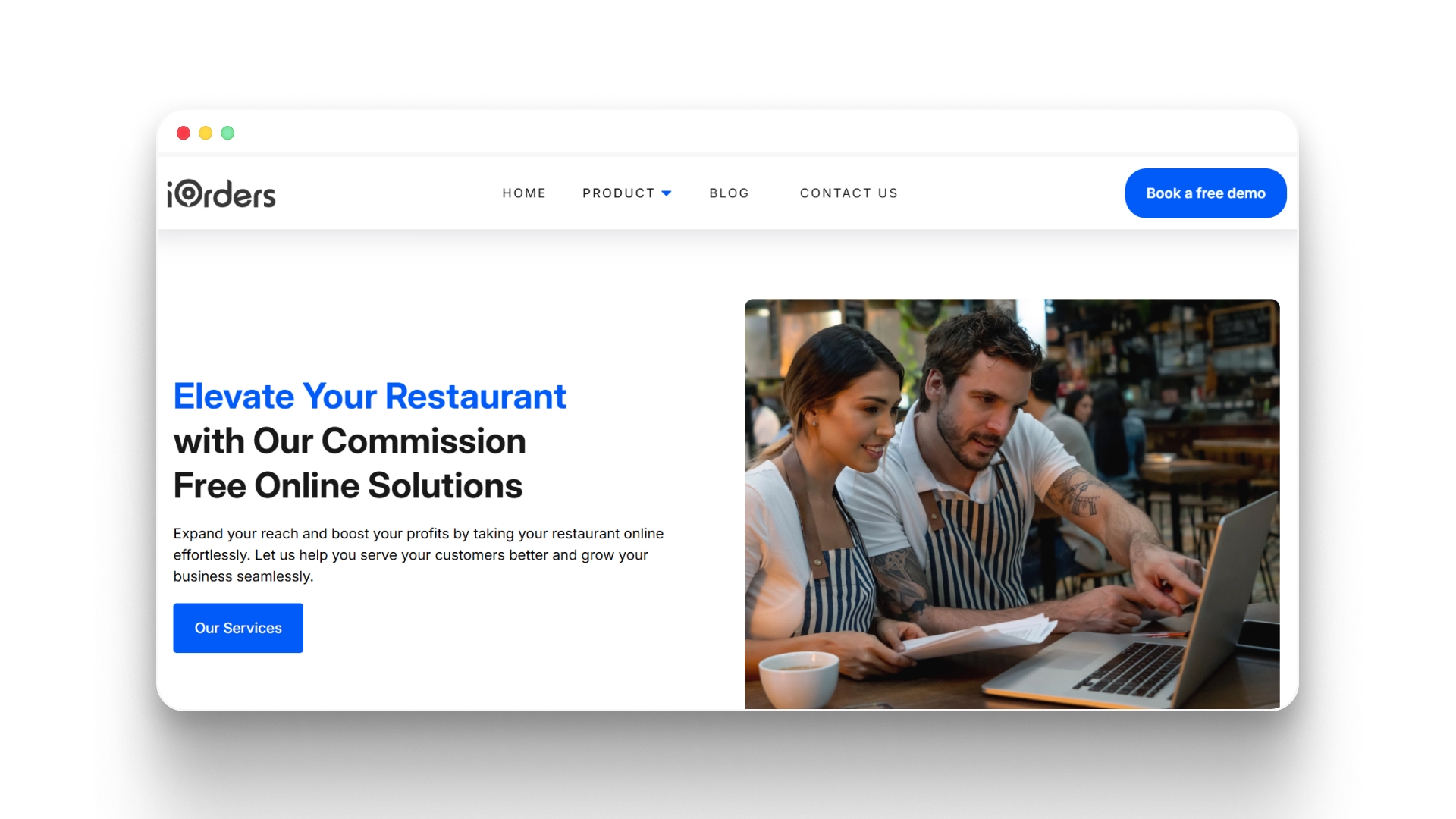
Growing online sales becomes easier when your ordering, delivery, and customer engagement work as one connected system. Instead of managing multiple tools or relying on third-party apps, iOrders helps you bring everything under your control. This allows you to capture more direct orders, increase order value, and keep customers coming back without losing revenue at each step.
Here’s how it supports your online sales growth:
Instead of depending on third-party platforms, you build a system where your online sales grow on your terms. Book a demo today!
Restaurant online sales improve when you control how orders come in, how they move through your system, and how customers return. Without that control, growth stays inconsistent, and margins remain under pressure.
A system like iOrders helps you bring your online orders, customer interactions, and revenue back under one roof. Rather than relying on external platforms to drive or manage your sales, you’re building a setup that works for your business every day.
If you’re ready to stop losing revenue to third-party platforms and take ownership of your online sales, get in touch with iOrders today.
1. How can I increase restaurant online sales without relying on discounts?
Discounts reduce margins and train customers to wait for offers. Instead, focus on improving menu structure, adding upsells, and promoting high-value items. Loyalty rewards and better ordering flow can increase repeat orders without cutting into profits.
2. Why do customers prefer third-party apps over direct ordering?
Convenience and habit play a big role. Customers often default to apps they already use. If your direct ordering option is not clearly visible or easy to access, they won’t switch, even if your prices are better.
3. What is the biggest mistake restaurants make with online ordering?
Many restaurants focus only on getting more orders instead of improving how those orders are processed. Poor order flow, lack of upselling, and no repeat strategy limit actual revenue growth.
4. How do I know if my restaurant's online sales strategy is working?
Track metrics like average order value, repeat order rate, and direct vs third-party order share. If orders are increasing but profit isn’t, your current setup likely needs adjustment.
5. How long does it take to see improvement in restaurant online sales?
Small changes like better menu structure or direct ordering visibility can show results within weeks. Long-term growth depends on building repeat customers and reducing reliance on third-party platforms over time.