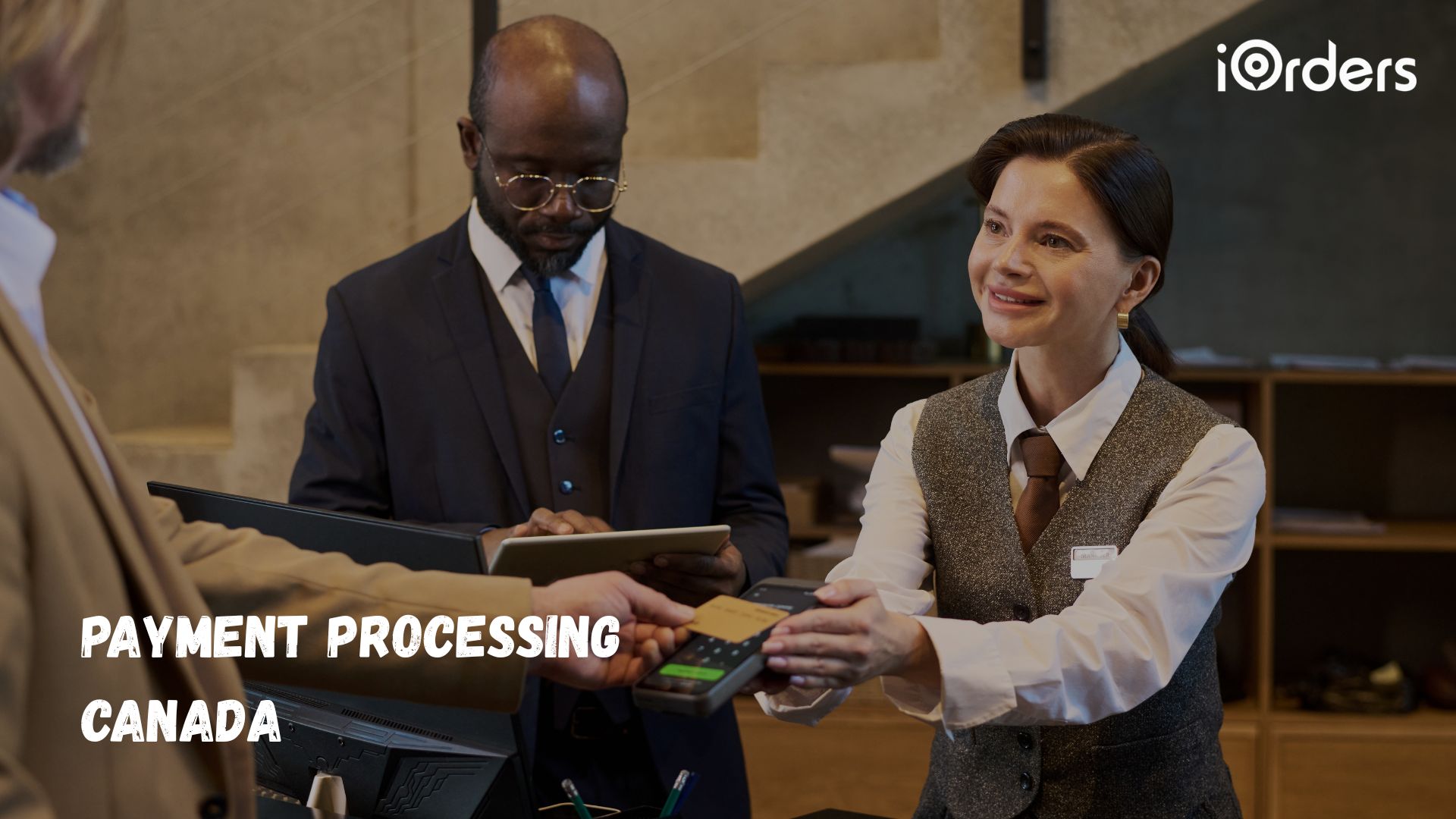
A customer scans a QR code, places an order in under a minute, taps their phone to pay, and expects the kitchen to receive everything instantly without errors. That entire experience depends on how well your payment processing system works behind the scenes.
In Canada, digital payments now dominate the market, with contactless payments accounting for 58% of total payment volume in 2024 alone. Mobile tap payments and digital wallets continue growing rapidly across restaurants, cafés, QSRs, and online ordering environments.
The challenge is that many restaurants still rely on disconnected payment tools that create operational gaps instead of simplifying workflows.
In this blog, we’ll break down how payment processing works in Canada, the different types of processors available, the most common restaurant payment methods, what businesses should evaluate before choosing a provider, and the best payment processing solutions Canadian restaurants are using in 2026.
Key Takeaways
Payment processing in Canada now affects far more than transactions alone, especially for restaurants managing online ordering, QR payments, delivery, and dine-in operations simultaneously.
Modern restaurant payment systems directly influence ordering speed, checkout experience, kitchen coordination, reporting accuracy, and customer retention.
Canadian restaurants increasingly prioritize payment processors that support Interac, contactless payments, mobile wallets, and integrated digital ordering workflows.
Choosing the right processor depends on operational needs like POS integrations, payout speed, multi-location management, loyalty systems, and delivery coordination, not just transaction fees.
Restaurant-specific payment ecosystems like iOrders are becoming more valuable because they connect payments, ordering, loyalty, and operational workflows into one centralized system.
What Is Payment Processing?
Payment processing is the system that allows businesses to securely accept and complete digital transactions from customers through online stores, POS systems, mobile apps, QR ordering systems, and payment terminals.
Whenever a customer taps a card, enters payment details online, or uses a digital wallet, several systems work together behind the scenes to verify the transaction, approve the payment, and transfer funds from the customer’s bank account to the business.
Although the process happens in seconds, payment processing involves multiple financial institutions, security layers, and technology providers communicating with each other in real time.
In industries like restaurants and fast-food retail, payment processing has become directly tied to how smoothly the business operates day to day.
Stop losing 20-30% of every order to third-party apps
The Restaurant Margin Playbook shows you how to build a direct ordering channel, own your customer relationships, and reclaim the margins delivery platforms are quietly taking.
What Do Modern Payment Systems Influence in Restaurants?
Modern payment systems now affect almost every part of restaurant operations, not just the final transaction at checkout. In 2026, payment infrastructure directly impacts ordering speed, delivery operations, customer experience, reporting accuracy, and how smoothly restaurants operate during busy service periods.
For restaurants, payment systems have become deeply connected to operational consistency across dine-in, takeaway, online ordering, QR ordering, and delivery workflows.
Here are the biggest areas modern restaurant payment systems influence:
Online ordering experience: Fast and reliable payment flows reduce abandoned carts and make direct ordering smoother for customers ordering through websites, apps, or QR menus.
Order accuracy and kitchen coordination: Integrated payment systems sync directly with POS systems and kitchen display systems (KDS), reducing manual order entry errors and improving communication between front-of-house and kitchen teams.
QR ordering and contactless dining: Payment systems connected with QR ordering allow customers to browse menus, place orders, split bills, tip, and pay directly from their phones without waiting for staff intervention.
Delivery and takeaway operations: Restaurants handling delivery and pickup orders need payment systems that support multiple ordering channels while keeping transactions and order reporting centralized.
Faster table turnover: Streamlined payment experiences reduce delays during checkout, helping restaurants serve more customers efficiently during peak hours.
Tip handling and staff payouts: Modern restaurant payment systems simplify digital tipping, tip pooling, and reporting visibility for staff and management teams.
Customer loyalty and repeat business: Many payment ecosystems now integrate directly with rewards programs, customer accounts, personalized offers, and repeat-order incentives.
Multi-location operational consistency: Restaurant groups and franchises rely on connected payment systems to standardize menus, reporting, promotions, and payment workflows across locations.
Sales reporting and reconciliation: Integrated payment systems make it easier to match orders, refunds, discounts, taxes, and payouts across dine-in, delivery, and online ordering channels.
Customer trust and checkout reliability: Failed payments, slow processing, or disconnected ordering systems create frustration quickly, especially during busy meal periods where speed matters heavily.
As restaurants continue shifting toward digital ordering ecosystems, payment processing is no longer operating separately from restaurant operations. It has become part of the overall service experience customers expect every time they order.
To understand why payment systems affect restaurant operations so heavily, it’s important to look at the core infrastructure powering every transaction.
The Main Components of a Payment Processing System
Several systems work together every time a digital payment is processed. Each component plays a specific role in authorizing, securing, transferring, and settling the transaction.
Payment Processing Components Table
Component
What It Does
Payment Gateway
Securely captures and encrypts customer payment information before transmitting it for authorization. This is the technology customers interact with during checkout online or through apps.
Payment Processor
Communicates between banks, card networks, and the merchant system to verify whether the transaction can be approved.
Acquiring Bank
The financial institution that processes card payments on behalf of the business and receives approved transaction funds.
Issuing Bank
The customer’s bank or card provider that verifies available funds and approves or declines the transaction.
Merchant Account
A temporary holding account where approved payment funds are stored before being deposited into the business bank account.
Card Networks
Payment networks like Visa, Mastercard, and American Express that facilitate communication standards and transaction routing between banks.
In a typical transaction, the customer submits payment information, the payment gateway encrypts the data, the processor sends the request through the card network to the issuing bank, and the issuing bank either approves or declines the transaction.
Once approved, the funds move through the acquiring bank into the merchant account before finally reaching the business bank account.
Now that the technical flow is clearer, the next step is understanding how payment processing operates specifically within the Canadian market.
How Payment Processing Works in Canada?
Canada has one of the world’s most mature digital payment environments, especially in restaurants and hospitality. Contactless payments, tap-to-pay cards, mobile wallets, online ordering, and QR-based checkout systems are now deeply embedded into how Canadian consumers pay for food and dining experiences.
For restaurants, payment processing in Canada has evolved far beyond countertop card terminals.
This shift is happening because restaurants increasingly operate across multiple ordering channels at the same time. A customer may order through a branded app, scan a QR code at the table, tap a card at pickup, or use Apple Pay during delivery checkout, all within the same restaurant ecosystem.
The Most Common Payment Methods in Canada
Canadian restaurant customers now expect multiple payment options across dine-in, takeaway, online ordering, and delivery channels. Supporting limited payment methods can quickly create friction during checkout.
Here are the payment methods most commonly used across Canadian restaurant operations today:
Credit cards: Visa and Mastercard remain the most widely used restaurant payment methods across both in-person dining and online ordering environments.
Interac Debit: Interac Debit is one of the most trusted and heavily used payment methods in Canada because it allows customers to pay directly from their bank accounts in real time.
Tap-to-pay contactless cards: Contactless card payments are now standard across Canadian restaurants, especially in quick-service and high-volume environments.
Apple Pay and Google Pay: Mobile wallets continue growing rapidly in restaurants because customers increasingly prefer phone-based tap payments during dine-in and pickup transactions.
QR-based payments: QR ordering systems increasingly allow customers to browse menus, place orders, split bills, tip, and complete payments directly from their phones.
Online card payments: Restaurants handling direct online ordering rely heavily on secure online payment gateways connected with websites, branded apps, and delivery systems.
Stored payment methods and loyalty-linked payments: Restaurant apps increasingly allow customers to save cards, redeem loyalty points, and reorder meals faster through connected payment ecosystems.
As Canadian restaurants continue expanding digital ordering capabilities, payment flexibility has become directly tied to customer convenience, checkout speed, and operational efficiency across every service channel.
As payment methods continue expanding, businesses also need to understand the different processor models available behind those transactions.
The Different Types of Payment Processors in Canada
Canadian restaurants now process payments across multiple channels at the same time, including dine-in, online ordering, QR ordering, delivery apps, mobile apps, kiosks, and takeaway systems. Because of this, businesses need to understand how different payment processor models work before choosing the right setup.
The three most common types of payment processors used across Canada are traditional merchant account providers, aggregated payment processors, and restaurant-specific payment ecosystems.
Payment Processor Types Comparison Table
Payment Processor Type
How It Works
Common Examples
Best Fit For
Key Advantages
Important Tradeoffs
Aggregated Payment Processors
Multiple businesses process payments under one larger shared merchant account managed by the platform provider.
iOrders, Stripe, Square, PayPal
Restaurants wanting faster setup, simplified onboarding, and integrated digital ordering workflows.
May still require third-party processor partnerships depending on payment infrastructure setup.
As digital ordering continues growing across Canadian restaurants, many operators are shifting away from treating payment processing as a standalone finance tool and toward viewing it as part of the restaurant’s larger operational infrastructure.
Not every payment processor fits every restaurant operation, which makes evaluating the right features and infrastructure especially important.
What Canadian Businesses Should Look for in a Payment Processor
Choosing a payment processor is no longer only about transaction fees. For restaurants in Canada, payment infrastructure now affects ordering speed, customer experience, delivery operations, reporting accuracy, and how efficiently the business runs during peak service hours.
Before choosing a payment processor, restaurants should evaluate how the system fits into their actual operational workflow, not just how it processes transactions.
Restaurant Payment Processor Evaluation Table
What to Evaluate
Why It Matters for Restaurants
Integration with POS and Ordering Systems
Payment systems should connect directly with POS platforms, online ordering systems, QR ordering, kitchen display systems (KDS), and loyalty programs to avoid disconnected workflows.
Support for Multiple Ordering Channels
Restaurants now process payments across dine-in, takeaway, online ordering, mobile apps, kiosks, and delivery systems simultaneously. The processor should support all major customer touchpoints smoothly.
Transaction Fees Beyond the Advertised Rate
Restaurants should evaluate hidden costs like chargeback fees, hardware fees, payout delays, PCI compliance charges, delivery-related fees, and currency conversion markups.
Fast Payouts and Cash Flow Reliability
Delayed deposits affect payroll, inventory purchasing, supplier payments, and day-to-day operations, especially for high-volume restaurants.
Contactless and Mobile Wallet Support
Canadian customers increasingly expect Apple Pay, Google Pay, tap-to-pay cards, and QR-based checkout experiences during dine-in and takeaway ordering.
Interac Compatibility
Interac Debit remains one of the most important payment methods in Canada because of strong consumer trust and lower processing costs compared to credit cards.
Security and PCI Compliance
Restaurants handling large digital transaction volumes need encrypted payment systems, tokenization, fraud monitoring, and PCI-compliant infrastructure to reduce payment risk.
Operational Reporting and Reconciliation
Connected payment systems make it easier to match orders, refunds, taxes, discounts, tips, and payouts across multiple channels without manual reconciliation headaches.
Scalability for Multi-Location Growth
Restaurant groups and franchises need systems that can standardize payments, reporting, promotions, and customer experiences across locations consistently.
Customer Ownership and Loyalty Integration
Restaurants increasingly prioritize systems that help them maintain direct customer relationships instead of relying entirely on third-party delivery marketplaces.
Ease of Use During Busy Service Hours
Payment systems should simplify operations for staff and customers, not create bottlenecks during peak ordering periods.
Support and Reliability
Payment outages directly affect revenue. Restaurants need processors with reliable uptime, responsive support, and stable infrastructure during high-volume periods.
For modern restaurants, payment processing now operates as part of the overall guest experience. A slow checkout flow, failed payment, disconnected online ordering system, or delayed payout can quickly affect customer satisfaction and operational stability at the same time.
Canadian restaurants are handling more digital transactions than ever before across dine-in, QR ordering, takeaway, apps, kiosks, and delivery systems. As ordering channels continue expanding, payment processing becomes deeply connected to customer experience and operational efficiency.
The strongest restaurant payment systems are no longer just processing transactions. They help restaurants create faster ordering flows, cleaner operations, better reporting visibility, and more consistent customer experiences across every touchpoint.
That’s where iOrders helps restaurants simplify operations through connected online ordering, QR ordering, payment workflows, loyalty systems, and centralized multi-location management built specifically for food businesses.
If you want a more organized and scalable restaurant payment ecosystem, book a demo with iOrders and explore how it fits into your operations.
FAQs
1. What is the difference between a payment gateway and a payment processor?
A payment gateway securely captures customer payment information, while the payment processor communicates with banks and card networks to approve and complete the transaction.
2. Can restaurants use one payment system for dine-in, online ordering, and delivery?
Yes, many modern restaurant payment platforms now support integrated payments across dine-in, QR ordering, online ordering, takeaway, and delivery channels.
3. How long do payment processors take to deposit funds in Canada?
Payout timing depends on the processor, but most Canadian payment providers deposit funds within one to three business days.
4. Do Canadian businesses need PCI compliance for payment processing?
Yes, businesses handling digital card transactions must follow PCI compliance standards to protect customer payment information securely.
5. What are the biggest payment processing challenges for restaurants?
Restaurants commonly face challenges involving disconnected systems, payout delays, chargebacks, failed online payments, and managing transactions across multiple ordering channels.

.png)

.webp)