

10 Leading Online Payment Processing Companies for Canada in 2026

April 30, 2025

Table of contents

Every declined transaction can cost you more than revenue. It also damages the customer’s trust, a vital element in the restaurant industry. 

With digital payments accounting for over 70% of all restaurant transactions, a reliable payment processor isn't just a back-office decision—it's a lifeline for your business's survival in the competitive restaurant industry.

Recent data from Payments Canada reveals that restaurants with reliable payment systems see 24% higher customer retention rates than those experiencing frequent payment failures. 

In today's competitive market, 67% of diners will abandon their online food order if they encounter payment issues. Seamless transactions aren't optional—they're essential.

As we explore the top payment processing companies serving Canadian restaurants in 2025, remember that your payment system isn't just about moving money—it's about creating frictionless experiences that keep customers coming back.

Key Takeaways

  • Online payment processing now affects far more than transactions alone because it directly impacts customer experience, operational efficiency, cash flow, and long-term business scalability.
  • Canadian businesses increasingly prioritize payment processors that support integrated ecosystems across POS systems, online ordering, loyalty programs, accounting tools, and multi-channel sales operations.
  • Different payment processors serve different business needs, with platforms like Stripe focusing on customization, Square simplifying operations for small businesses, and iOrders supporting restaurant-specific operational workflows.
  • Features like fraud protection, multi-currency support, fast payouts, POS integration, and operational reporting have become essential when evaluating payment processors in 2026.
  • For restaurants and multi-location food businesses, payment processing decisions now influence delivery profitability, customer retention, direct ordering growth, and operational consistency across locations.

What Is Online Payment Processing?

Online payment processing is the system that allows businesses to securely accept digital payments from customers through websites, apps, online ordering systems, or e-commerce platforms.

Whenever a customer enters their card details, taps a digital wallet, or completes an online checkout, several systems work together behind the scenes to approve, verify, and transfer the payment securely from the customer’s bank to the business.

The process usually involves four main components:

  • Payment gateway: Encrypts and securely transmits payment information from the customer to the payment processor.
  • Payment processor: Communicates with banks and card networks to authorize and complete the transaction.
  • Merchant account: Temporarily holds approved funds before they are deposited into the business bank account.
  • Customer payment method: Credit cards, debit cards, Interac, Apple Pay, Google Pay, digital wallets, or bank transfers.

For businesses, online payment processing does much more than simply accept payments. Modern processors now support:

  • recurring billing
  • fraud prevention
  • subscription management
  • multi-currency transactions
  • mobile payments
  • digital wallets
  • POS integrations
  • real-time reporting
  • chargeback management
  • loyalty and customer data tracking

In industries like restaurants, payment processing is now directly tied to customer experience. A slow checkout, failed payment, or complicated ordering flow can reduce conversions immediately.

That is why businesses increasingly look for payment systems that integrate smoothly with their operations instead of treating payments as a completely separate tool.

Also read: 10 Smart Restaurant Upselling Techniques to Grow Your Check Size
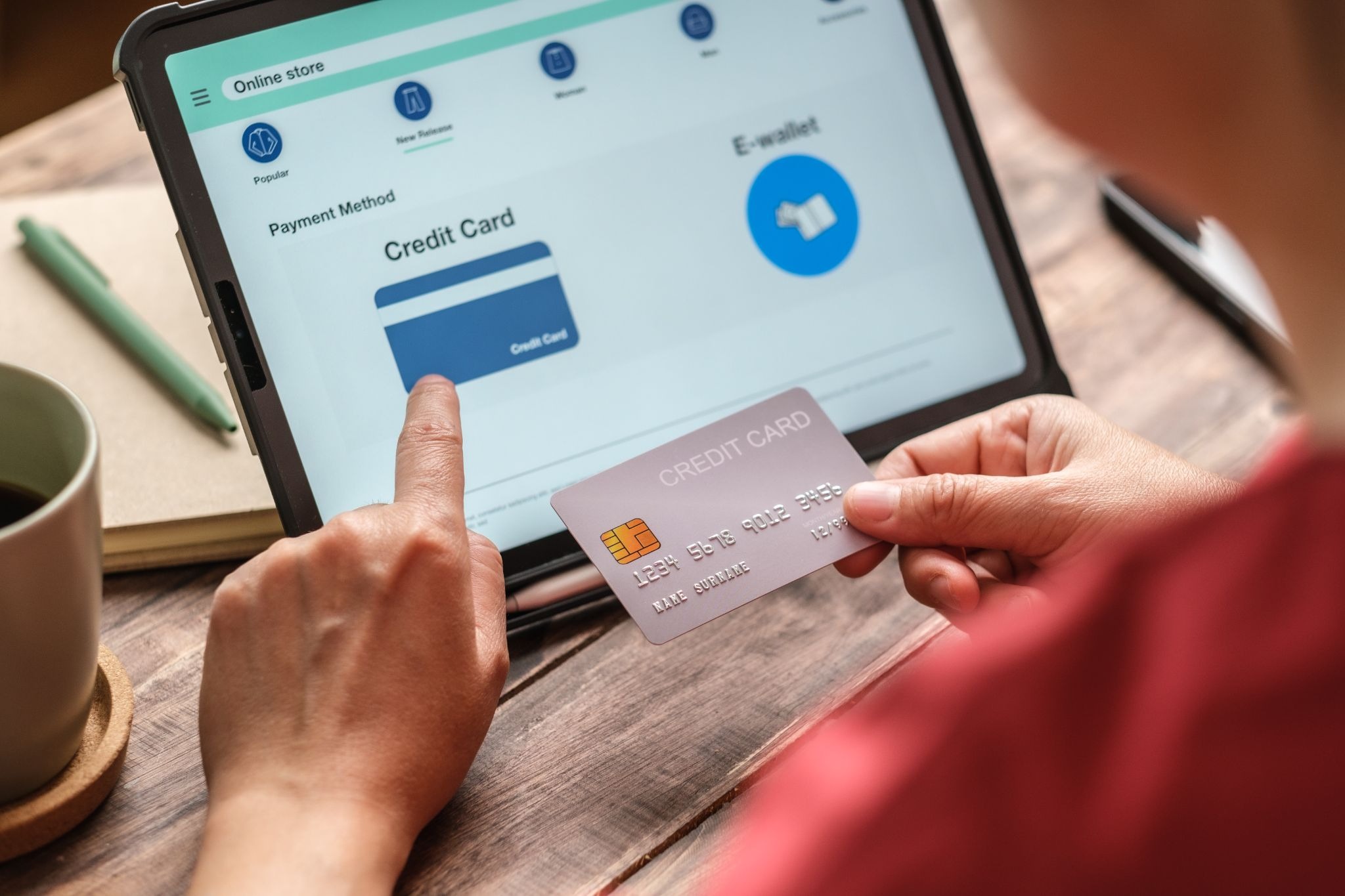
Online Payment Processing Landscape in Canada

Online Payment Processing Landscape in Canada

Canada’s online payment ecosystem has evolved rapidly over the last few years. Digital payments, contactless transactions, mobile wallets, and online ordering are now standard customer expectations across most industries.

Several major trends are shaping the Canadian payment processing market in 2026.

  • Strong growth in digital and contactless payments: Canadian consumers increasingly prefer online card payments, mobile wallets, QR payments, and tap-based transactions over cash. Contactless behavior accelerated permanently across retail, restaurants, and e-commerce.
  • Real-time payments infrastructure is expanding: Canada’s upcoming Real-Time Rail (RTR) initiative is expected to modernize domestic payment settlement with faster, 24/7 transaction capabilities and richer payment data standards under ISO 20022.
  • Businesses now expect integrated payment ecosystems: Modern businesses increasingly want payment processing tied directly into POS systems, online ordering, accounting tools, loyalty programs, subscriptions, and operational reporting instead of disconnected standalone gateways.
  • Fraud prevention and compliance are becoming more important: As online transaction volume grows, Canadian businesses are investing more heavily in fraud monitoring, encrypted payment flows, AI-driven risk detection, and PCI-compliant infrastructure.
  • Cross-border commerce is influencing processor choice: Businesses serving international customers increasingly prioritize multi-currency support, lower FX conversion costs, and global payment acceptance as part of their payment stack strategy.

For Canadian businesses in 2026, payment processing is no longer just a financial backend system. It has become a core operational decision that affects customer experience, checkout conversion rates, cash flow, reporting visibility, and long-term scalability.

Suggested read: Top 8 Restaurant Types You Can Start in Canada With Low Cost

Now, let's examine the ten standout payment processors serving Canadian restaurants in 2026, looking at their strengths and potential limitations.

Stop losing 20-30% of every order to third-party apps

The Restaurant Margin Playbook shows you how to build a direct ordering channel, own your customer relationships, and reclaim the margins delivery platforms are quietly taking.

Download the eBook →

Top 10 Online Payment Processing Companies in Canada (2026)

Canadian businesses now expect faster payouts, lower processing costs, multi-channel payment support, fraud protection, POS integration, and smoother customer experiences across online, mobile, and in-store transactions.

For restaurants, franchises, and multi-location food businesses, the stakes are even higher. Payment processing affects ordering speed, customer retention, delivery profitability, and how well operations scale across locations.

Below are the top online payment processing companies in Canada for 2026, including their strengths, tradeoffs, pricing structures, and the types of businesses they serve best.
1. iOrders

iOrders

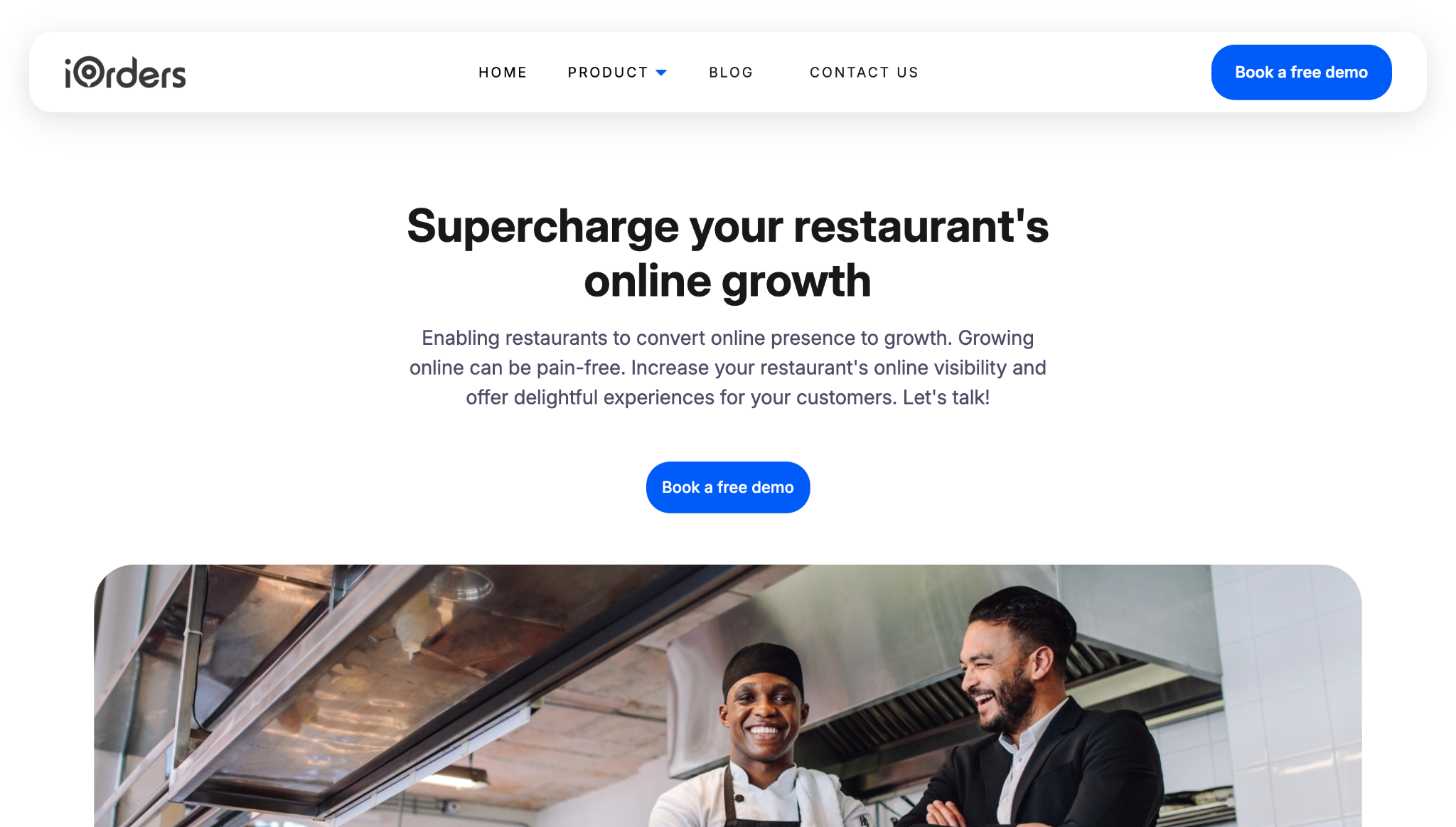
iOrders is a Canadian-built restaurant commerce and payment platform designed specifically for restaurant franchises, multi-location food businesses, ghost kitchens, cafés, QSR chains, and fast-casual brands. Unlike generic payment processors that only handle transactions, iOrders focuses on solving the larger operational and profitability challenges restaurants face when managing online ordering, delivery, payments, loyalty, and customer retention across multiple channels.

For franchise operators and restaurant groups, the platform becomes especially valuable because it centralizes operations across locations while maintaining consistency in branding, menu management, customer experience, reporting, and loyalty systems.

Features and Benefits:

  • Commission-free online ordering system: Restaurants avoid paying heavy third-party marketplace commissions and keep more profit from every order placed directly through their own channels.
  • Centralized multi-location management: Franchise owners can manage menus, promotions, loyalty programs, pricing, analytics, and operational workflows across all locations from one dashboard.
  • Seamless POS integrations: Orders from websites, QR ordering, mobile apps, and direct channels sync automatically with existing POS systems to reduce manual entry and improve kitchen coordination.
  • White-label branded mobile apps: Restaurants can launch fully branded mobile ordering apps that strengthen customer retention and eliminate dependency on third-party apps.
  • QR ordering and dine-in ordering: Supports table-side ordering and contactless dine-in experiences that improve ordering speed and reduce front-of-house congestion.
  • Delivery-as-a-Service (DaaS): Restaurants can offer delivery fulfillment without managing their own fleet while still maintaining more control over delivery operations and customer experience.
  • Smart Campaigns and marketing automation: Restaurants can create data-driven promotions based on real customer behavior, ordering frequency, and purchasing patterns.
  • Customizable loyalty and rewards systems: Loyalty programs can be standardized across all franchise locations while still adapting to local customer behavior.
  • Integrated review and feedback opportunities: Organized digital ordering workflows create smoother opportunities for collecting customer reviews and feedback after completed orders.
  • Operational consistency across locations: Standardized systems reduce operational gaps that often lead to order mistakes, inconsistent customer experiences, and negative reviews.

Also read: Multi-Location Menu Sync: A 2026 Guide to Scalable Restaurant Menu Operations

The platform was built around a major problem in the restaurant industry: losing margins to third-party delivery commissions while struggling with disconnected ordering systems, inconsistent customer experiences, and fragmented operational workflows. 

Instead of relying entirely on DoorDash or Uber Eats ecosystems, restaurants using iOrders can build direct relationships with customers through their own branded ordering channels while keeping more control over revenue, customer data, promotions, and delivery operations.
2. Stripe

Stripe

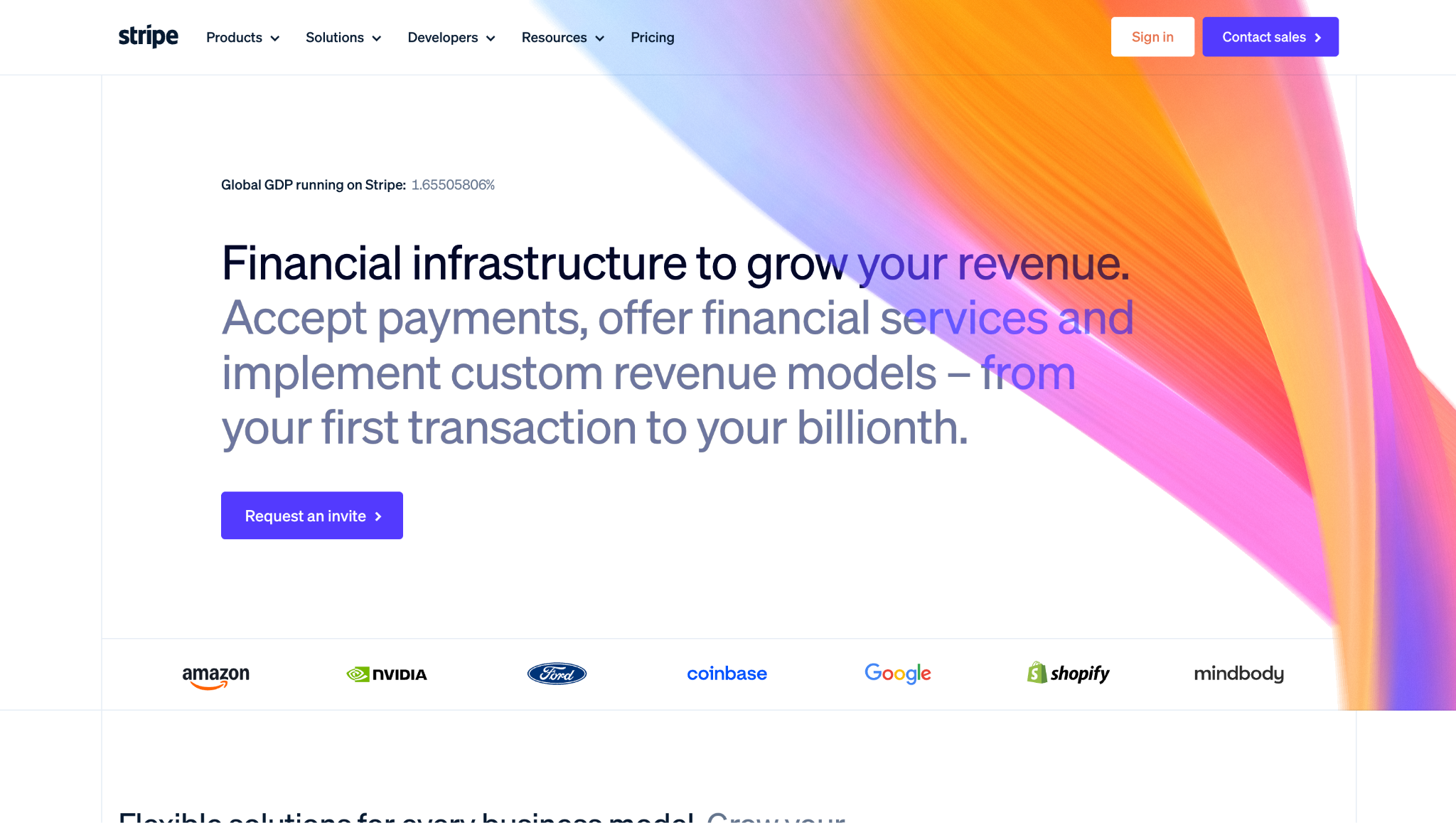
Stripe has become one of the most influential payment infrastructures globally because of its highly flexible, developer-first architecture. 

What separates Stripe from many traditional processors is its ability to support highly customized payment workflows. Businesses can build subscription billing systems, marketplace split payments, embedded finance products, recurring billing models, and highly tailored checkout experiences directly through Stripe’s APIs. For businesses with strong development resources, Stripe offers almost unlimited flexibility.

Stripe remains one of the strongest options when technical flexibility and scalability matter more than simplicity.

Features and Benefits:
  • Highly customizable APIs: Businesses can build completely custom checkout flows, recurring billing systems, and marketplace payment structures.
  • Subscription and recurring billing tools: Particularly strong for SaaS companies, memberships, and recurring revenue models.
  • Global payment support: Supports 135+ currencies and numerous local payment methods worldwide.
  • Fraud prevention through Stripe Radar: Machine-learning fraud detection helps reduce payment risk and chargebacks.
  • Integrated tax automation: Automatically calculates taxes across regions and jurisdictions.
  • Detailed analytics and reporting dashboards: Businesses gain visibility into revenue trends, customer behavior, and payment performance.
  • Strong e-commerce integrations: Works seamlessly with Shopify, WooCommerce, Magento, and custom storefronts.
  • Scalable infrastructure: Built to support both startups and enterprise-scale transaction volumes.

3. PayPal

PayPal

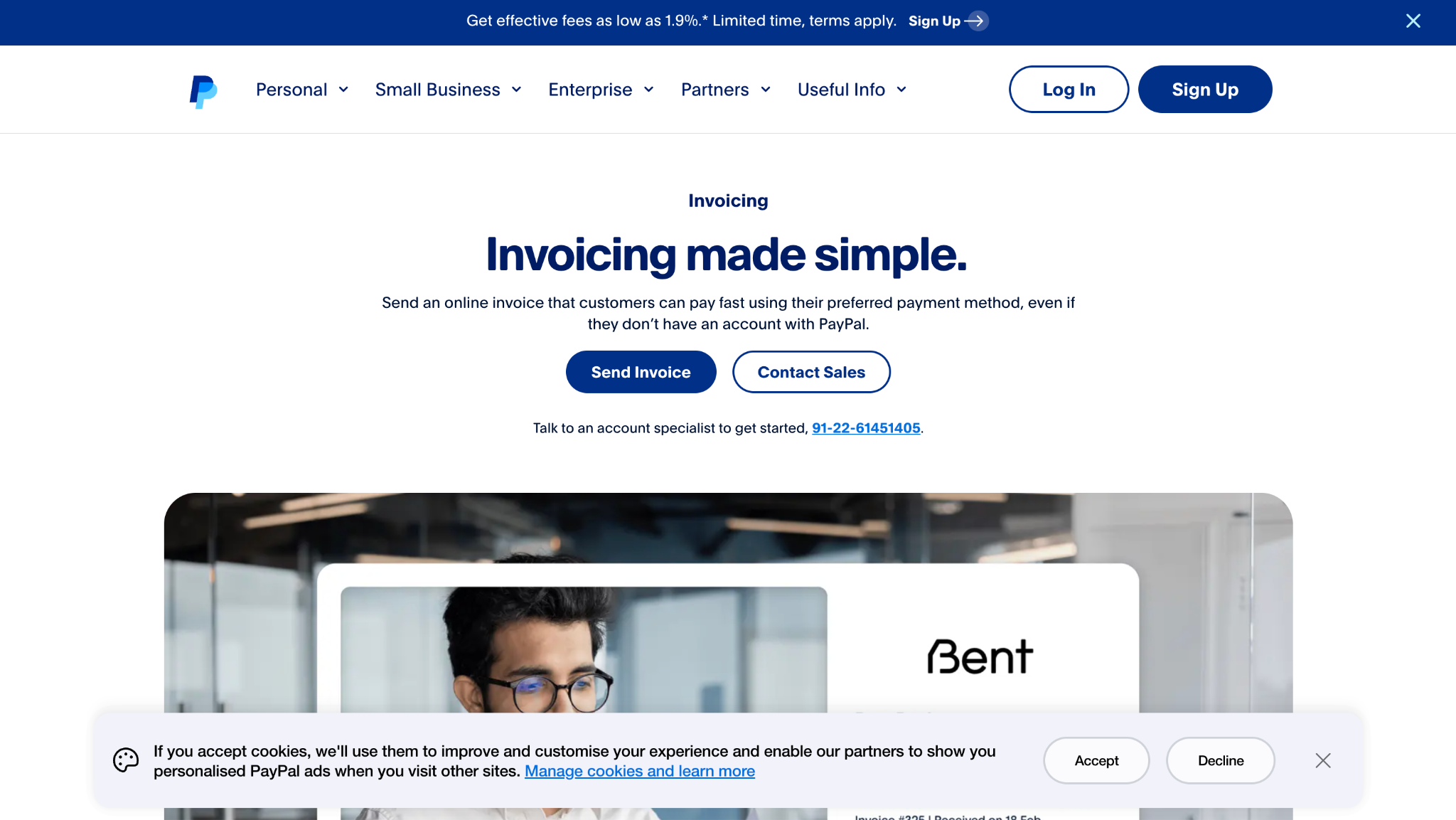
PayPal remains one of the most trusted and recognizable online payment brands globally, with hundreds of millions of active users worldwide. Its biggest advantage continues to be customer familiarity. Many online shoppers already trust PayPal enough to complete purchases faster without manually entering payment details every time.

While PayPal is not as customizable and may not always be the lowest-cost option at scale, it remains highly effective for businesses prioritizing ease of setup, customer trust, and simplified online payments.

Many Canadian businesses use PayPal alongside other processors rather than relying on it exclusively.

Features and Benefits:
  • High consumer trust and brand recognition: Customers often feel more comfortable completing transactions through PayPal.
  • Faster checkout experiences: Returning PayPal users can complete purchases quickly without re-entering payment information.
  • Cross-border transaction support: Supports international payments and multiple currencies.
  • Integrated invoicing tools: Businesses can send invoices and accept direct online payments easily.
  • Buy Now, Pay Later functionality: Flexible financing options improve conversion opportunities for some merchants.
  • Simple onboarding and setup: Businesses can start accepting payments quickly with minimal technical setup.
  • Mobile wallet compatibility: Supports mobile-friendly checkout experiences.
  • Buyer and seller protection systems: Adds additional confidence for online transactions.

4. Square

Square

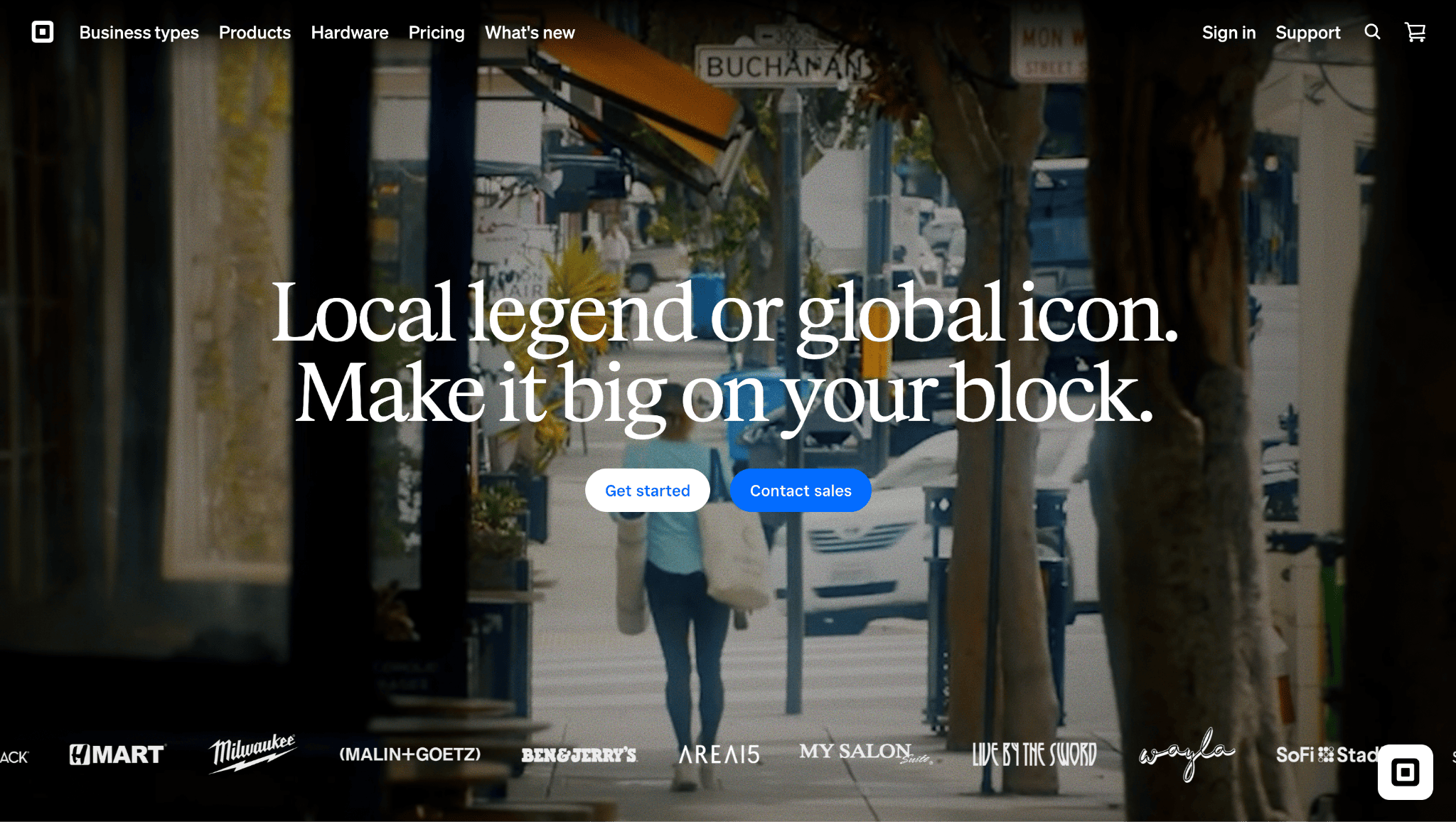
Square built its reputation by simplifying payment acceptance for small businesses through flat-rate pricing and easy-to-use hardware. Over time, it evolved into a complete business ecosystem that combines payment processing, POS systems, online selling, payroll, inventory management, and customer engagement tools.

Square is especially popular among cafés, bakeries, small restaurants, retail stores, salons, and service businesses because it offers an all-in-one operational setup without requiring technical expertise or complicated onboarding.

One of Square’s biggest strengths is its unified approach to in-person and online selling. Businesses can manage inventory, customer data, payments, and reporting across physical and digital sales channels through one platform. For smaller operators looking for simplicity and speed, Square remains one of the most practical choices in Canada.

Features and Benefits:
  • Unified online and in-store payment system: Keeps customer data, inventory, and reporting synchronized automatically.
  • Integrated POS ecosystem: Includes POS software, terminals, kiosks, and hardware solutions.
  • Simple flat-rate pricing structure: Easier for smaller businesses to predict payment processing costs.
  • Online store creation tools: Businesses can launch online storefronts directly through Square.
  • Inventory and sales tracking: Real-time inventory visibility across locations and channels.
  • Appointment, invoicing, and payroll tools: Supports broader operational management beyond payments.
  • Mobile payment flexibility: Businesses can accept payments through phones, tablets, or terminals.
  • Strong ecosystem for small businesses: Designed to reduce operational complexity for growing operators.

5. Moneris

Moneris

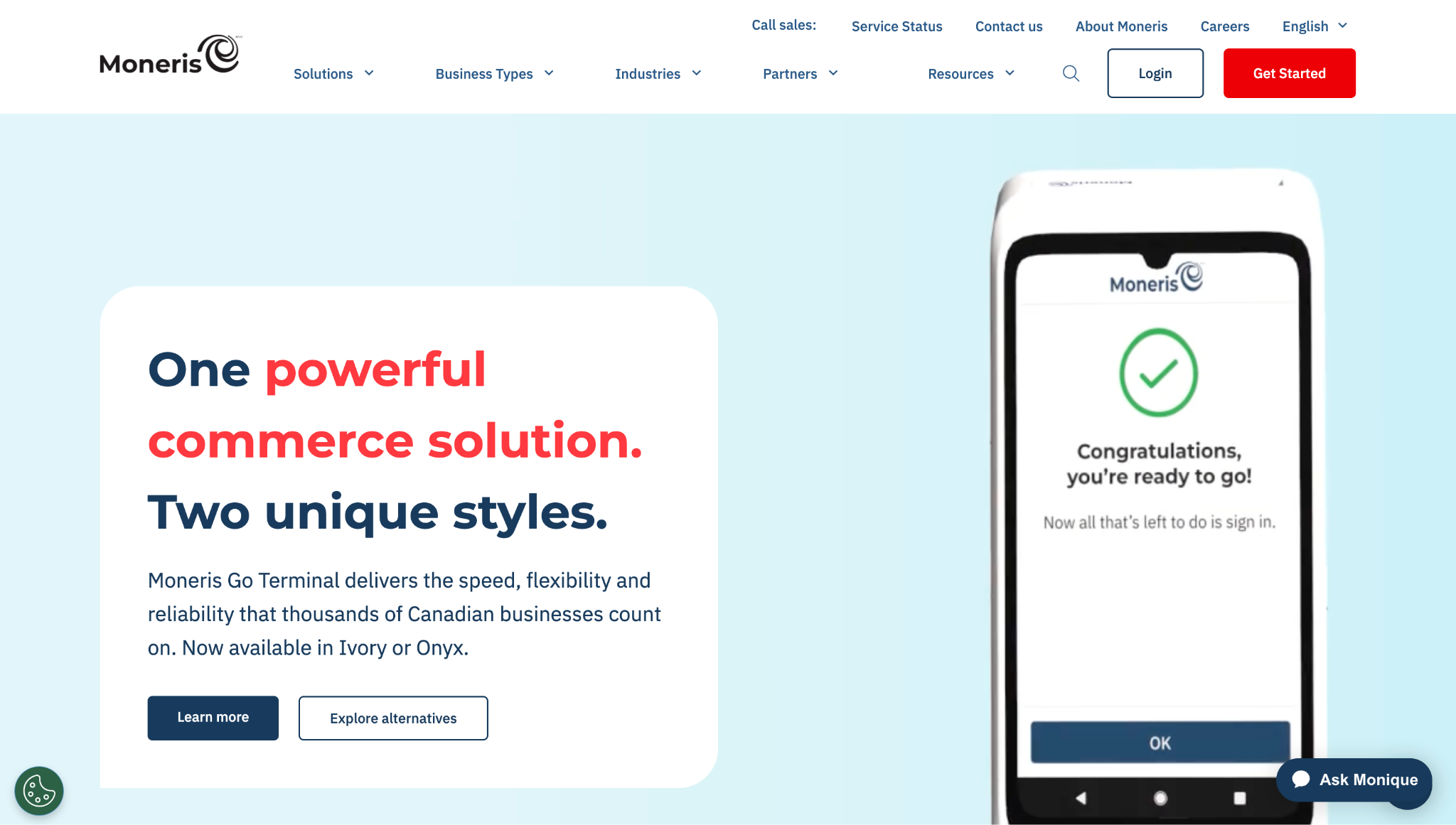
Moneris is Canada’s largest domestic payment processor and processes billions of transactions annually across hundreds of thousands of Canadian merchants. Owned jointly by RBC and BMO, Moneris is deeply integrated into the Canadian financial system and is particularly popular among established businesses looking for domestic infrastructure and long-term banking relationships.

Moneris supports both in-person and online payment processing while offering terminals, mobile payment solutions, e-commerce integrations, and fraud protection systems tailored to Canadian regulatory requirements.

Features and Benefits:
  • Deep Canadian banking integration: Strong ties with major Canadian financial institutions.
  • Merchant account infrastructure: Dedicated merchant accounts provide additional financial separation and security.
  • Supports online and in-person payments: Offers terminals, mobile payments, and e-commerce processing.
  • Large-scale transaction reliability: Processes billions of payments annually across Canada.
  • Canadian compliance support: Built around Canadian payment and financial regulations.
  • Domestic customer support network: Canadian-based merchant service and onboarding support.
  • Fraud protection and security tools: Helps businesses reduce transaction risk and maintain compliance.
  • Strong enterprise and retail presence: Widely used by established Canadian merchants.

6. Helcim

Helcim

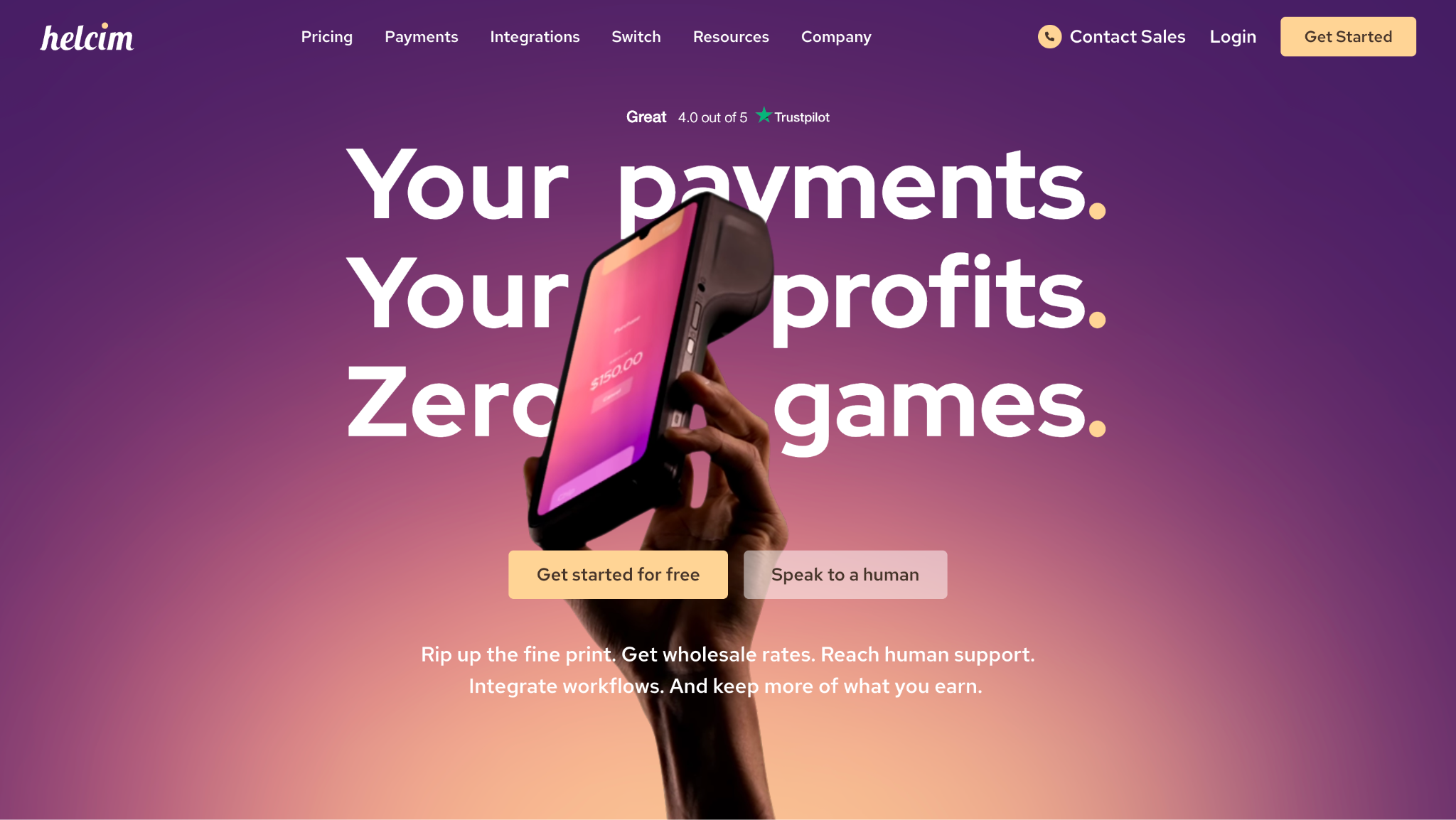
Helcim is a Calgary-based payment processor that has built a strong reputation in Canada by focusing heavily on pricing transparency, interchange-plus billing, and customer-friendly merchant terms. 

The company has become particularly popular among Canadian businesses that process moderate to high transaction volumes and want predictable pricing without long-term contracts, PCI fees, setup fees, or cancellation penalties. Helcim also bundles several business tools directly into the platform instead of charging separately for every feature.

For businesses that value simplicity, transparency, and lower long-term payment costs, Helcim is one of the strongest Canadian options available in 2026.

Features and Benefits:
  • Interchange-plus pricing model: Businesses can see exactly what card networks charge versus what Helcim earns, improving pricing transparency.
  • Automatic volume discounts: Processing rates decrease automatically as transaction volume grows without requiring negotiation.
  • No contracts or cancellation fees: Businesses can scale without being locked into long-term commitments.
  • Free payment tools included: Includes invoicing, payment gateway access, virtual terminals, recurring billing, and online store functionality.
  • Tap to Pay on iPhone: Allows businesses to accept contactless payments directly through mobile devices.
  • Fast deposits: Next-business-day deposits available for supported Canadian banks.
  • Strong Canadian customer support: Support teams operate directly from Canada and consistently receive strong merchant reviews.
  • Lower costs for growing businesses: Particularly attractive for merchants with larger average order values or increasing payment volume.

7. Adyen

Adyen

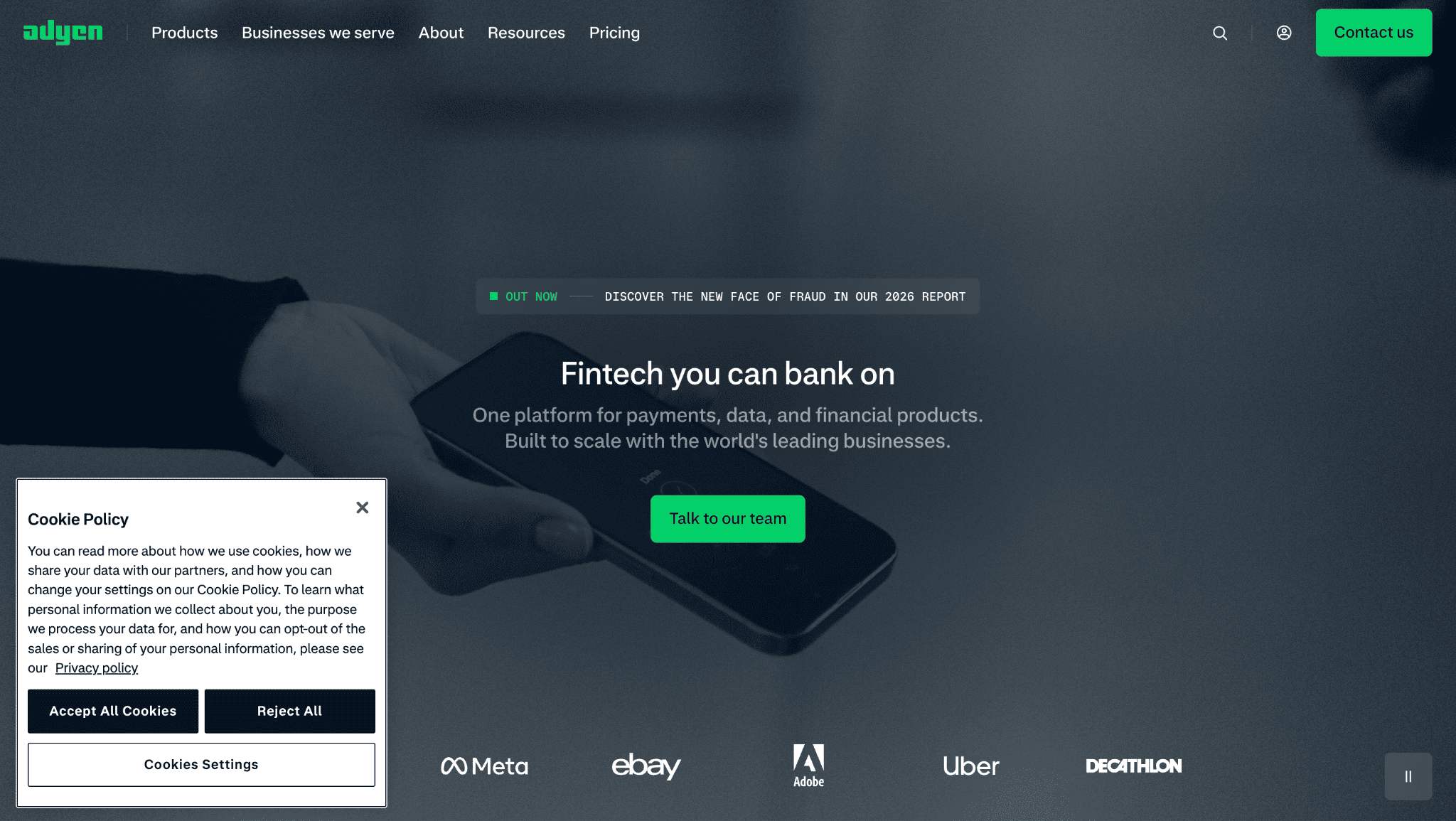
Adyen is one of the most sophisticated enterprise-grade payment platforms in the world and powers payments for major global brands including Uber, Spotify, Microsoft, and eBay. Unlike traditional processors that rely on multiple third-party banking relationships, Adyen operates as a fully integrated payment gateway, processor, and acquiring bank in many markets, allowing businesses to manage global payments through one infrastructure.

Adyen is built primarily for large-scale international businesses that operate across multiple regions, currencies, and sales channels. Its strongest advantage is omnichannel payment unification, where online, mobile, app-based, and in-store transactions all operate through one reporting ecosystem.

Features and Benefits:
  • Unified omnichannel payments: Consolidates online, mobile, app, and in-store payments into one infrastructure.
  • Interchange++ pricing transparency: Businesses receive detailed visibility into interchange fees, scheme fees, and Adyen margins.
  • RevenueProtect fraud detection: Machine-learning fraud systems monitor transactions in real time.
  • Smart payment routing: Automatically routes transactions through the most efficient and highest-approval pathways.
  • Global acquiring infrastructure: Supports payments across more than 150 currencies and international markets.
  • Advanced reporting and analytics: Businesses gain deep visibility into transaction performance and customer payment behavior.
  • Enterprise scalability: Built to support extremely high transaction volumes across multiple countries.
  • Strong compliance and risk management systems: Supports enterprise-grade operational security and payment reliability.

8. Airwallex

Airwallex

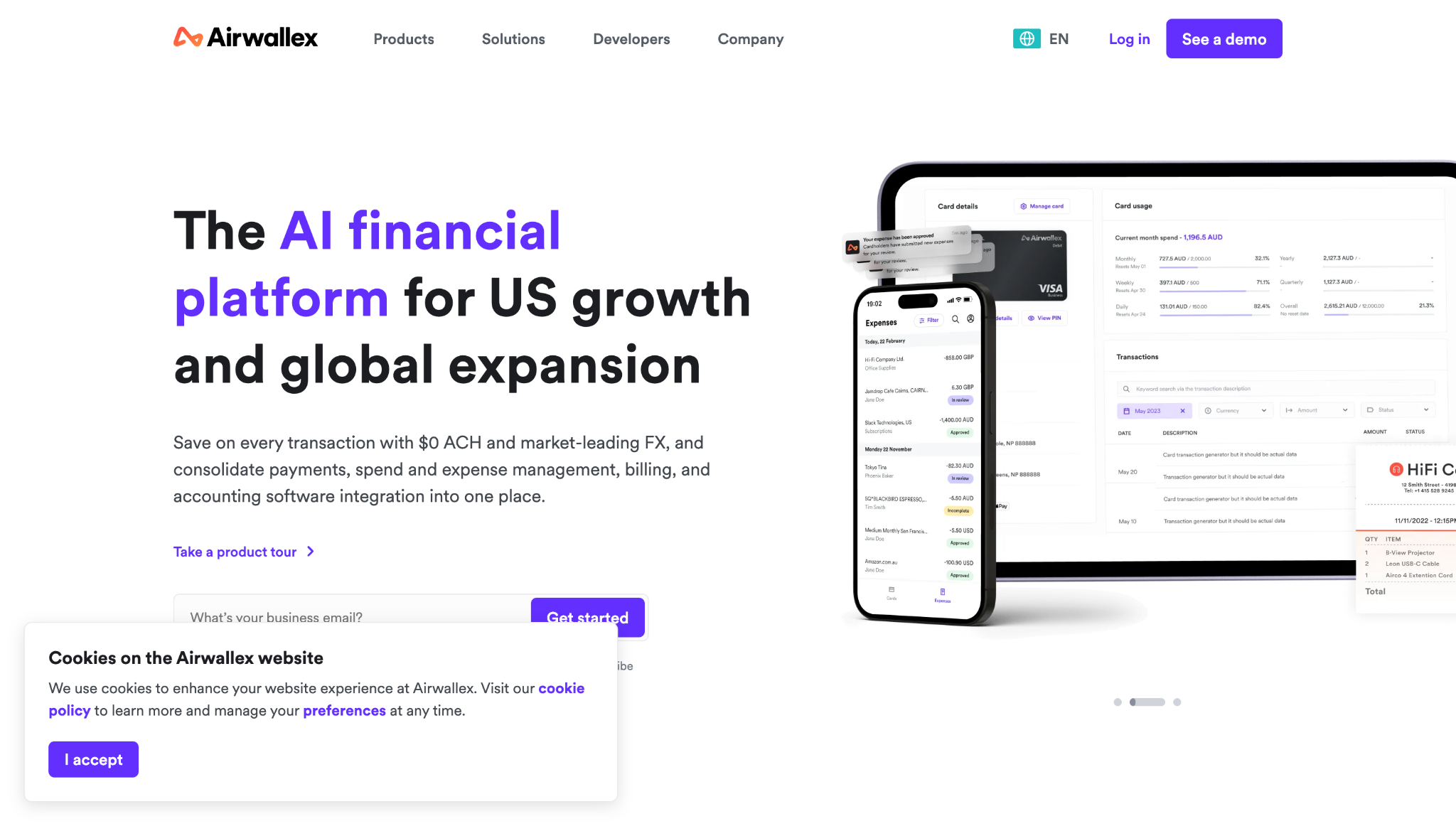
Airwallex is a modern financial infrastructure platform designed for businesses operating internationally. Instead of focusing only on payment processing, Airwallex combines global payments, multi-currency accounts, expense management, foreign exchange optimization, and international supplier payouts into one platform.

The company has grown rapidly because it solves a major pain point for businesses handling international operations: excessive bank transfer costs, slow cross-border settlements, and expensive foreign exchange margins. Airwallex bypasses many traditional banking rails by using local payment infrastructure in different countries, significantly reducing international payment friction and conversion costs.

Features and Benefits:
  • Multi-currency business accounts: Businesses can hold and manage funds across more than 20 currencies.
  • Global payment support: Send payments to suppliers and partners across 150+ countries.
  • Lower foreign exchange costs: FX conversion rates are significantly lower than traditional bank markups.
  • Local payment rails instead of SWIFT: Faster and cheaper international payment routing.
  • Corporate cards and expense management: Businesses can manage international team spending from one platform.
  • Accounting software integrations: Connects with Xero, QuickBooks, and NetSuite.
  • Cross-border operational efficiency: Simplifies global vendor payments and international customer transactions.
  • Scalable international infrastructure: Suitable for businesses growing across borders.

9. Shopify Payments

Shopify Payments

Shopify Payments is Shopify’s native payment processing system built directly into the Shopify ecosystem. Headquartered in Ottawa, Shopify has become one of Canada’s largest technology companies, and Shopify Payments was designed to simplify payment acceptance for merchants already selling through Shopify storefronts.

Its biggest strength is operational simplicity. Businesses do not need to connect separate merchant accounts or external payment gateways because payments, reporting, checkout, and order management all operate within Shopify itself. This creates a much smoother setup process for online businesses and removes many technical barriers involved in payment integration.

Features and Benefits:
  • Native Shopify integration: No external payment gateway setup or third-party connection required.
  • Unified reporting and analytics: Payments, orders, customer data, and sales reporting remain centralized within Shopify.
  • Supports multiple payment methods: Includes Apple Pay, Google Pay, Shop Pay, and major credit cards.
  • Simplified chargeback management: Merchants can handle disputes directly through the Shopify admin dashboard.
  • Eliminates additional Shopify transaction fees: Businesses avoid extra platform transaction charges when using Shopify Payments.
  • Fast onboarding process: Businesses can activate payments quickly inside existing Shopify stores.
  • PCI compliance and payment security: Built directly into Shopify’s payment infrastructure.
  • Strong ecosystem compatibility: Works seamlessly with Shopify apps, subscriptions, and storefront customizations.

10. Interac Online

Interac Online

Interac is one of the most trusted financial networks in Canada and remains a foundational part of the country’s payment infrastructure. While Interac itself is not a standalone payment processor like Stripe or PayPal, it powers debit transactions, Interac e-Transfers, and online bank-based payments used by millions of Canadians daily.

Interac’s biggest strength is consumer trust and deep banking adoption. Nearly every Canadian bank account supports Interac functionality, making it one of the most universally accessible payment methods in the country. For businesses, Interac transactions are often cheaper than traditional credit card payments because they operate through debit rails rather than credit card networks.

In 2026, supporting Interac payments is considered essential for Canadian businesses serving domestic customers, especially in retail, restaurants, service businesses, and e-commerce.

Features and Benefits:

  • Direct bank-account payments: Customers can pay online directly through their Canadian banking accounts.
  • Lower transaction costs: Debit-based processing fees are often lower than traditional credit card interchange fees.
  • Interac e-Transfer support: Widely used for invoicing, peer-to-peer payments, and small business transactions.
  • Strong consumer trust in Canada: One of the most recognized and trusted payment brands nationally.
  • Reduced chargeback exposure: Debit transactions generally carry lower fraud and dispute risk compared to credit cards.
  • Broad compatibility across processors: Supported through major Canadian processors like Moneris, Square, and Helcim.
  • Fast domestic payment infrastructure: Optimized specifically for Canadian banking systems and local transactions.
  • Essential for Canadian payment coverage: Particularly important for businesses targeting Canadian consumers directly.

Also read: Billing and Invoicing for Restaurants in 2026: Smart Practices to Follow

As we examine the top payment processors serving Canadian restaurants in 2026, consider these criteria to find the partner that best aligns with your business model and growth objectives.

How to Choose the Right Payment Processor for Your Canadian Business

The best payment processor is not always the one with the lowest transaction fee. The right choice depends on how your business operates, where your customers buy from, how fast you are growing, and how much operational control you need behind the scenes.

Before choosing a payment processor, businesses should evaluate how payments connect with the rest of their operations, not just how transactions are approved.

Here are the most important factors Canadian businesses should evaluate before making a decision.

  • Understand your business model first: A restaurant franchise, SaaS company, retail store, subscription business, and international e-commerce brand all have very different payment infrastructure needs. Choose a processor designed around your actual operational model.
  • Evaluate your sales channels: Some businesses only process online payments, while others combine in-store POS, mobile ordering, delivery apps, subscriptions, kiosks, or invoicing. Your payment processor should support all major customer touchpoints cleanly.
  • Check integration compatibility: Payment systems work best when they connect directly with your POS, accounting software, loyalty systems, inventory tools, or e-commerce platform. Poor integrations often create reporting gaps and manual reconciliation problems later.
  • Consider international payment needs: If your business handles foreign suppliers, international customers, or multiple currencies, global payment infrastructure and lower FX costs become extremely important.
  • Look beyond transaction fees: Low advertised rates can sometimes hide additional charges involving chargebacks, monthly platform fees, hardware costs, payout delays, PCI compliance fees, or currency conversion markups.
  • Prioritize operational simplicity: Complicated payment workflows slow down staff, create customer frustration, and increase support issues. Simpler systems usually scale more smoothly over time.
  • Review payout speed and cash flow timing: Faster deposits matter significantly for restaurants, retail businesses, and companies managing tight operational cash flow.
  • Assess fraud protection and security tools: Strong fraud monitoring, chargeback management, encryption, and PCI compliance help reduce financial risk as transaction volume grows.
  • Think about scalability early: A processor that works well for a startup may become limiting once transaction volume, locations, or international operations expand.
  • Evaluate customer ownership and data access: Businesses relying heavily on third-party marketplaces often lose visibility into customer behavior and retention opportunities. Direct payment ecosystems usually provide stronger customer ownership and marketing flexibility.
  • Consider support quality carefully: Payment problems affect revenue immediately. Reliable support becomes extremely important during outages, disputes, integration issues, or failed transactions.

For restaurants and multi-location food businesses specifically, payment processing decisions increasingly affect much more than transactions alone. Ordering flow, delivery management, loyalty programs, QR ordering, customer retention, and operational consistency are now closely connected to the payment ecosystem itself.

That is why many restaurant operators are moving toward integrated platforms like iOrders that combine payment processing with commission-free ordering, branded customer experiences, centralized franchise management, loyalty systems, and delivery operations instead of treating payments as a completely separate operational layer.

Ready to optimize your restaurant's payment processing? 

iOrders can help you select and implement the right payment solution while integrating our suite of restaurant management tools to maximize efficiency and profitability.

Contact iOrders today to schedule a demonstration of how our services complement these payment processors to create a seamless experience for you and your customers.

FAQs

1. What types of payments can online payment processors accept?

Most online payment processors support credit cards, debit cards, digital wallets, contactless payments, bank transfers, and mobile payment methods.

2. Are online payment processors secure?

Yes, reputable payment processors use encryption, tokenization, fraud monitoring, and PCI-compliant systems to protect payment information and reduce transaction risk.

3. How long does online payment processing take?

Most payment authorizations happen within seconds, while business payouts usually take between one to three business days depending on the processor.

4. Can businesses accept international payments through online payment processors?

Many modern payment processors support international transactions, multiple currencies, and localized payment methods for global customers.

5. What is a merchant account in online payment processing?

A merchant account is a temporary holding account where approved customer payments are stored before being deposited into the business bank account.

6. What happens if an online payment fails?

Failed payments can happen due to insufficient funds, expired cards, fraud prevention blocks, connectivity issues, or incorrect payment details entered by the customer.

Related Blogs

Maximize Your Restaurant Profits

Download a FREE Restaurant Margin Playbook
By providing a telephone number and submitting this form you are consenting to be contacted by SMS text message. Message & data rates may apply. You can reply STOP to opt-out of further messaging. Reply Help for more information. Message frequency may vary.
Thank you! Your PDF is ready.
Download
Oops! Something went wrong while submitting the form.