Book a free demo
Oops! Something went wrong while submitting the form.
June 24, 2026
For many restaurants, third-party delivery started as a simple growth channel. Turn on DoorDash or Uber Eats, reach more customers, and increase order volume without building an in-house delivery operation.
But over time, most operators realized the real challenge wasn’t getting onto delivery platforms. It was managing everything that came after.
And the scale is only growing. According to Grand View Research, online food delivery revenue in the US is projected to surpass $500 billion globally by 2030, while millions of restaurant orders continue flowing through third-party marketplaces daily. As delivery volume increases, so does operational complexity.
In this blog, we’ll break down what third-party service delivery management actually means, why restaurants rely on delivery marketplaces, the full vendor management lifecycle, the biggest operational risks restaurants face, the KPIs that matter most, and how restaurants are reducing dependency on third-party platforms while building more sustainable delivery operations in 2026.
Third-party delivery service management is how restaurants handle the operational side of working with external delivery platforms like DoorDash, Uber Eats, Grubhub, and others as part of their broader ordering ecosystem.
A third-party delivery service is a platform that acts as the middleman between a restaurant and its customers. Customers place orders through the app, the restaurant prepares the food, and a contracted driver handles the last-mile delivery. The restaurant doesn't need to hire drivers, manage logistics, or build its own ordering interface. The platform handles all of it in exchange for a commission on every order.
Managing these services well means more than just signing up and turning on a tablet. It involves keeping menus consistent across every platform, making sure incoming orders flow into the kitchen without friction, tracking the real profitability of each channel, and deciding strategically when to use third-party platforms and when to steer customers elsewhere.
The operational reality for most restaurants is that third-party delivery doesn't live in isolation. If your restaurant uses multiple apps simultaneously, orders arrive on separate tablets at the same time, one on DoorDash, another on Uber Eats, a third on Grubhub and your team is bouncing between screens during your busiest hours.
That's time lost and mistakes made. This is exactly why third-party delivery management has become its own operational discipline: the platforms are useful, but running them poorly costs money and creates chaos in the kitchen.

The honest answer is that third-party platforms offer something that's very hard to replicate on your own, especially early on: built-in audience and instant discoverability.
In the US, 4 in 10 consumers order through a third-party app at least five times a month. For a restaurant without an established delivery presence or a loyal existing customer base, not being on these platforms means being invisible to a significant portion of people who are actively looking for somewhere to order from right now.
Several operational and financial factors drive this adoption.
At the same time, relying heavily on third-party delivery providers also introduces operational tradeoffs involving commission costs, customer ownership, delivery quality control, and dependency on external platforms.
Also read: Voice AI in Food Delivery Examples and Key Use Cases
That balance between convenience and operational control is where strong third-party service delivery management becomes critical for restaurants in 2026.
The Restaurant Margin Playbook shows you how to build a direct ordering channel, own your customer relationships, and reclaim the margins delivery platforms are quietly taking.
Download the eBook →.png)
Third-party service delivery management is usually handled as a full operational lifecycle rather than a one-time vendor setup process.
For restaurants, every stage of this lifecycle directly affects customer experience, operational consistency, delivery profitability, and long-term scalability. Here’s how the full lifecycle typically works:
The first stage involves identifying and evaluating third-party providers before integrating them into restaurant operations.
Many restaurants make the mistake of choosing delivery partners based only on marketplace popularity or commission pricing. In reality, the long-term operational impact matters far more.
Restaurants should evaluate:
At this stage, restaurants also define Service Level Agreements (SLAs), which establish operational expectations between both parties.
These agreements usually outline:
Without clearly defined operational expectations early on, restaurants often struggle to hold vendors accountable once service quality problems begin appearing.
For growing restaurant groups and franchises, vendor assessment becomes even more important because delivery inconsistencies across locations can damage brand reputation quickly.
Once a provider is selected, the next challenge is integrating that service smoothly into the restaurant’s daily operations.
This stage is often underestimated, but poor onboarding creates many of the operational issues restaurants later experience with third-party delivery systems.
The onboarding process usually involves:
For restaurants handling dine-in, takeaway, QR ordering, direct online ordering, and third-party marketplaces simultaneously, operational synchronization becomes critical.
A disconnected onboarding process can lead to:
The smoother the integration phase is, the easier it becomes for restaurants to maintain operational consistency during busy service periods.
After the system is operational, restaurants need continuous visibility into how third-party providers actually perform over time.
This is where many restaurants lose operational control. They outsource delivery, but they stop actively monitoring the customer experience connected to it.
Strong third-party delivery management requires ongoing performance tracking across operational, financial, and customer-service metrics.
Restaurants commonly monitor:
Monitoring these metrics helps restaurants identify operational weaknesses before they escalate into larger customer retention problems.
For example:
Without structured monitoring, restaurants often discover delivery problems only after negative reviews or declining repeat business begin appearing publicly.
Also read: 5 Best Food Delivery Apps in Toronto for Restaurants in 2026
As restaurants rely more heavily on external delivery ecosystems, operational risk increases alongside convenience.
Third-party delivery providers often gain access to:
That means restaurants need active risk management processes, not just vendor relationships.
This stage focuses on reviewing:
Restaurants also need contingency planning for situations like:
One of the biggest risks restaurants face today is over-dependency on a single third-party ecosystem without maintaining operational flexibility elsewhere.
That is why many restaurants are now balancing third-party delivery with direct ordering systems, QR ordering, and first-party customer channels to reduce operational exposure.
Eventually, restaurants may decide to replace a vendor, reduce dependency on certain marketplaces, or transition toward different delivery systems entirely.
This final lifecycle stage is often ignored, but poor offboarding creates long-term operational and security issues.
A structured offboarding process typically includes:
Without proper transition planning, restaurants may experience:
For restaurant operators in 2026, third-party service delivery management is no longer just about outsourcing convenience. It has become a core operational discipline focused on maintaining visibility, accountability, customer experience, and long-term control across increasingly complex delivery ecosystems.
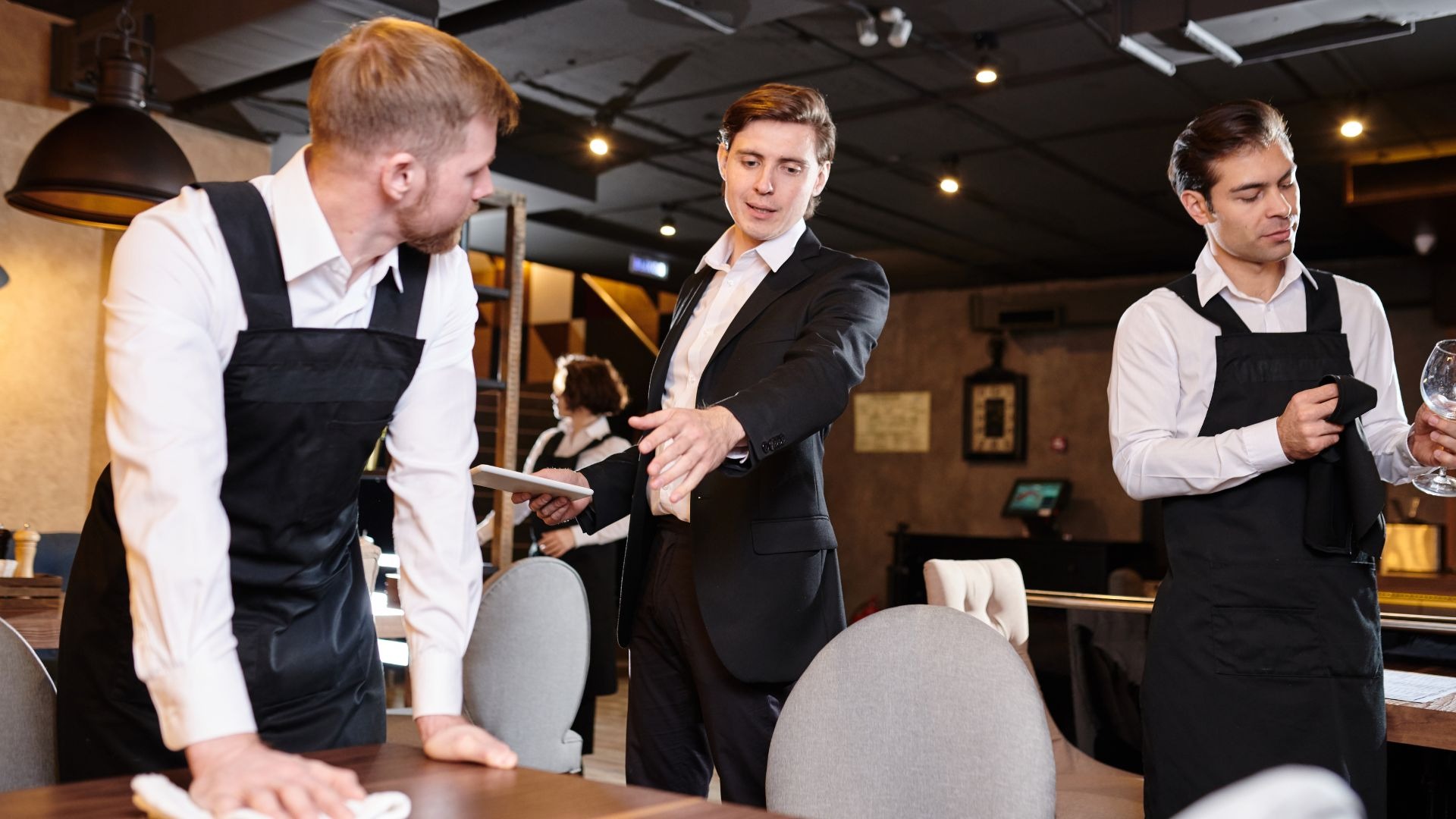
Restaurants cannot improve third-party delivery performance without measuring it consistently. Once multiple vendors, delivery platforms, outsourced drivers, and digital ordering channels become part of daily operations, operational visibility becomes critical.
That is where KPIs help.
Tracking the right metrics allows restaurants to identify delivery bottlenecks, operational inefficiencies, customer experience gaps, and vendor performance issues before they begin affecting repeat business or brand reputation more seriously.
Here are the most important KPIs restaurants should monitor when managing third-party service delivery operations.
These KPIs become even more important for restaurant groups and franchises managing multiple locations simultaneously. Without centralized visibility, operational issues often remain hidden until they begin affecting customer retention, reviews, and profitability across several stores.
The strongest third-party delivery management strategies focus on continuous operational improvement, not just vendor oversight alone.
Third-party delivery services help restaurants scale faster, expand customer reach, and simplify logistics operations. But as restaurants become more dependent on outside platforms and vendors, they also lose a certain level of operational control.
That dependency creates several operational, financial, and customer experience risks that restaurants need to manage carefully.
One of the biggest risks is inconsistent customer experience. Customers usually blame the restaurant, not the delivery provider, when food arrives late, cold, damaged, or incorrect. Even if the restaurant prepared the order correctly, the delivery experience still affects customer reviews, repeat business, and overall brand perception.
Restaurants also face visibility problems when multiple third-party systems operate separately. Orders may flow through different marketplaces, payment providers, driver networks, and POS integrations at the same time, making it harder to track performance consistently across locations.
Other major risks include:
Restaurants also risk losing direct customer relationships over time. Many marketplace platforms control customer data, ordering behavior insights, and communication touchpoints, making it harder for restaurants to build loyalty independently.
Also read: Top 10 Delivery App Complaints That Restaurant Owners Face in 2026
For multi-location restaurants and franchises, these challenges become even more complex because operational inconsistency across stores can quickly affect brand reputation at scale.
Most restaurants are not trying to eliminate third-party delivery completely. The real goal is reducing over-dependency while regaining more operational control, customer ownership, and profitability over time.
That shift usually happens gradually through a hybrid ordering strategy.
Instead of relying entirely on external marketplaces, restaurants increasingly invest in direct ordering channels that allow them to build stronger first-party customer relationships while still using third-party delivery providers where necessary.
Some of the most effective strategies include:
Restaurants adopting this approach often gain:
The reason most restaurants stay dependent on third-party platforms isn't because they want to. It's because building a credible direct ordering alternative has historically required technical resource, time, and ongoing maintenance that most operators simply don't have.
iOrders removes that barrier. The platform gives restaurants a fully commission-free direct ordering channel, website ordering, QR ordering, and a white-label branded mobile app. Every order that moves from a third-party platform to iOrders is margin the restaurant keeps in full.
The loyalty and rewards system ties directly into that ordering channel, so every direct order builds a customer profile you own, contact details, order history, preferences, that you can use for targeted campaigns, re-engagement, and repeat visit incentives. That's the customer data that third-party platforms have been collecting on your behalf and keeping for themselves.
For restaurants doing real delivery volume, the shift doesn't need to be all at once. Even moving 20% to 30% of repeat orders to a direct channel produces meaningful annual margin recovery. iOrders is built to make that migration straightforward.
See how iOrders works and what the numbers look like for your restaurant!
.webp)
1. What is the difference between third-party delivery and direct delivery?
Third-party delivery uses external platforms and driver networks to fulfill orders, while direct delivery is managed through the restaurant’s own ordering channels and operational systems.
2. Why do restaurants struggle with multiple delivery platforms?
Managing separate tablets, menus, payment systems, and order flows across different marketplaces often creates operational confusion, delayed fulfillment, and higher error rates during busy service hours.
3. What are Service Level Agreements (SLAs) in restaurant delivery?
SLAs are operational agreements that define delivery expectations such as delivery speed, order accuracy, refund handling, support response times, and vendor accountability standards.
4. Why is customer data ownership important for restaurants?
Owning customer data allows restaurants to build loyalty programs, run targeted promotions, encourage repeat orders, and maintain direct customer relationships outside marketplace platforms.
5. How can restaurants track delivery profitability accurately?
Restaurants should monitor commission costs, refund rates, average order value, delivery-related operational costs, and repeat customer behavior across every ordering channel.