April 15, 2026
The global quick-service restaurant market reached $1.16 trillion in 2026, driven by demand for fast and convenient dining. As order volumes grow, restaurants face tighter margins due to rising labor, food, and delivery costs. At the same time, more orders are shifting to digital channels, changing how QSRs manage demand and operations.
A large share of these digital orders now comes through third-party platforms. While they help increase reach, they also introduce high commissions, limited access to customer data, and disconnected systems. As a result, many restaurants struggle to maintain control over operations and customer relationships as they scale.
In this blog, you'll learn the QSR meaning, how the model works, and ways to improve margins, operations, and customer control.
QSR stands for quick-service restaurant, a type of restaurant designed to serve food quickly, with minimal wait time and limited table service. It is built for fast ordering and simple service processes, allowing you to handle more customers efficiently.
In a QSR setup, customers usually place orders at a counter, kiosk, website, or mobile app. Payment is made upfront, and the food is either taken away, delivered, or consumed with limited service. This structure helps you reduce service time while keeping operations simple and consistent.
Common examples include global and regional chains that operate with fixed menus, fast preparation processes, and repeatable workflows. The goal is not just quick food, but a system that supports scale, cost control, and consistent customer experience.

A QSR operates on a system built for speed, consistency, and cost control. Each feature is designed to simplify operations and reduce manual effort. For your restaurant, this directly impacts margins, staff efficiency, and your ability to scale without relying heavily on third-party platforms.
Here are the key features that define how a QSR functions in practice:
These features work together to create a system that supports speed, cost control, and operational consistency. More importantly, they allow you to scale operations while reducing dependency on third-party platforms and maintaining full control over your customer relationships.
To support this level of operational visibility and control, platforms like iOrders provide analytics that help you track food cost trends over time, identify discrepancies early, and make more informed decisions.
Also Read: Interactive Restaurant Technology Trends Changing How Guests Order
To better understand how these principles work in practice, let’s look at QSR businesses operating at different scales.

The QSR model in Canada includes a mix of global chains and independent restaurants, all operating on similar principles of speed, consistency, and structured workflows. While their scale differs, they follow comparable systems for managing orders, maintaining menus, and delivering a consistent customer experience.
Large QSR chains demonstrate how standardized operations and digital ordering systems help manage high order volumes across multiple locations.
Independent QSRs highlight how smaller operators can compete effectively by focusing on a clear menu, consistent execution, and efficient service.
These examples show that success in the QSR model is not limited to large chains. Whether operating a single location or multiple outlets, the core requirements remain consistent: efficient order management, consistent execution, and the ability to serve customers quickly while maintaining control over operations, pricing, and customer data.
Platforms like iOrders support this by allowing restaurants to take direct orders and manage customer relationships without relying entirely on third-party marketplaces.
While these examples show how the QSR model is applied in practice, let’s now compare it with other dining formats that differ in service style, pricing, and customer experience.
The Restaurant Margin Playbook shows you how to build a direct ordering channel, own your customer relationships, and reclaim the margins delivery platforms are quietly taking.
Download the eBook →.png)
QSRs and fast-casual restaurants are both built around quick service, but they differ in how they balance speed, food quality, pricing, and customer interaction.
QSRs focus on standardized menus, rapid preparation, and high order volume, while fast-casual formats place more emphasis on fresh ingredients, customization, and a slightly enhanced dining experience. These differences influence how each model operates, the systems they use, and the type of customer it serves.
Key Differences
Also Read: 7 Ways AI Restaurant Technology Boosts F&B Profit in India (2026)
On the surface, QSR operations appear straightforward, but in practice, they involve several challenges that affect performance and growth. Let’s break them down.

QSR operations are built for speed and scale, but rising costs, digital dependency, and customer expectations introduce ongoing challenges. Addressing these requires practical approaches that improve control over orders, operations, and customer relationships while maintaining efficiency.
QSRs face rising expenses for labor, rent, raw materials, and delivery logistics, which directly impact margins.
Best Practices:
Many QSRs rely on aggregators for online orders, which often involve high commissions and limited access to customer data.
Best Practices:
High order volumes can lead to errors, delays, and inconsistent service during peak hours.
Best Practices:
Improper inventory tracking can lead to stockouts, overstocking, or food waste.
Best Practices:
As QSRs scale, maintaining consistent quality, taste, and service becomes more difficult.
Best Practices:
The QSR market is highly competitive, making it difficult to retain customers and build loyalty.
Best Practices:
These challenges highlight that while the QSR model is designed for efficiency, long-term success depends on how effectively operations, costs, and customer relationships are managed. Businesses that adopt structured processes and reduce dependency on external platforms are better positioned to maintain control and improve margins.
Now let’s see how iOrders helps QSRs manage orders, customer data, and operations through a unified system.
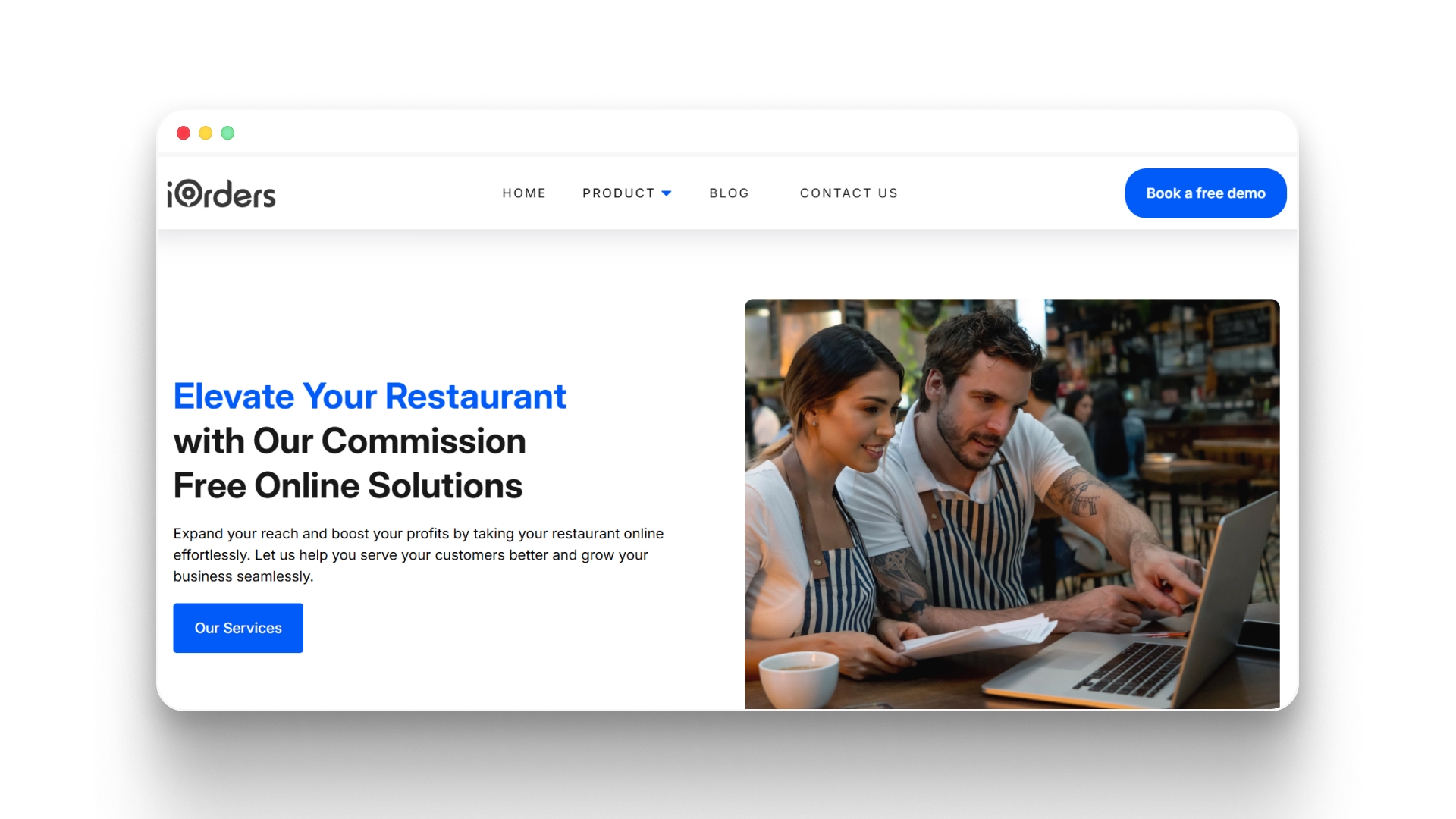
Managing multiple systems and third-party platforms can reduce your control over orders, margins, and customer relationships. iOrders provides QSRs with a unified system that combines direct online ordering, branded digital presence, payments, and customer engagement tools.
To support your operations and growth, here are the key capabilities that make a difference:
When these capabilities work together, QSRs can streamline daily operations, maintain consistency across channels, and build direct relationships with customers. This creates better visibility into orders, improves coordination across teams, and supports more controlled growth over time.
QSR operations require consistent coordination across ordering, preparation, and customer interaction to maintain service quality at scale. As processes expand across multiple channels, maintaining visibility, control, and consistency becomes critical to sustaining performance. A well-organized system helps align daily operations with long-term business goals while keeping execution predictable and manageable.
iOrders supports this transition by enabling QSRs to move away from fragmented systems and dependence on third parties toward a more unified, direct ordering setup. With capabilities such as branded ordering channels and centralized management, it helps restaurants maintain better control over daily operations. At the same time, customer data ownership improves visibility into orders and enables more informed decision-making.
Request a demo today to see how it can support your ordering, operations, and customer management.
.webp)
1. What technology stack is commonly used in modern QSR operations?
Modern QSRs use POS systems, kitchen display systems, online ordering platforms, and payment gateways. These tools integrate to manage orders, track inventory, and streamline communication between front-of-house and kitchen teams, resulting in faster, more accurate service.
2. How do QSRs manage peak-hour demand efficiently?
QSRs manage peak demand through pre-defined workflows, staff allocation based on traffic patterns, and ingredient preparation in advance. Kitchen zoning, order batching, and real-time order tracking systems help maintain speed and reduce delays during high-volume periods.
3. What role does data analytics play in QSR growth?
Data analytics helps QSRs understand customer behavior, peak ordering times, menu performance, and revenue trends. These insights support better decision-making around pricing, inventory planning, promotions, and resource allocation to improve overall operational outcomes.
4. How can QSRs reduce dependency on third-party aggregators?
QSRs can reduce dependency by adopting direct ordering channels such as branded websites, mobile apps, and QR-based ordering. Building owned customer databases and running loyalty programs also helps shift repeat customers away from aggregator platforms.
5. What factors influence customer retention in QSRs?
Customer retention depends on consistent food quality, quick service, reliable delivery, and personalized engagement. Loyalty programs, targeted offers, and smooth ordering experiences across channels also play a key role in encouraging repeat visits.