January 5, 2026
Many restaurants begin offering delivery after noticing repeat phone orders and regular customers asking for food at home. The initial response is often positive, but the operational reality becomes clear within weeks. Order management grows complicated, delivery costs rise, and customer information stays fragmented across platforms.
As delivery volume increases, restaurants are forced to make decisions that affect margins, menu pricing, and staff workload. Without the right structure in place, delivery can create more friction than revenue.
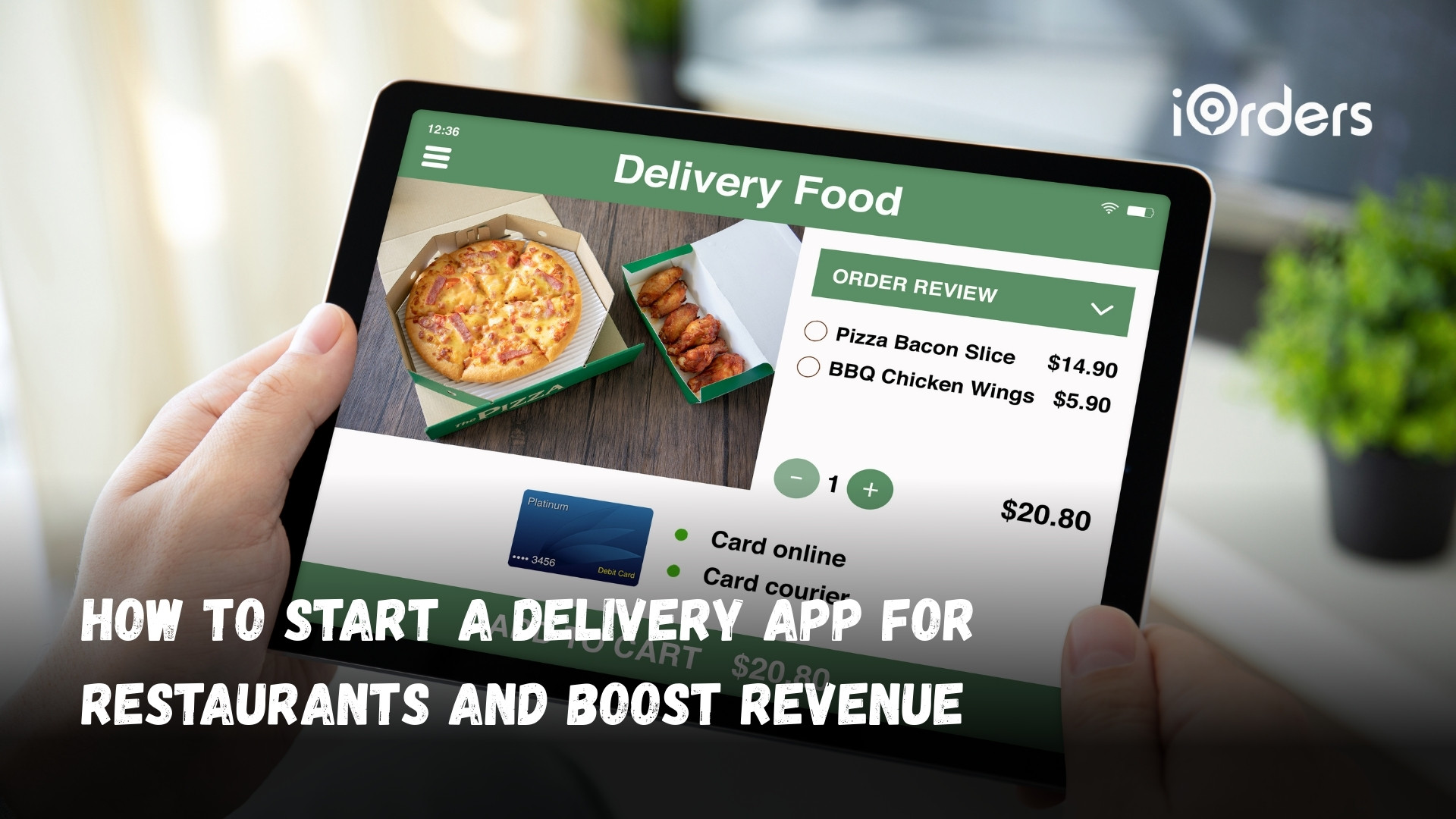
A well-chosen delivery app for restaurants helps centralize orders, support direct customer relationships, and create a delivery setup that remains profitable as demand grows. This guide explains how to build that system step by step.
Before adding delivery, restaurants need clear answers about demand, costs, and operational impact. Begin with your own restaurant data to review current takeout orders, peak hours, average ticket size, and items that already travel well. This information shows whether delivery can scale without disrupting kitchen flow.
Next, evaluate the local delivery environment to understand what customers already expect. Focus on factors that directly influence order volume and repeat business:
Additionally, pay attention to how competitors manage menu pricing and packaging for delivery.
A delivery model can impact costs, staffing, customer experience, and daily operations. Restaurants should select an approach that fits order volume, available staff, and long-term profit goals.
Some restaurants manage delivery using their own drivers, while others rely on third-party logistics providers for fulfillment. Each option has practical trade-offs that should be reviewed carefully.
1. In-House Delivery
In-house delivery works best for restaurants with consistent order volume and the ability to manage drivers directly. It offers full control but requires ongoing operational oversight.
Key considerations include:
2. Third-Party Delivery
Third-party logistics providers handle delivery without taking a percentage of the order value. Restaurants maintain branding while outsourcing driver management.
Key considerations include:
Here’s a quick comparison between the two models:
Many prefer to combine both approaches based on order volume and staffing availability. A delivery app for restaurants helps manage either model by centralizing orders, coordinating fulfillment, and keeping customer data within the restaurant’s system.
Also Check: A Guide To Food Delivery Service For Restaurants.
Before accepting delivery orders, restaurants must confirm that their business registration and permits allow off-premise sales. Requirements vary by city and province or state, so local verification is essential.
In Canada and North America, restaurants typically need the following approvals in place:
Restaurants using third-party delivery drivers should also review contracts to confirm liability coverage and compliance responsibilities. Now, the next step is selecting technology to manage orders, streamline delivery, and keep operations running smoothly.
Recommended: Restaurant Business License Requirements: Types & Checklist.
Efficient delivery operations depend on the right combination of systems to handle orders, route them to the kitchen, and manage fulfillment. Restaurants need technology that centralizes operations, reduces errors, and supports direct customer engagement. iOrders is designed to fit seamlessly into this stack, helping restaurants streamline delivery while maintaining control over orders and customer data.
Key components of an effective delivery technology stack include:
iOrders brings all these capabilities together into a single solution built specifically for restaurants looking to run delivery efficiently. You can book a demo here to get started!
A delivery menu should support speed, consistency, and cost control. Restaurants often lose margin by offering their full dine-in menu without adjusting for delivery conditions.
Start by treating delivery as a separate channel with its own performance criteria. Every item should justify its place based on demand, prep time, and delivery reliability.
When building a delivery-focused menu, evaluate items using these criteria:
Once your menu is built for delivery, the next step is ensuring orders travel well from the kitchen to the customer.
Also Check: Automatic Menu Ordering System for Hotels and Restaurants.
Set Up Packaging and Logistics
Packaging affects food quality, brand perception, and repeat orders. Restaurants should test packaging under real delivery conditions before launch. This includes temperature retention, stacking, and spill resistance.
Key packaging and logistics decisions include:
After logistics are in place, delivery performance depends on the people handling each order.
Recommended read: Top 22 Food Packaging Ideas to Elevate Your Brand.
Restaurants using in-house drivers must treat delivery as a customer-facing role, not a support task. Drivers influence customer satisfaction as much as food quality. Hiring should focus on reliability and communication, not just availability. Training should be structured and repeatable.
Training programs should include:
Restaurants using third-party drivers should still define service expectations internally. Once your delivery team is in place, compliance and safety requirements need to be addressed.
Ensure Legal and Safety Compliance
Delivery introduces risks related to food safety, insurance, and liability. Restaurants should address compliance before accepting the first order.
Requirements vary by region, but most issues arise from overlooked details rather than missing licenses.
Key areas to review include:
Clear documentation reduces risk during inspections or disputes. Now, the next challenge is generating demand.
Also Read: Top Strategies to Get More Repeat Customers for Restaurants.

A delivery launch should focus on customers who already trust your restaurant. Early adoption often comes from existing diners, not new discovery. Marketing should direct customers to channels you control and can measure.
Effective launch actions include:
Promotions create initial demand for delivery, while retention programs help stabilize revenue over time.
Delivery profitability improves with repeat orders. Restaurants should plan retention before focusing on acquisition. Retention programs work best when tied to direct ordering behavior.
Actionable retention tactics include:
Once retention programs are in place, delivery operations should be tested, refined, and scaled carefully.
Also Check: Proven Food & Beverage Loyalty Programs to Boost Retention.
Delivery should be tested before full expansion. Testing identifies operational gaps without overwhelming staff. Start with limited hours, a focused menu, or a smaller delivery radius.
During testing and scaling, review:
Testing and scaling delivery highlights how closely ordering, delivery, and customer data are connected. Instead of managing each area in isolation, restaurants can streamline operations by using an integrated platform like iOrders.
Once a restaurant sets up delivery, the real challenge is keeping it profitable and manageable as order volume grows. This requires a delivery app for restaurants that supports direct ordering, flexible delivery fulfillment, and customer ownership without adding operational burden.
iOrders gives restaurants a way to manage delivery through their own channels while maintaining control over pricing, branding, and customer relationships.
If you want to see how iOrders supports a delivery setup that stays under your control, book a demo today!
Starting a delivery service requires planning, operations, and a system that supports your goals without overwhelming staff. From choosing the right delivery model to optimizing packaging and training personnel, each step shapes the efficiency and profitability of your delivery operations.
The restaurants that succeed are those that maintain control over their orders, data, and customer relationships while keeping processes simple and scalable. Choosing the right technology is a critical part of that foundation.
iOrders helps centralize orders, manage delivery logistics, and retain ownership of your customers, all without commission fees. Connect with our team today and take the next step toward a profitable, manageable delivery system.
1. How do I start a delivery service for my restaurant?
Start by assessing demand, choosing a delivery model (in-house or third-party), optimizing your menu for delivery, and selecting technology to manage orders efficiently. Clear planning ensures a smooth launch.
2. What technology do I need to run a delivery service for my restaurant?
You need a system that centralizes orders, connects to your POS, and allows direct customer interaction. A delivery app for restaurants like iOrders streamlines ordering, fulfillment, and customer data management.
3. Should I hire drivers or use a third-party delivery service?
It depends on order volume, staffing capacity, and cost goals. In-house drivers give full control, while third-party logistics handle delivery without commissions and scale easily. Many restaurants use a hybrid approach.
4. How can I ensure my delivery service for my restaurant is profitable?
Focus on optimizing menu items for travel, reducing packaging costs, controlling delivery radius, and managing labor efficiently. Direct ordering channels help avoid high commissions and retain revenue.
5. How do I build customer loyalty through a delivery service for my restaurant?
Offer rewards, incentives, and targeted promotions for repeat orders. Collect customer contact information and engage them through direct channels to encourage consistent ordering and long-term retention.