January 5, 2026
As a restaurant owner, you put serious thought into your menu. You price items carefully, promote bestsellers, and rely on staff to upsell when possible. Yet once customers order online, that strategy often disappears.
Most guests reorder the same familiar items, first-time diners hesitate, and high-margin dishes rarely get the attention they deserve during busy hours. At the same time, every order already contains valuable insights. Past purchases, ordering time, dietary preferences, and channel behavior quietly reveal what each customer is likely to want next.
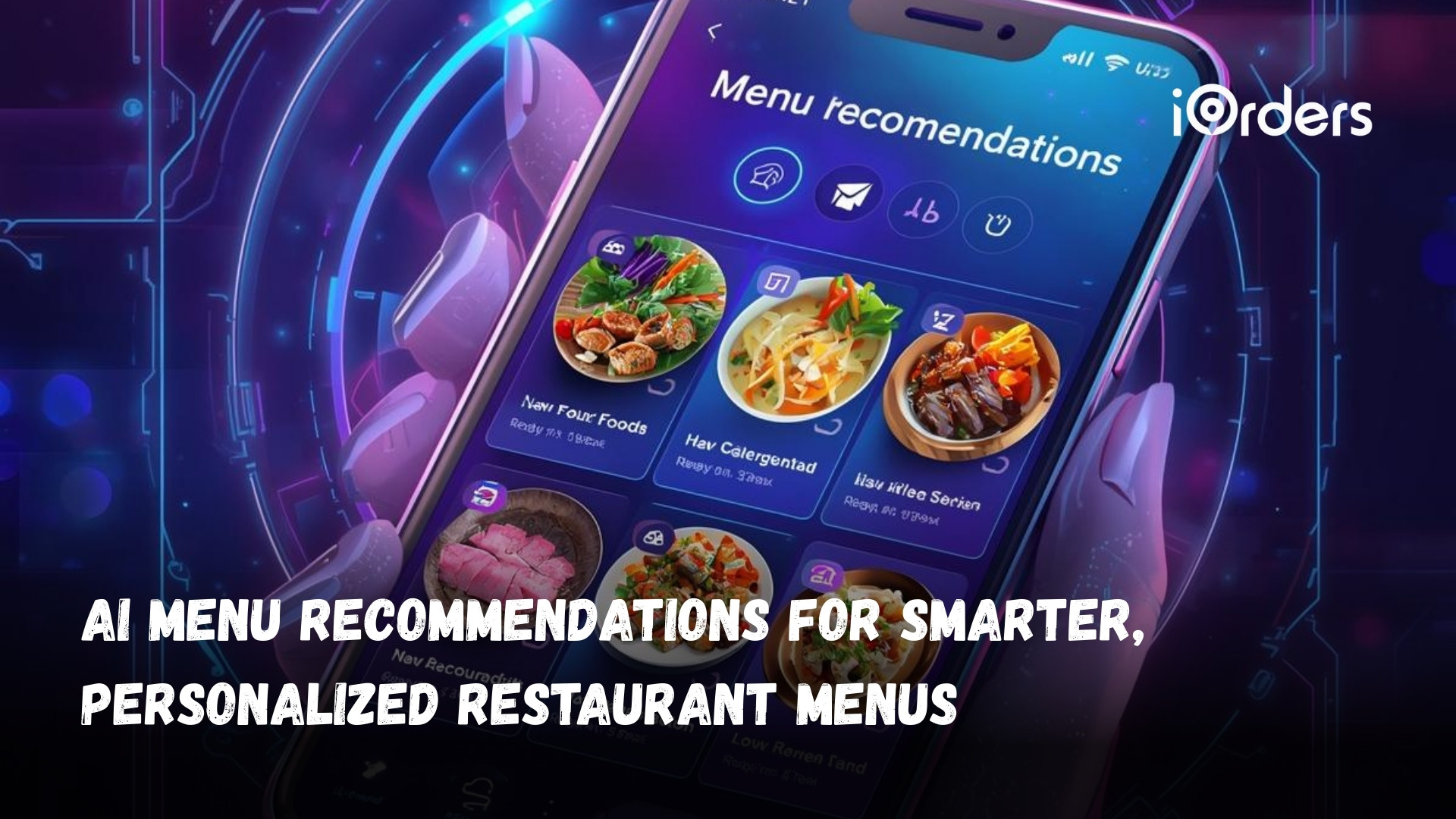
AI menu recommendations turn those signals into real-time suggestions, helping restaurants personalize menus automatically. In this blog, you will explore how AI tailors menus, adapts to context, integrates with operations, and drives measurable results for modern restaurants.
AI menu recommendations use artificial intelligence to suggest menu items based on customer behavior, preferences, and real-time context. Instead of showing the same menu to everyone, AI adapts what customers see based on data-driven insights.
These systems analyze past orders, browsing patterns, time of day, order type, and dietary signals to predict what a customer is most likely to choose. Over time, the recommendations become more accurate as the system learns from every interaction.
Unlike fixed menus or manual upselling, AI-driven recommendations adjust automatically without staff intervention. This allows restaurants to guide choices consistently across online ordering channels while reducing guesswork and operational effort.
Recommended: Touchless Restaurant Technology for Smarter Ordering and Payments.
.jpg)
AI-powered menu recommendations become most effective when they learn from repeat behavior. Every returning customer leaves behind patterns that reveal preferences, favorite items, and ordering habits. When AI analyzes this data, it can surface suggestions that feel familiar yet relevant, instead of generic or random.
Over time, these personalized recommendations help restaurants move beyond static menus. Customers see items aligned with their tastes, which increases confidence, speeds up decisions, and encourages add-ons. This approach naturally supports better upsells and a higher average order value without relying on manual prompts.
To personalize effectively, AI looks at several repeat signals, including:
Restaurants benefit most when AI has access to clean, first-party data. Platforms like iOrders allow owners to capture and utilize this information directly from their own ordering channels. This further enables more accurate personalization and improved customer engagement.
Diners often have specific dietary needs, from vegetarian and vegan preferences to allergen sensitivities. AI menu recommendations identify these patterns from past orders and signals, surfacing suitable options automatically.
This reduces ordering friction, builds customer confidence, and encourages repeat visits through a more thoughtful, inclusive experience.
Key ways AI adapts menus for dietary and customer needs:
Beyond individual preferences, timing and context play a critical role in shaping what customers are most likely to order.
Also Read: 7 Proven Ways to Improve Guest Experience and Loyalty.
AI menu recommendations use situational intelligence to make ordering more relevant and timely. Instead of showing the same items to every customer, menus adjust based on when and how an order is placed.
Key contextual signals AI uses include:
These contextual insights help restaurants surface the right items at the right moment. Customers decide faster, high-margin dishes gain visibility, and operations run more smoothly during both peak and slower hours.
Also Check: Guide to Restaurant Demand Planning for Improved Management.
Once timing and context are accounted for, the next layer focuses on how AI learns, predicts, and adapts in real time.
.jpg)
AI uses machine learning to help restaurants make smarter menu decisions. Predictive analytics allow systems to forecast which items are likely to be popular at specific times, helping operators plan inventory, staffing, and promotions more effectively.
Key ways machine learning improves menu decisions include:
Restaurants gain additional benefits when AI integrates directly with their POS system. You can achieve this by implementing iOrders to ensure smooth, real-time data flow from every order, reducing manual tracking and letting staff focus on service. This combination of predictive and real-time intelligence makes menus smarter, operations more efficient, and customer experiences more personalized.
AI menu recommendations can also suggest profitable combos and optimize pricing to boost revenue. By analyzing past orders, customer preferences, and item popularity, AI identifies combinations that are likely to appeal to each diner while increasing overall spend.
Key ways AI supports dynamic pricing and combo suggestions include:
Restaurants can keep full control over their menu and pricing while letting AI insights guide decisions. With tools like iOrders, operators can see real-time trends, track customer preferences, and adjust recommendations effortlessly, all within their own system, without relying on third-party platforms.
For AI menu recommendations to be effective, they must remain consistent across all ordering channels. Customers expect a seamless experience whether they browse online, scan a QR code, or use a mobile app. Inconsistent suggestions can confuse diners and reduce the impact of personalization.
Key benefits of maintaining channel consistency include:
You can achieve this consistency with iOrders, which ensures AI-driven recommendations stay aligned across your website, QR codes, and white-label mobile app. This unified approach helps restaurants deliver a smooth, professional, and personalized experience for every customer, no matter the channel.
AI menu recommendations become even more powerful when they connect seamlessly with loyalty programs and POS systems. By linking customer purchase history, preferences, and reward activity, AI can provide smarter, targeted suggestions that increase engagement and repeat business.
Key ways this integration adds value include:
With iOrders, restaurants can link AI recommendations to loyalty and rewards programs, tailoring offers based on past purchases and customer behavior. Staff effort is minimized, and customers receive personalized, relevant rewards across all channels, creating a seamless, data-driven experience.
.jpg)
AI menu recommendations boost personalization while streamlining operations. Automating choices lets staff focus on service, reduces errors, and speeds up orders.
Key ways AI improves efficiency include:
You can achieve this level with iOrders, which unifies AI menu recommendations with order management, POS integration, and real-time dashboards. Restaurants gain full visibility across all channels, reduce manual work, and ensure staff can focus on delivering a seamless customer experience.
AI menu recommendations enable continuous improvement through A/B testing. Restaurants can measure real customer responses instead of relying on intuition.
Key elements AI can test include:
AI measures performance using real-time data such as clicks, selections, and completed orders. High-performing variations receive greater visibility, while underperforming options are adjusted automatically.
Recommended: The Ultimate Guide to Restaurant Subscription Models.
AI menu recommendations deliver value only when they translate into measurable business outcomes. Restaurants using intelligent personalization often see improvements across revenue, efficiency, and customer retention, not just better-looking menus.
Common results driven by AI-powered recommendations include:
These gains become more sustainable when restaurants operate through direct channels. With iOrders, commission-free online ordering ensures more revenue stays in-house, while loyalty programs and smart campaigns turn AI insights into repeat business. Together, these capabilities help restaurants connect personalization directly to long-term growth and profitability.
AI menu recommendations can transform how restaurants drive revenue, improve efficiency, and strengthen customer loyalty. When integrated into a connected system, AI helps increase order frequency, boost average basket size, and reduce operational friction.
Restaurants that control their ordering channels and customer data can turn insights into smarter decisions, better-targeted promotions, and repeat business that scales.
With iOrders, restaurants can achieve these results seamlessly, converting AI-driven insights into measurable growth, higher margins, and stronger customer relationships. Schedule a demo to see how intelligent menu recommendations can make a real impact on your restaurant’s performance.
1. What are AI menu recommendations in restaurants?
AI menu recommendations use data such as past orders, preferences, timing, and behavior to suggest relevant menu items to customers. These suggestions update automatically and improve with every interaction.
2. How do AI menu recommendations increase average order value?
AI highlights add-ons, combos, and higher-margin items based on customer behavior. Relevant suggestions encourage customers to add more items without feeling pressured or overwhelmed.
3. Can AI menu recommendations work for small or independent restaurants?
Yes, AI menu recommendations scale based on order data, not restaurant size. Even small restaurants can benefit as the system learns from repeat customers and daily ordering patterns.
4. Do AI menu recommendations replace staff upselling?
AI complements staff efforts rather than replacing them. Automated suggestions reduce manual upselling pressure while allowing staff to focus on service and order accuracy.
5. How long does it take to see results from AI menu recommendations?
Most restaurants begin noticing improvements in order value and repeat visits within weeks. Results continue to improve as AI learns from more customer interactions and order data.