Book a free demo
Oops! Something went wrong while submitting the form.
November 3, 2025
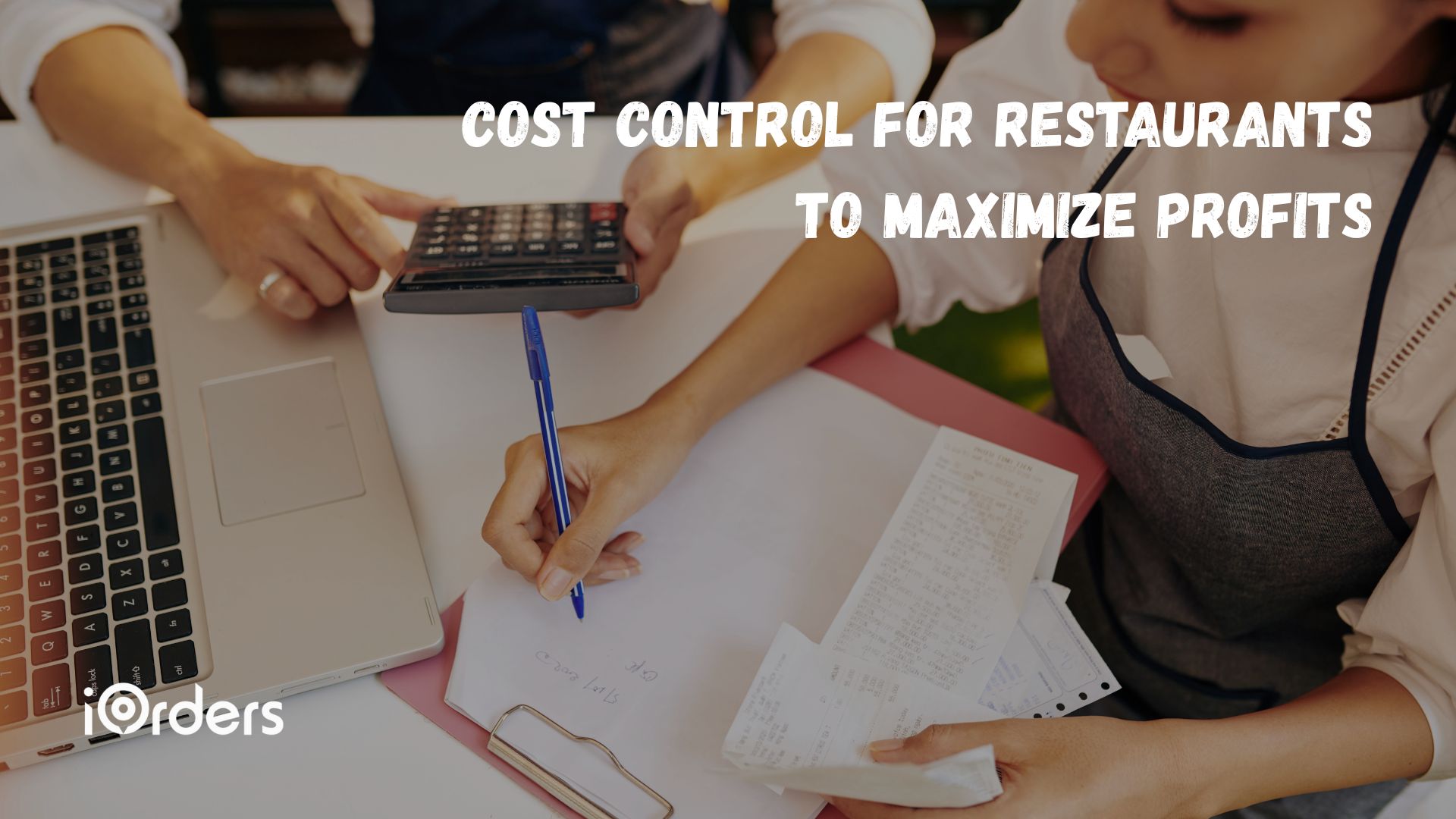
The restaurant business is tougher than ever. With food and labor costs increasing, even thriving restaurants are feeling the pinch. Inflation, supply chain challenges, and rising operational expenses are squeezing profit margins to the limit.
Many owners find themselves asking, if the dining room is full, why isn’t the bank account? The truth often lies in hidden inefficiencies: food waste, overstaffing, poor supplier deals, or unnoticed energy drain. But cutting costs doesn’t mean cutting quality. Smart cost control is about working efficiently, not cheaply.
This guide breaks down 10 proven ways to tighten expenses, reduce waste, and protect your profits, so you can keep serving great food and growing your business, even in today’s challenging economy.
At a Glance:
Controlling costs is vital for sustaining profitability in the competitive restaurant industry. By strategically managing labor, inventory, and operations, you can maintain high standards without sacrificing your bottom line or customer experience.

Utilizing modern technology, like restaurant employee scheduling software and restaurant management systems, empowers you to make data-driven decisions that optimize resources and reduce waste.
Here are 10 effective ways to take control of your restaurant costs and keep your business thriving:
Labor is one of the biggest expenses for any restaurant group, and poor scheduling can quietly drain profits. Smart scheduling software helps balance staffing levels based on real-time sales data, seasonal trends, and employee availability, ensuring the right number of people are working at the right time.
These systems analyze traffic patterns, weather forecasts, and historical performance to predict labor needs accurately.
Best practices:
Example: A restaurant group uses an AI-powered scheduling app that automatically adjusts shifts during slower lunch hours. When demand spikes unexpectedly, it sends instant notifications to available staff, maintaining service quality while keeping labor costs within budget.
Wage adjustments, whether due to new labor laws or company policy, can quickly disrupt budgets if not handled precisely. Keeping payroll systems accurate and up to date ensures compliance, prevents costly errors, and keeps labor expenses predictable.
Integrating payroll with scheduling software allows automatic rate updates, accurate overtime calculations, and real-time cost tracking.
Best practices:
Example: When a city-wide minimum wage hike takes effect, a restaurant group instantly syncs new rates across its payroll and scheduling systems. Managers see updated labor costs in real time, ensuring compliance and eliminating payroll discrepancies before payday.
Also Read: What is a POS System for Restaurants? Do You Really Need One?
Menu engineering is one of the most powerful cost control strategies for restaurant groups. By analyzing sales data, food costs, and customer behavior, restaurants can refine pricing and item placement to boost profitability without alienating guests.
Even small adjustments, like changing wording or visual hierarchy, can influence buying decisions and improve margins. Standardizing recipes and portions also keeps ingredient costs consistent across locations.
Best practices:
Example: A café group reviews sales analytics and redesigns its menus with vibrant item descriptions and strategic placement of premium dishes. Within weeks, average check sizes rise, with guests responding positively to the enhanced dining experience.
Keeping a close eye on food costs and inventory performance is essential for maintaining profitability. Understanding metrics like food cost percentage and inventory turnover helps restaurant groups identify where money is being lost, through waste, overstocking, or inconsistent portioning.
Modern inventory management systems provide real-time visibility into ingredient usage, supplier pricing, and stock levels, allowing managers to make faster, data-driven decisions.
Best practices:
Example: A fast-casual restaurant uses digital inventory tools to monitor ingredient usage daily. When patterns of over-ordering appear, managers adjust purchase schedules, keeping supplies fresh and reducing unnecessary spend.
Also Read: A Simple Guide to Restaurant App Development in 2025
Manual inventory tracking often leads to errors, wasted time, and inaccurate food cost reporting. By digitizing and automating these processes, restaurant groups can improve accuracy, save staff hours, and gain real-time insight into purchasing and usage trends.
Modern inventory software connects directly with POS and accounting systems, automating everything from purchase orders to invoice reconciliation. This creates a more transparent, data-driven supply chain that supports smarter cost control.
Best practices:
Example: A growing restaurant group uses an integrated inventory platform that auto-generates purchase orders when stock runs low and syncs invoices with accounting. Managers spend less time on paperwork and more time focusing on service and profitability.
Internal theft, whether through inventory loss or time fraud, can quietly erode profits over time. Creating visibility across time tracking, payroll, and inventory systems helps detect inconsistencies early.
At the same time, fostering a workplace culture built on trust, fair pay, and clear expectations reduces the temptation for dishonest behavior. When staff feel valued and processes are transparent, accountability naturally follows.
Best practices:
Example: A café now monitors attendance through payroll-integrated time tracking and performs weekly digital inventory audits. Managers catch discrepancies before they escalate, while employees appreciate clear policies and consistent pay.
Also Read: Kitchen Order Ticket System in a Restaurant: How It Works
Managing too many disconnected apps can lead to higher subscription costs, redundant work, and data silos. Streamlining restaurant operations through a unified platform reduces complexity and helps teams focus on what matters, serving customers and growing revenue.
Many modern systems now combine functions like scheduling, payroll, inventory tracking, and team communication into one interface, making it easier to share data and automate tasks across departments.
Best practices:
Example: A restaurant group consolidates its scheduling and payroll processes in a single platform, reducing monthly software costs and improving cross-department visibility. Managers now access labor data, timesheets, and communication threads in one place, making operations smoother and decisions faster.
For restaurant groups managing multiple locations, visibility is everything. A restaurant management system (RMS) provides a centralized hub to track expenses, forecast sales, and compare performance across outlets, all in real time.
By unifying financial and operational data, operators can spot inefficiencies early and make decisions that boost overall profitability.
Best practices:
Example: A growing restaurant group uses MarginEdge to analyze food and labor costs across branches. The insights help managers replicate winning strategies from top-performing locations and fine-tune operations where margins are tighter.
Also Read: How to Make a Small Restaurant Grow: Top 33 Tips
Food waste silently eats into profits and efficiency. From prep to plating, tracking waste helps restaurants identify where losses occur and take quick corrective action.
Digital tools now make it easier to monitor usage, standardize recipes, and align purchasing with actual demand, all while maintaining food quality and customer satisfaction.
Best practices:
Example: A busy kitchen uses digital recipe management and live ingredient tracking to monitor prep waste daily. Within weeks, chefs fine-tune portion sizes and ordering patterns, reducing spoilage and improving cost predictability without sacrificing quality.
Manual invoice handling is time-consuming and prone to costly errors. By automating invoice capture and reconciliation, restaurants can gain tighter financial control and free staff from repetitive administrative work.
Modern restaurant management systems (RMS) process invoices digitally, match them against purchase orders, and flag discrepancies instantly, helping operators stay accurate, compliant, and cash-flow positive.
Best practices:
Example: A multi-location restaurant group automates its invoice and payment workflows, cutting processing time significantly while uncovering overlooked vendor credits. The result is faster reconciliation, improved cash flow visibility, and fewer end-of-month surprises.
Harness technology to automate and integrate your restaurant’s cost control processes. Monitor labor and inventory closely, optimize menus smartly, and enforce compliance rigorously. These ten strategies empower your restaurant to adapt efficiently to rising wage demands and shifting market conditions, ensuring you protect your bottom line without compromising quality or service.
Also Read: Hire and Retain Restaurant Employees: Top 12 Strategies
iOrders empowers restaurants to take control of their finances through smart, technology-driven cost optimization. With rising food, labor, and operational expenses, maintaining profitability requires real-time visibility and data-backed decisions, and iOrders delivers exactly that.
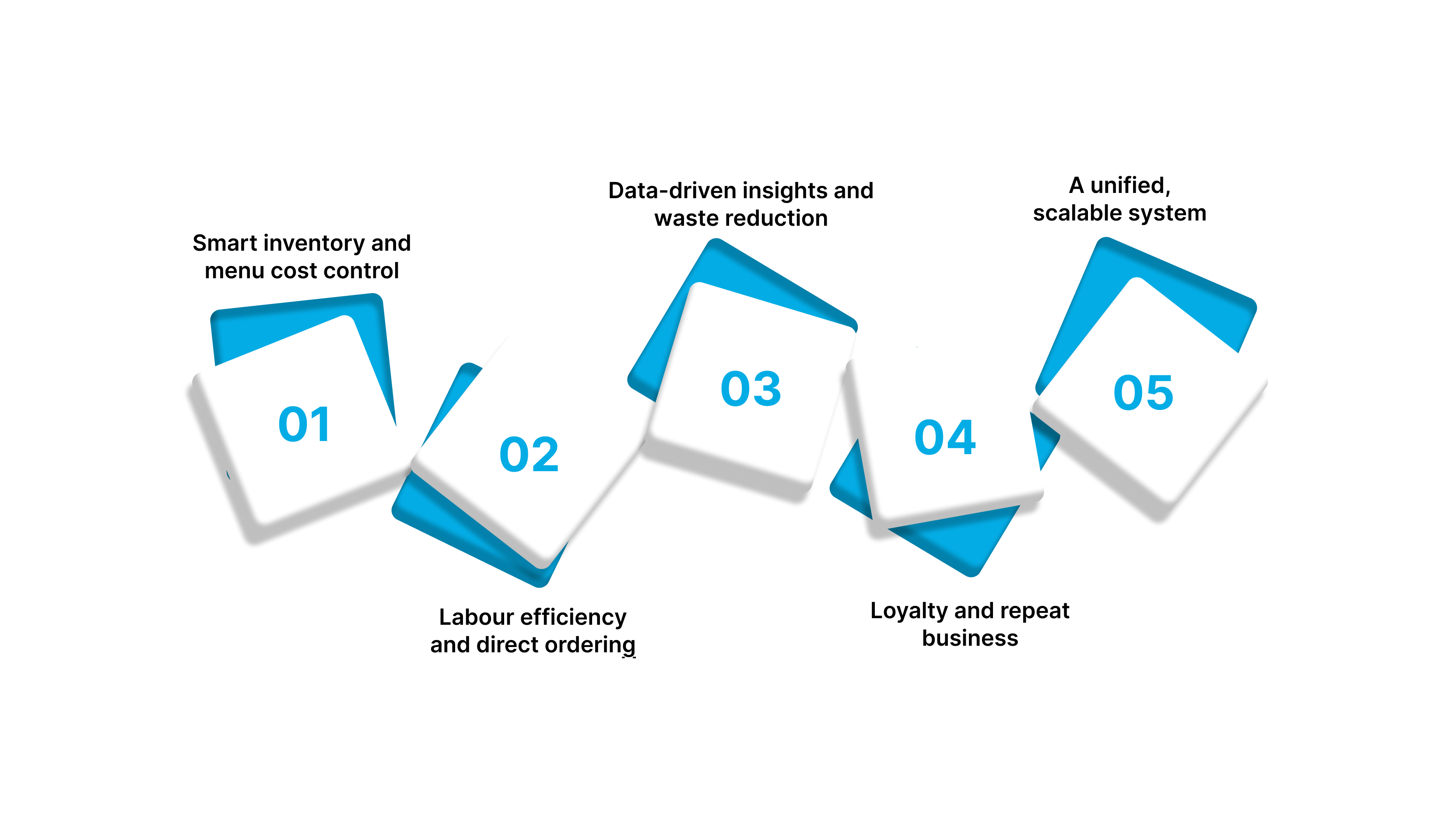
Here’s how iOrders helps restaurants strengthen cost control across operations:
With iOrders, restaurants can reduce hidden costs, automate routine processes, and operate with data-backed clarity, all while maintaining quality and customer satisfaction. The result is a leaner, more profitable business built for sustainable growth.
Also Read: How to Start and Run a Successful Restaurant in 10 Simple Steps
In today’s competitive dining landscape, profitability depends on more than great food and service, it requires smart, data-driven cost control. From reducing third-party fees to automating operations and improving customer retention, technology now plays a key role in keeping restaurants efficient and financially healthy.
iOrders makes this transformation simple. By combining commission-free online ordering, branded websites, loyalty programs, and real-time analytics in one unified platform, iOrders helps restaurants cut unnecessary costs while strengthening customer engagement. Every feature is designed to simplify management, reduce overhead, and support long-term growth.
Ready to make your restaurant more efficient and profitable? Book a free demo with iOrders today and see how an all-in-one restaurant management platform can help you control costs, increase revenue, and run smarter every day.
1. How can restaurant groups leverage centralized purchasing to control costs?
Centralized purchasing consolidates buying power across multiple restaurant locations, enabling volume discounts and bulk pricing that individual units often cannot access. It reduces the complexity of managing multiple vendor relationships and standardizes ingredient quality across units, leading to more predictable costs. Additionally, centralized procurement teams can audit supplier pricing regularly for compliance and explore alternative vendors to ensure competitive rates, ultimately improving cost efficiency and ensuring consistent menu quality throughout the group.
2. What reporting tools help restaurant groups track and manage cost variances across locations?
Restaurant groups benefit from integrated restaurant management systems (RMS) or accounting platforms that produce detailed, real-time reports highlighting cost variances between locations. These tools generate dashboards showing metrics such as food cost percentage, labor cost ratio, inventory turnover, and waste levels, allowing operators to pinpoint inefficiencies quickly. Drill-down capabilities support root cause analysis, enabling adjustments like reviewing supplier contracts or optimizing labor schedules. This data-driven approach empowers decision-makers to implement consistent cost-saving strategies across all units and respond dynamically to budget discrepancies.
3. How does cross-store performance benchmarking support cost control in restaurant groups?
Benchmarking compares performance metrics of each store against group averages and top performers to identify deviations. Metrics include labor efficiency, food cost percentage, and waste rates. Stores consistently underperforming signal opportunities to share best practices from higher-performing units, such as improved scheduling methods or inventory controls. Benchmarking also fosters healthy competition by tying manager incentives to performance metrics, driving ongoing cost consciousness and operational improvements across the entire restaurant group.
4. What role does menu standardization play in cost control for multi-unit operators?
Menu standardization ensures every location follows consistent recipes and portion sizes, minimizing ingredient waste and controlling food costs. It simplifies supply chain management by requiring fewer ingredient variations, facilitating better forecasting and purchasing accuracy. Standardizing menus also helps maintain customer expectations for taste and quality, building brand consistency. While some seasonal variation is possible, a core standardized menu supports cost predictability and operational efficiency across the group.
5. Why is ongoing staff training crucial for group-wide cost management?
Well-trained employees understand the importance of precise portion control, correct food handling, and waste reduction techniques, all of which directly impact costs. Training also increases staff awareness of cost control policies and discourages practices that cause loss, such as over-ordering or misreporting inventory. Furthermore, involving staff in cost-saving initiatives fosters a culture of accountability and continuous improvement, essential for sustainable profitability in multi-unit operations where scaled errors can quickly escalate expenses.
6. How should restaurant groups approach supplier diversification for cost stability?
Relying on multiple suppliers mitigates risks from supply chain disruptions, price hikes, or quality inconsistencies. Diversification provides leverage to negotiate better contracts by creating competition among vendors. It also allows restaurants to source seasonal or specialty ingredients more flexibly. However, it requires robust inventory and procurement management systems to ensure smooth integration and avoid complexity or duplication, maintaining cost control while safeguarding supply reliability.
7. How can technology help prevent internal theft and fraud in multi-unit restaurants?
Technology integrates POS systems, inventory management, and employee time tracking to create transparency in operations. Automated audit trails can flag unusual activities like excessive voids, discounts, or inventory discrepancies, enabling early detection of theft or fraud. Cameras linked with POS data can verify orders and transactions. Regular real-time monitoring across locations is critical to quickly address issues before losses accumulate. These technological safeguards, combined with clear protocols, enhance trust while protecting profitability in large restaurant groups.
.png)