Book a free demo
Oops! Something went wrong while submitting the form.
March 25, 2026
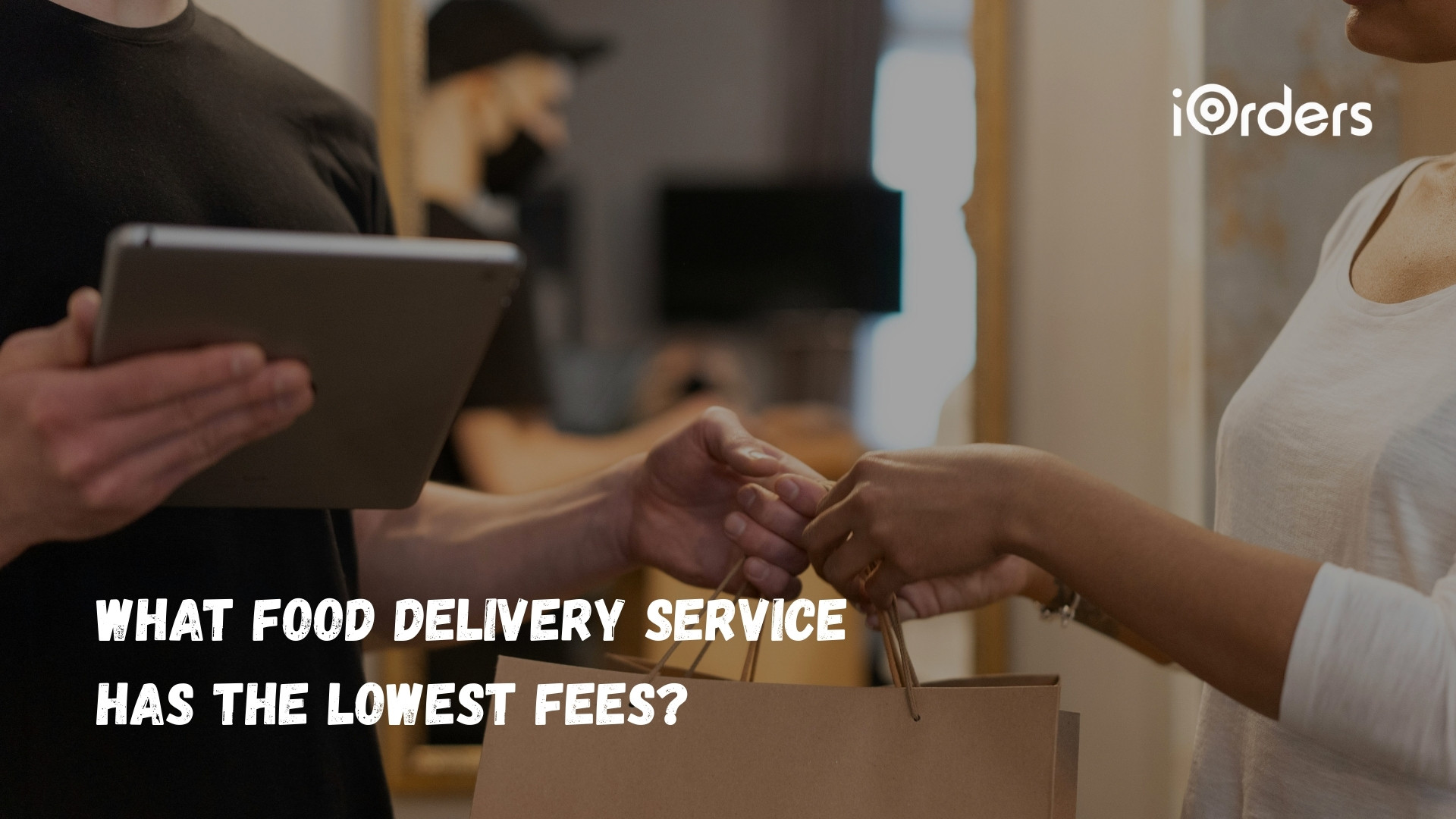
A guest places a $30 takeout order through a delivery app. By the time the platform commission, service charges, and processing fees settle, a noticeable share of that ticket is already gone. For many restaurant owners, the question isn’t whether delivery drives orders. It’s how much each order actually costs.
Demand certainly exists, as about 40% of respondents use food delivery apps or order takeout three to five times a month. That steady volume makes platform fees hard to ignore.
It certainly makes you wonder: which food delivery service has the lowest fees? This platform guide reviews common delivery apps and breaks down how their fee structures affect restaurant margins.
A delivery order might look simple on the surface. A guest places an order, the kitchen prepares it, and a driver picks it up. However, behind that single order sits a layered fee structure that quietly reduces the revenue a restaurant keeps.
Most delivery platforms apply several charges to every order. These costs vary by platform, city, and service plan, but the structure usually includes the following.
When these charges stack together, the total cost can add up quickly. A $30 delivery order may lose several dollars before the kitchen even accounts for ingredients, labor, and packaging.
In many cases, the combined platform costs range between 15% and 40% of the total order value, depending on the platform and service tier. Over hundreds of orders each month, those percentages can take a noticeable share of a restaurant’s delivery revenue.
Recommended: Choosing the Best Food Delivery Service Apps.
Most restaurants rely on a small group of delivery marketplaces to reach online customers. Each platform offers exposure and built-in demand, but its fee models follow a similar structure. Restaurants usually pay a commission on every order, while customers see delivery and service fees at checkout.
The exact percentages depend on the city, delivery distance, and service tier a restaurant selects. However, the ranges below reflect the typical fee structures many restaurants encounter when using major delivery apps.
At first glance, these platforms may look similar in cost. The differences usually appear when order volume grows or when restaurants select higher visibility plans within the apps. A small percentage gap can translate into thousands of dollars over a year of delivery orders.
Also Check: Delivery Pricing Strategy for Restaurants: 7 Proven Models.
There isn’t a single platform that always comes out cheapest. The final cost of a delivery order depends on several factors, including order size, distance, and local demand. However, certain platforms tend to come out ahead in specific situations. Looking at typical fee structures can help restaurants estimate which services may result in lower overall costs.
Small baskets usually carry higher percentage-based fees. A $15–$20 order can trigger service charges or small order fees that increase the final total. In many markets, DoorDash often ends up slightly cheaper for smaller orders because its delivery pricing can start lower than some competitors.
That difference may only be a few dollars per order, but over dozens of small takeout tickets each week, the savings can add up.
For orders in the $25–$40 range, Grubhub often produces lower totals in many comparisons. The platform sometimes applies slightly lower service fees, which reduces the overall cost for mid-sized orders.
Restaurants that receive many family meals or group orders may see smaller fee differences when comparing these platforms.
Delivery costs rarely stay the same across cities. A platform that appears cheaper in one market may cost more in another. Several factors influence how fees are calculated.
For restaurants, this means the lowest-fee platform can shift depending on local demand and ordering patterns. Running small tests across different services often reveals which option keeps the most revenue from each order.
Even when a platform appears cheaper in certain scenarios, marketplace commissions still apply to every order. For restaurants with steady delivery volume, those percentages can still take a noticeable share of revenue over time. This is why many operators are starting to look beyond marketplace apps and consider direct ordering systems such as iOrders, where restaurants can accept online orders without paying platform commissions.

Marketplace delivery apps promise reach and convenience. However, the visible fees only tell part of the story. Many restaurants start noticing the real cost after a few months of steady delivery orders.
Beyond the basic delivery charges customers see, several factors quietly reduce the revenue a restaurant keeps from each order.
These issues become more visible during peak hours. Restaurants may gain visibility through delivery apps, but the added fees and daily workflow friction can steadily chip away at margins.
Restaurants reach a point where comparing delivery platform fees stops helping. Even the lowest-cost option still takes a percentage from every order, and over time, that share adds up.
This is why many operators are shifting part of their order volume to direct channels. Instead of relying entirely on marketplace apps, they give repeat customers a way to order through their own website or branded experience.
iOrders supports this transition by giving restaurants a direct ordering setup that works alongside their existing operations.
The biggest advantage is simple: no marketplace commission on the order itself. Restaurants keep the full menu price and maintain control over their customer relationships.
For operators who already receive steady delivery demand, even moving a portion of orders to iOrders can protect margins and create a direct ordering channel that grows over time. Book a demo today to see how it works.
Reducing delivery costs doesn’t mean cutting off marketplace apps completely. It means gradually shifting the right orders to lower-cost channels.
Here’s what that looks like in practice:
This approach lets restaurants reduce fees gradually without risking order volume or visibility.
Marketplace delivery apps offer reach, but they come with unavoidable commissions that cut into every order. While one platform may appear cheaper for a small or mid-sized order, fees vary by city, order size, and peak hours, making it hard to predict your true costs.
For restaurants looking to protect margins and take control of their revenue, direct ordering with iOrders provides a clear solution. iOrders helps you retain more of each order’s revenue, turning delivery demand into higher profits instead of fees.
Ready to stop losing a chunk of every order? Connect with our team and get started with iOrders today.
1. How much do delivery apps typically charge restaurants in fees?
Most major delivery platforms charge restaurants a commission ranging from about 15% to 30% per order, depending on the service level and market. These fees often represent the biggest portion of the cost restaurants pay for marketplace orders.
2. Do delivery app fees include all costs a restaurant pays?
No. The visible commission is just one piece. Restaurants often also face payment processing fees, promotional or marketing fees, and sometimes delivery costs shared with the platform, which can push total costs higher than the base commission.
3. Can delivery apps charge restaurants extra for marketing or visibility?
Yes. Many platforms offer paid marketing options like featured placement or promotional boosts inside the app, and those charges are on top of standard commissions.
4. Do delivery fees change at peak times or in specific areas?
Delivery fees for customers and service charges can vary by location, time of day, and demand levels, but the commission rates restaurants pay generally stay set by contract rather than hourly demand.
5. Is it possible to reduce delivery fees without losing orders?
Yes. Restaurants can encourage more direct orders through their own channels, use QR code ordering, and build loyalty programs that move repeat customers off third-party apps and toward lower‑cost ordering options.
.png)