Book a free demo
Oops! Something went wrong while submitting the form.
January 23, 2026
You may have dealt with this before: a small menu update turns into hours spent fixing PDFs, adjusting your website, updating your Google listing, and correcting delivery app menus. Even after all that work, customers still sometimes see the wrong price or an item you no longer serve. These mismatches create extra work for your staff and lead to disappointed guests.
This is why many restaurant owners want to learn how to make a digital restaurant menu that’s easy to edit, accurate across channels, and ready for online orders. A well-built digital menu keeps your information consistent and reduces manual updates.
This guide shows you how to create a digital menu that’s clean, reliable, and built to increase orders.
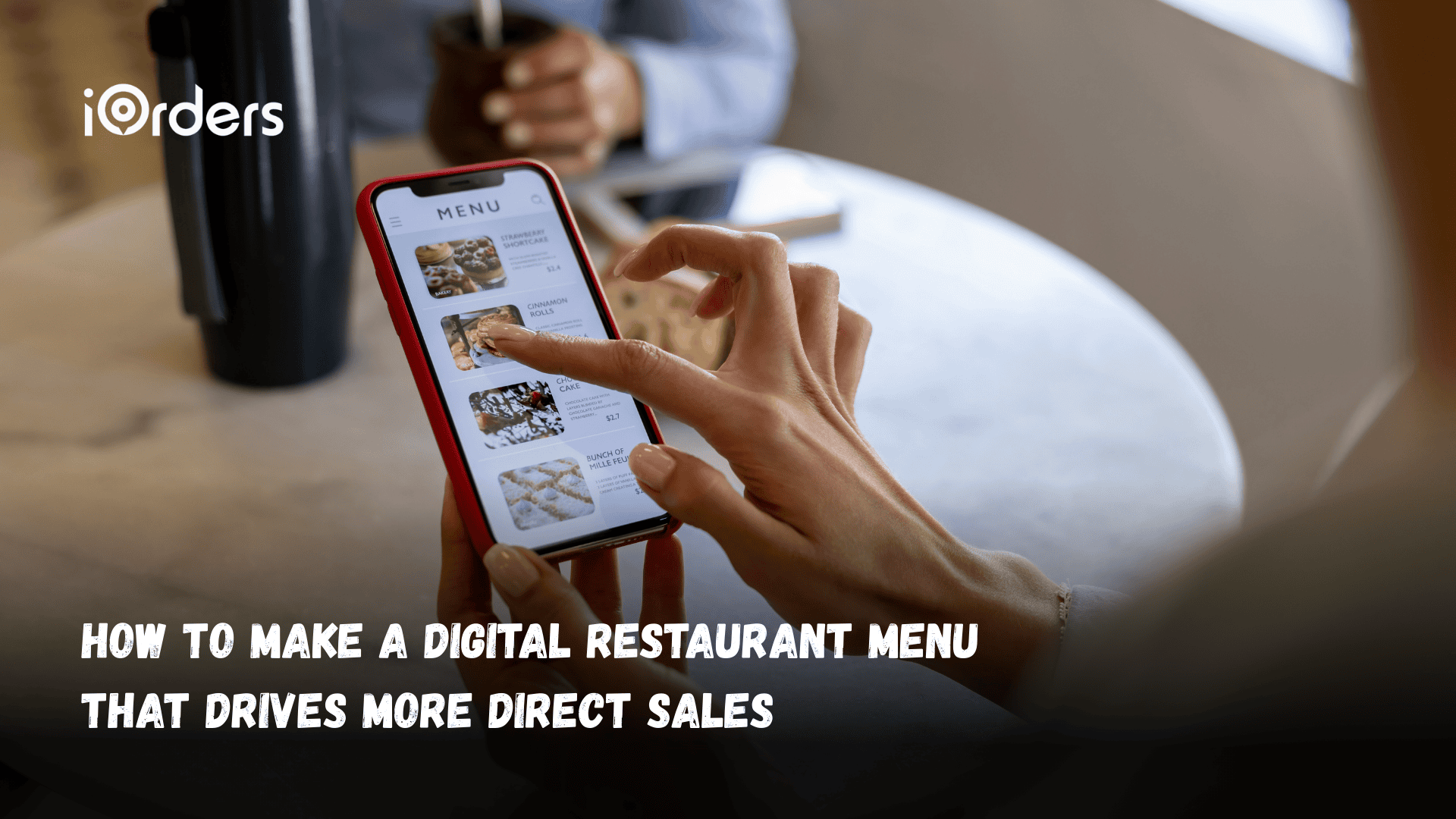
A digital restaurant menu is an online menu that customers can view on their phones or any web-enabled device. It’s commonly used on restaurant websites, QR codes on tables, social media links, and online ordering pages.
Instead of relying on printed menus or PDFs, a digital menu gives guests quick access to updated items, prices, and descriptions in a format that’s easy to read and simple for you to manage.
A digital menu helps you keep information accurate across every channel while reducing the effort needed to manage updates. It also supports a smoother ordering experience for your guests. Here are the key benefits for restaurants:
Now that you know why digital menus matter, here’s a practical step-by-step method for creating one for your restaurant.
Also Check: Automatic Menu Ordering System for Hotels and Restaurants.

Creating a digital menu involves more than uploading items online. Each step helps you keep your menu organized, accurate, easy to use, and ready for online ordering. Here’s a clear process you can follow.
Start by selecting a platform that lets you update items quickly and display your menu in a mobile-friendly format. A good tool saves you time and prevents errors across channels.
Look for features such as:
Before uploading anything, prepare your content. This keeps your menu clean and easy to navigate.
Prepare the essentials:
A well-organized list reduces mistakes and speeds up setup.
A clean layout can help customers choose faster and increase average order value.
Key design guidelines:
For example, placing your top sellers at the top of each section can encourage higher sales.
Interactive features help customers find items faster and reduce questions for your staff.
Useful additions include:
These features create a smoother digital ordering experience.
Make your menu easy to access from anywhere. QR codes help you share your menu in physical spaces without printed copies.
Where to place QR codes:
Keep the QR code linked to a stable URL, so updates reflect instantly.
Integrating your digital menu with your POS prevents double entry and reduces mistakes.
Benefits include:
Example: When an item sells out in your POS, it disappears from your digital menu automatically.
Create menus that change based on the time or day. This keeps your menu relevant and avoids confusion.
Use cases:
This helps customers always see the correct options without manual edits.
Test your menu on multiple devices to ensure a smooth experience.
Check for:
A quick test prevents customer drop-offs.
Once your menu is ready, make sure customers can find it easily.
Share it across:
Consistent visibility increases usage and reduces calls asking, “Do you still have this item?”
After launch, monitor how customers interact with your menu. Look at which items get attention and where people drop off.
Improve using:
Regular updates keep your menu relevant and aligned with customer needs. Now, after building your digital menu, you’ll need a system that keeps updates, ordering, and delivery running smoothly. iOrders simplifies that process.
Recommended: 10 Best Digital Ordering Systems for Cafes.

Even after a menu is designed and ready, keeping it accurate, consistent, and fully integrated with ordering channels can still be a daily challenge. Updating items across your website, QR codes, and delivery apps often leads to mistakes, lost orders, or frustrated customers.
Managing delivery logistics, syncing with your POS, and tracking customer behavior adds another layer of complexity. iOrders simplifies all of this by bringing digital menus, ordering, QR codes, delivery coordination, and analytics into a single platform. This helps in reducing manual work and ensuring the menu always reflects what your restaurant actually serves.
Key features include:
Book a demo and see how it simplifies your workflow.
Think of a day when you had to update a price, remove a sold-out item, and tweak a description, only to repeat the same changes on your website, QR codes, and delivery pages. A setup like that slows down your team and leads to mistakes that customers notice.
A well-built digital menu can help your restaurant stay accurate, reduce update time, and guide customers toward faster decisions. When your menu is easy to manage and reflects real availability, it supports smoother ordering and better guest experiences.
However, the challenge is maintaining all of this across your website, QR codes, and delivery channels without adding more work to your day. That’s where iOrders provides real value. It brings menu management, direct ordering, and delivery coordination into one system, helping restaurants stay consistent with far less effort.
Ready to simplify your digital menu and increase direct orders? Connect with us today to get started!
1. Do digital menus work if my restaurant has poor or unstable Wi-Fi?
Yes. Most digital menu providers allow you to host menus that load quickly, even on slow networks. You can also generate static QR code menus that cache previously loaded content on the customer’s device, reducing dependence on strong Wi-Fi.
2. Can I use digital menus without offering online ordering?
Absolutely. Many restaurants use digital menus solely for browsing, allergen details, and updates. You can enable ordering later without redesigning the menu.
3. How often should a digital menu be updated?
Update your menu whenever an item is added, removed, or runs out. Many restaurants review their digital menus weekly to keep descriptions, prices, and images accurate.
4. Do digital menus require professional photography?
Not necessarily. Good lighting and consistent framing can produce strong photos even with a smartphone. High-quality images help conversions, but you can start simple and upgrade visuals over time.
5. Are digital menus suitable for restaurants with frequently changing specials?
Yes. Digital menus are ideal for restaurants that rotate dishes or ingredients. You can update specials in seconds and sync them across QR codes, your website, and online ordering pages without reprinting anything.
.png)