Book a free demo
Oops! Something went wrong while submitting the form.
December 18, 2025
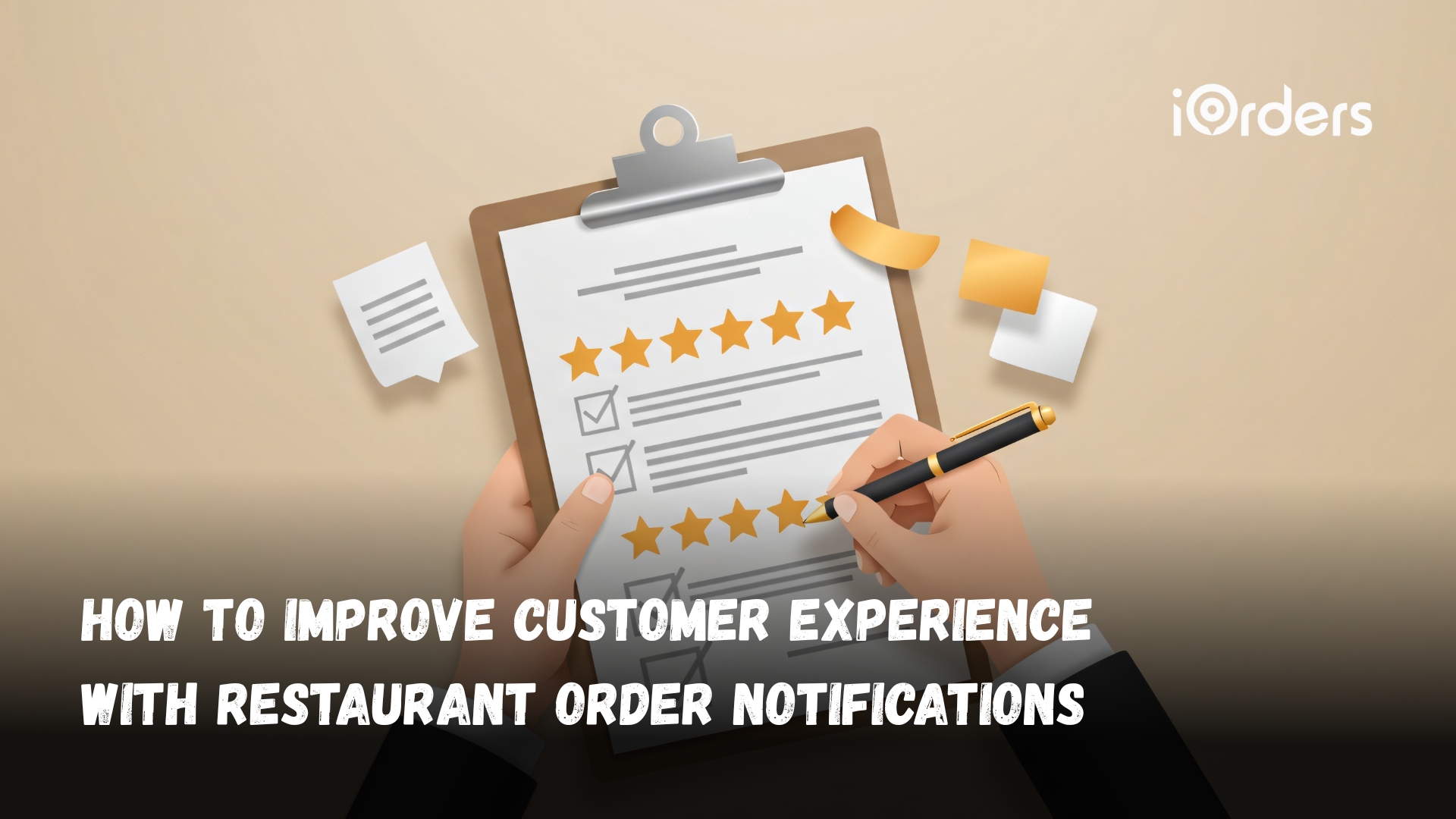
Placing an order should feel reassuring, not uncertain. When customers submit a digital order and hear nothing back, even a short delay can create doubt about whether the order went through at all. That anxiety is becoming more common as online ordering becomes a default experience.
The U.S. online food delivery market is projected to reach $74.03 billion by 2033, growing at a 9.31% CAGR from 2025 to 2033. This shows how often customers now rely on digital channels to interact with restaurants. Customers want confirmation, updates, and clarity without having to ask.
Restaurant order notifications fill that gap by keeping customers informed, confident, and engaged from order placement to pickup or delivery. This article explains how notifications improve customer experience and build trust at every stage of the order.
Brief breakdown:
Restaurant order notifications are automated messages that keep guests and staff informed about an order’s progress. They act as the communication layer between digital orders and real kitchen activity. When done well, they replace uncertainty with clear, timely updates.
These are the different notifications to guide guests and staff through each stage of the order:
Each notification type plays a different role in setting expectations. They shape how smoothly orders move through the restaurant. Their real value becomes clear when looking at how they affect daily operations.
Suggested Read: Advantages of Investing in the Restaurant Online Ordering System Market
Order notifications influence far more than guest communication. They shape how your kitchen, front of house, and pickup or delivery flow work together.
These impacts show up most clearly during busy service periods:
Notifications can also drive incremental orders when used thoughtfully. Tacos N’ Tortas used a push notification offering a free churro with a limited-time code. The campaign created urgency, increased orders, and rewarded loyal customers through direct, timely communication.
Suggested Read: Why Restaurants Pair Square POS With iOrders for Better Ordering
Not all notifications serve the same purpose. Separating guest updates from staff alerts keeps communication clear and operations focused.
The following sections explain how each notification type supports a different operational need.
These notifications communicate order status directly to guests. They reduce uncertainty and help guests plan pickups or deliveries. Clear updates improve trust without requiring staff involvement.
These notifications typically cover:
Internal alerts guide staff actions during service. They prioritize speed, accuracy, and coordination across teams. These alerts support decision-making during busy periods.
These alerts usually focus on:
When each notification serves a defined role, noise decreases and clarity improves.
You can use iOrders to give your customers direct ordering and updates through a branded mobile app and website. Order notifications and messages come from your brand, not a third-party marketplace. Schedule a free demo today.
Restaurants have multiple ways to send order updates, but each channel behaves differently. Choosing the right one affects speed, visibility, cost, and guest perception.
This table shows how different notification channels serve different purposes based on timing, visibility, and guest context:
No single channel works for every situation. Most restaurants benefit from using different channels for different moments in the order journey.
When each channel makes the most sense:
When used thoughtfully, these channels remove guesswork for customers and keep them informed. That sense of clarity helps customers feel confident while they wait for their order.

Customer confidence is built after an order is placed, during the moments of waiting and uncertainty. When guests are unsure what is happening, they fill the gap with assumptions. Clear, timely order notifications replace that uncertainty with reassurance and set expectations without staff involvement.
The following practices show how notifications influence trust at each stage:
Domino’s Canada uses its Tracker to show customers each stage of order progress in real time. Status updates like preparation, baking, and out for delivery reduce uncertainty while customers wait. Push notifications reinforce confidence by confirming progress without requiring staff interaction.
Confidence improves when notifications remain consistent across every order source. Managing that consistency becomes more complex as ordering channels expand.
Suggested Read: Why You Need a Cloud Kitchen Ordering Solution to Slash Costs and Scale Your Business?
Restaurants often receive orders from multiple sources at the same time. Notifications must stay aligned across platforms so guests receive clear, predictable updates regardless of how they ordered.
This is how notification expectations change by ordering channel.
iOrders helps restaurants manage notifications from a centralized ordering environment. This makes it easier to maintain consistent messaging across owned digital channels. Clear control reduces gaps as order volume and channel complexity increase.
Order notifications are powerful, but small mistakes can quickly turn them into noise. Most issues come from overuse, poor timing, or unclear ownership rather than the technology itself.
Table showing common errors in notifications:
These problems usually appear gradually as order volume grows. Without clear rules, notifications add friction instead of removing it.
Scaling order notifications without increasing noise requires:
Managing this balance becomes easier with centralized control. That is where platforms like iOrders help restaurants keep communication clear as they scale.
Suggested Read: Why Restaurant POS Integration is Key to a Seamless Ordering Workflow?

iOrders is a digital ordering platform designed for restaurants that want control over their online ordering, customer communication, and growth. The platform brings ordering, engagement, and menu management into one connected system. Restaurants using iOrders have seen a 2 times increase in purchase frequency through direct digital channels.
These features support restaurants across ordering, engagement, and operations:
We help you accept orders directly without third-party commissions. This keeps margins predictable and customer relationships fully owned. Orders flow into one system, reducing operational fragmentation.
iOrders enables customers to order directly from your website or via QR codes. This supports flexible service models across dine-in, pickup, and takeout. Menu and order flows remain consistent.
The platform supports delivery without forcing you to manage drivers or marketplaces. You choose how delivery fits your operation. The ordering and communication layer stays under your control.
iOrders can help you reach customers with targeted messages and offers. Campaigns are based on real ordering behavior. This supports repeat business without guesswork.
We give you tools to reward returning customers intentionally. Loyalty programs are structured and measurable. Referrals and rewards strengthen retention over time.
You can use stored data to time outreach effectively, reaching customers when intent is highest. Campaigns focus on relevance rather than frequency, avoiding message fatigue. Customers hear from you when it matters, not when it feels intrusive.
We help you manage reviews and feedback consistently across digital channels. Responses stay aligned with your brand voice and tone. Post-order engagement becomes easier to maintain without adding staff workload.
We provide a fully branded app for ordering and engagement that keeps your restaurant front and center. Customers interact with your brand, not a third party. Repeat ordering becomes more familiar, faster, and easier over time.
iOrders is built to grow with your restaurant from day one. We focus on clarity, ownership, and scalable infrastructure. As order volume increases, your systems stay reliable instead of reactive.
When order notifications are missing or poorly managed, small gaps quickly turn into operational problems. Guests ask for updates, staff are interrupted, and kitchens feel unnecessary pressure during peak periods. Over time, uncertainty erodes trust and makes digital ordering harder to manage, not easier.
iOrders helps restaurants bring structure to order communication while keeping control in-house. We connect ordering, updates, and customer engagement within one reliable platform. As volume grows, communication stays clear instead of reactive.
See how structured order notifications can reduce daily friction. Schedule a quick demo with our team.
Order notifications reduce uncertainty after checkout by confirming progress and setting expectations. Customers feel informed while waiting, which lowers frustration and improves overall confidence in digital ordering.
Consistent updates build trust by showing reliability beyond food quality. Customers are more likely to reorder when communication feels predictable, transparent, and respectful of their time.
Restaurants should look for timing control, channel separation, and centralized management. Tools must align notifications with real kitchen stages, not estimated or generic timelines.
Scalable tools maintain clarity even during peak periods. They prevent alert overload by limiting messages to meaningful moments, keeping staff focused and customers informed.
Direct control allows consistent branding and clearer messaging. Relying on third parties often limits customization and creates gaps between customer expectations and restaurant operations.
.png)