Book a free demo
Oops! Something went wrong while submitting the form.
May 4, 2026
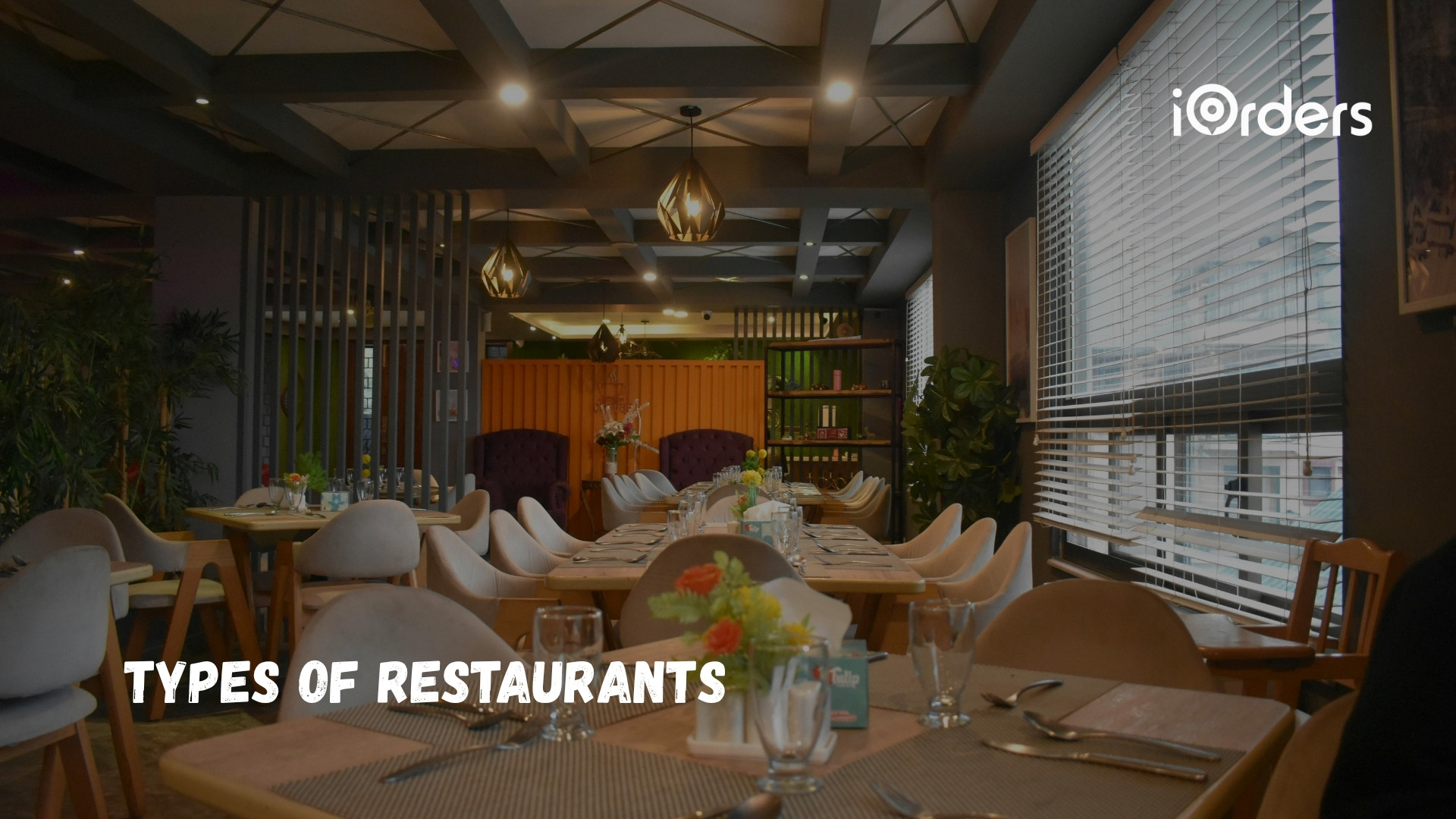
Before you finalize your concept, you need to decide what kind of restaurant you’re building. Not the cuisine, but the type of restaurant that will define how it runs every day. In fact, 85% of Canadians consider restaurant food “convenient” when deciding where to eat, which makes service style and speed a key part of your model.
Will customers order at a counter or sit at a table? Will you depend on quick turnover or longer dining experiences? Can your space and team handle high volume, or do you need a more controlled setup?
These decisions affect your staffing, service flow, and how orders are handled from day one. This guide breaks down the most common restaurant types with real examples, so you can choose a model that fits your setup and long-term plans.
When you evaluate a type of restaurant, you are looking at how service, pricing, and ordering come together during a real shift. These factors decide how your team works and how your guests experience your brand.
Most restaurant types are shaped by three core elements:
Based on these factors, most restaurants fall into three main models:
With that foundation in place, you can now look at how each type of restaurant actually works and what it takes to run it day to day.
Also Check: Restaurant Business Models for 2025-26: Adapting to Modern Demands.

On paper, most restaurant types look similar. The difference shows in how each one runs once orders start coming in.
The sections below break down how each type actually functions day to day, so you can see what it takes to run them and where each one fits best.
The Restaurant Margin Playbook shows you how to build a direct ordering channel, own your customer relationships, and reclaim the margins delivery platforms are quietly taking.
Download the eBook →.png)
Quick-service restaurants are designed for speed, affordability, and high order volume. Guests expect fast service with minimal wait time, and menus are usually limited to keep preparation simple. North America accounted for 37.45% of the global QSR market share in 2024, underscoring the widespread adoption of this model across the region. QSRs are suitable if you want to focus on scale and consistent daily sales rather than high margins per order.
What you need to consider:
Where this model fits best:
Challenges to plan for:
Fast casual restaurants sit between quick-service and full-service. They offer better food quality and more customization while still maintaining relatively fast service. Such a model works if you want to offer a more premium product without the complexity of full table service.
Key factors to evaluate:
Where this model performs well:
Things to watch out for:
Casual dining restaurants focus on providing a complete dine-in experience. Guests are seated, served, and spend more time at the table. It is suitable if you want to build a strong brand experience and encourage longer visits.
What defines this setup:
Where it works best:
Challenges to consider:
Fine dining focuses on premium experiences, detailed presentation, and high service standards. Guests expect consistency, quality, and attention to detail. This model works if your goal is to position your restaurant as a destination rather than a high-volume outlet.
Important considerations:
Where this model fits:
Challenges:
These formats focus on frequent, smaller purchases and repeat customers. They are often driven by daily habits like morning coffee or quick snacks. Cafe models are best if you want steady daily traffic with simpler operations.
Key aspects:
Best suited for:
Challenges:
Ghost kitchens operate without a physical dining space. All orders are placed online and delivered to customers. If you want to reduce upfront costs and focus entirely on delivery, then ghost kitchens are the best choice.
What makes this model different:
Where it works best:
Challenges to plan for:
Mobile restaurant formats offer flexibility and lower entry costs. They allow you to test concepts without committing to a fixed location. A smaller setup like this lets you test demand first and expand once orders start picking up.
Key considerations:
Where this model fits:
Challenges:
These formats focus on a specific service style or cuisine. Buffets offer fixed pricing, while specialty restaurants center around a defined menu or theme. They work well if you want to stand out through a clear concept or a distinct dining format.
Key differences:
Best suited for:
Challenges:
Now that you’ve seen how each setup works day to day, the next step is narrowing down which one fits your space, team, and plans for growth.
Choosing a type of restaurant comes down to what you can realistically support, day after day. A model that looks attractive on paper can struggle if it does not match your budget, team, or location. Before you decide, break it down into a few key areas.
Your available capital will narrow your options quickly. Some formats need more space, staff, and upfront investment than others.
A full-service restaurant may offer higher ticket sizes, but it also requires more staff, interiors, and ongoing expenses. If your budget is tight, starting with a simpler format gives you more room to adjust.
Each type follows a different revenue model. You need to decide how you want to make money, through volume, pricing, or repeat visits.
If your location supports steady foot traffic, volume-driven models can work well. If not, you may need a format that earns more per order.
Your surroundings play a major role in what will work.
Opening a dine-in restaurant in a delivery-first area can limit your reach. The model should match how people in that area prefer to order.
Some restaurant types require more coordination and experienced staff than others.
If you are working with a small team, a complex service model can slow you down. Simpler formats reduce dependency on multiple roles and make training easier.
Every added element, such as larger menus, table service, and customization, adds complexity.
If you are starting out, managing too many moving parts can lead to mistakes and delays. A focused concept is easier to control and scale.
Order behavior has shifted. Many restaurants now depend heavily on off-premise orders.
If a large portion of your orders will come from delivery, your restaurant type should support that from day one. The best type of restaurant is not the most popular one. It is the one that fits your budget, location, and ability to manage daily service.
Once you’ve chosen the setup that fits your business, the next step is making sure you can manage orders, delivery, and customer interactions without gaps.

No matter which type of restaurant you choose, one thing stays constant. Orders will come from multiple places. your counter, your website, phone calls, and delivery requests. Without a centralized system, your staff ends up switching between tools, re-entering orders, and fixing mistakes during peak hours.
As your restaurant grows, this scattered setup becomes harder to manage. You need a system that brings orders, delivery, and customer interactions into one place. That’s where iOrders helps. It acts as the single layer connecting your ordering, delivery, and customer engagement, so your team can focus on service instead of managing multiple systems.
Choosing the right system early helps you avoid patching together tools later. If you want to see how this setup fits your restaurant, book a demo and explore it in detail.
Choosing the right type of restaurant comes down to how well it fits your plans. Your budget, location, team size, and order demand should guide the decision rather than what looks popular or profitable on the surface. A model that matches your capacity is easier to manage, easier to grow, and far less stressful to run daily.
As orders increase across dine-in, pickup, and delivery, managing them across different tools can slow you down. Using a centralized system like iOrders helps you keep orders, delivery, and customer data in one place.
If you want to see how this fits your setup, you can connect with our team and explore it in detail.
.webp)
1. What is the most profitable type of restaurant to start?
Profitability depends on your cost structure and order volume. Quick-service and ghost kitchens often have lower overhead, while full-service and fine dining rely on higher ticket sizes. The most profitable model is one that matches your location, demand, and ability to manage daily operations efficiently.
2. Which type of restaurant is easiest to start with a small team?
Quick-service restaurants, cafés, and ghost kitchens are easier to start with smaller teams. They require fewer staff roles and simpler coordination compared to full-service or fine dining setups.
3. How does location influence the type of restaurant you should open?
Location directly affects demand. High-footfall areas support QSRs and cafés, while residential areas work better for casual dining. Delivery-heavy locations are more suitable for ghost kitchens or takeout-focused models.
4. Can you switch your restaurant type later as your business grows?
Yes, many restaurants start with a simpler model and expand over time. For example, a delivery-first setup can later add dine-in, or a café can expand into a full-service format once demand is established.
5. What role does menu size play in choosing a restaurant type?
Menu size impacts kitchen complexity and service speed. Smaller menus are easier to manage and work well for QSRs and food trucks. Larger menus suit full-service restaurants but require more staff coordination and preparation time.