Book a free demo
Oops! Something went wrong while submitting the form.
November 12, 2025
Customer feedback has become one of the most valuable assets for restaurants in today’s competitive dining market. With so many choices available, diners are more likely to trust reviews and recommendations before deciding where to eat. Listening to customer opinions not only improves service quality but also helps build long-term loyalty.
Recent studies show that 87% of diners read online reviews before visiting a restaurant, and nearly 79% trust these reviews as much as personal recommendations. This growing reliance on feedback highlights how essential it is for restaurants to manage and respond to customer input effectively.
A well-structured restaurant feedback system helps collect real-time insights, identify improvement areas, and strengthen your brand reputation. In this blog, we’ll explore how feedback systems drive growth, enhance customer satisfaction, and how platforms make managing reviews effortless and impactful.
A restaurant feedback system is a tool that helps restaurant owners collect, organize, and analyze customer opinions across various channels, from dine-in experiences to online orders and delivery reviews. It turns customer feedback into valuable insights that guide operational and service improvements.

Key functions of an effective feedback system include:
Together, these features give restaurant owners a clear understanding of customer satisfaction levels and empower them to make data-driven decisions that boost loyalty, efficiency, and overall business growth.
Collecting feedback informally, through casual conversations or random online reviews, might seem sufficient, but it often fails to give the full picture of your customers’ experiences. Without structure, important insights can be overlooked, leading to missed opportunities for growth and improvement.
Here’s why casual feedback isn’t enough:
Now that we’ve seen why casual feedback often falls short, let’s look at how structured systems transform that information into real growth. A proper feedback system does much more than collect opinions, it actively drives improvement, efficiency, and stronger customer connections.
Also Read: A Detailed Checklist Guide for Restaurant Owners Before Purchasing a Restaurant
Implementing a structured feedback system gives restaurants a clear view of their customers’ experiences. It transforms everyday opinions into valuable insights that guide service, training, and menu improvements. Instead of reacting to issues after they arise, restaurants can proactively enhance quality and strengthen customer relationships.

A feedback system provides real-time insights into customer satisfaction across different touchpoints. It helps restaurant owners track performance consistently and identify weak spots early.
How it helps: Enables quick adjustments in service or menu offerings before issues grow, ensuring consistent quality and better guest experiences.
When customers see their feedback acknowledged and acted upon, they feel heard and valued. This emotional connection encourages them to return more often.
How it helps: Builds loyalty and increases repeat business by showing diners that their opinions directly shape their dining experience.
Feedback data highlights how staff interactions affect customer satisfaction. Managers can use this to recognize strengths and address training needs.
How it helps: Motivates employees to maintain high service standards while fostering a culture of accountability and pride in their work.
A structured system collects measurable data on everything from food quality to delivery speed. This information helps managers make confident, informed decisions.
How it helps: Reduces guesswork in menu design, staffing, and promotions—resulting in smarter operations and higher profitability.
Consistent monitoring and timely responses to feedback help maintain a positive public image. Customers associate your brand with reliability and care.
How it helps: Increases positive online reviews, strengthens community trust, and attracts new diners through improved visibility and word-of-mouth.
Handling complaints privately through feedback forms or post-meal surveys allows restaurants to resolve issues before they reach social platforms.
How it helps: Protects your brand’s online reputation by addressing concerns directly, turning potential criticism into an opportunity to impress.
By using structured feedback as a continuous improvement tool, restaurants can elevate customer satisfaction, empower staff, and achieve sustainable business growth.
You can also use platforms like iOrders, which offers an AI-Powered Review System designed to help restaurants manage and respond to customer feedback efficiently. It automatically crafts personalized, brand-aligned responses that maintain a consistent tone across all reviews.
Also read: 7 Types Of Restaurant Digitalization To Boost Efficiency.
Even the best restaurants face recurring challenges — from maintaining consistent quality to managing customer expectations. Without structured feedback, these issues often go unnoticed or unresolved. A strong feedback system provides clear visibility into what’s working and what needs improvement, helping restaurants make smarter, data-driven decisions every day.

Here’s how feedback systems solve key restaurant challenges:
A well-implemented feedback system turns everyday challenges into opportunities for growth, keeping restaurants adaptable, efficient, and customer-focused.
Read our full guide: Best Sites for Online Restaurant Reviews, to learn which platforms matter most and how to manage them effectively for better visibility and customer trust.
A well-structured feedback loop doesn’t just collect customer opinions; it fuels growth across every level of restaurant operations. By turning real-time insights into action, restaurants can enhance service quality, build stronger customer relationships, and make data-backed business decisions.
Here’s how a strong feedback loop creates measurable business impact:
A strong feedback loop transforms everyday customer opinions into actionable strategies that improve efficiency, profitability, and brand loyalty, helping restaurants evolve faster in a competitive market.
Collecting feedback is only the first step, what truly matters is how you manage, analyze, and act on it. When handled correctly, customer feedback becomes a strategic asset that drives loyalty, strengthens your brand reputation, and improves operations from the inside out.

Here are some proven best practices for managing feedback effectively:
Gather reviews, surveys, and comments from every source, online platforms, social media, and in-house surveys, into one system.
Why it matters: Centralization helps identify common patterns and ensures no valuable feedback is missed or overlooked.
Timely responses show that your restaurant values customer input and is committed to continuous improvement.
Why it matters: A quick, respectful reply (especially to negative reviews) can turn dissatisfied guests into loyal advocates.
Analyze feedback trends to recognize top-performing staff and pinpoint training opportunities.
Why it matters: This helps maintain consistent service quality while motivating employees to improve performance.
Not all feedback carries the same weight; some may highlight critical operational issues, while others reflect personal preferences.
Why it matters: Categorizing feedback by urgency and topic allows managers to focus on what truly impacts customer experience and profitability.
Leverage technology to simplify how feedback is collected, analyzed, and reported.
Why it matters: Tools like iOrders’ AI-Powered Review System automate responses, highlight key trends, and ensure brand-consistent communication without added workload.
Always communicate the actions you’ve taken based on customer input, either through social posts, email updates, or staff acknowledgments.
Why it matters: Demonstrating that feedback leads to real change builds trust, transparency, and stronger customer relationships.
When feedback is managed effectively, it becomes more than just a review; it becomes a roadmap for long-term restaurant growth and customer satisfaction.
Recommended: Top 10 Restaurant Advertising Campaigns: Inspiration from Top Ads.
Feedback isn’t just for improvement, it’s a powerful marketing and retention tool when used strategically. Every review, comment, or suggestion reveals what customers love most about your restaurant, helping you amplify those strengths through marketing and loyalty initiatives.
Here’s how restaurants can turn feedback into lasting growth opportunities:
By using feedback as a foundation for marketing and loyalty strategies, restaurants can build trust, improve engagement, and create lasting customer relationships that fuel business growth.
iOrders helps restaurants build Loyalty and Rewards Programs that seamlessly work across dine-in, pickup, and delivery channels.
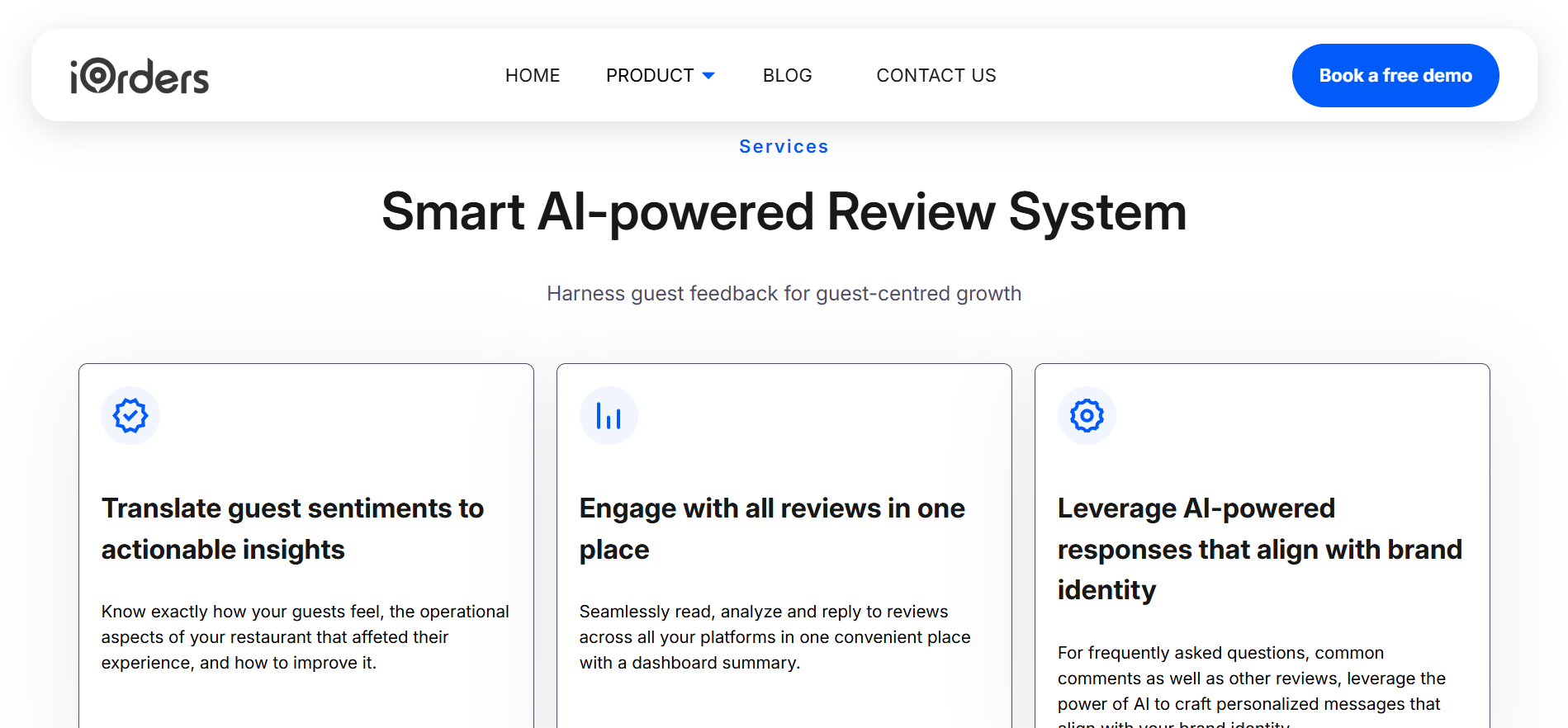
Manually tracking reviews across Google, social media, and delivery apps can be overwhelming. That’s where iOrders’ AI-powered review system steps in, offering automation, consistency, and control.
With iOrders, restaurant owners can:
A structured restaurant feedback system helps owners listen, adapt, and grow with confidence. From understanding diner sentiment to improving menu performance, feedback is the foundation of long-term success.
With iOrders, restaurants gain a commission-free, AI-powered solution that automates review management, streamlines operations, and strengthens customer relationships.
Book a demo with iOrders today to see how our intelligent feedback tools can help your restaurant thrive in a competitive market.
1. What is a restaurant feedback system?
A feedback system helps restaurants collect, manage, and analyze customer opinions across multiple channels, from dine-in to delivery, in one platform.
2. Why are feedback systems essential for restaurant growth?
They help restaurants identify service gaps, improve food quality, and build customer loyalty through data-backed decisions.
3. How does iOrders simplify review management?
iOrders uses AI to automate responses, centralize feedback, and provide actionable insights, saving time while enhancing accuracy.
4. Can feedback systems improve marketing campaigns?
Yes. By analyzing customer preferences, restaurants can tailor promotions, loyalty programs, and email campaigns more effectively.
5. Does iOrders charge commissions on feedback tools?
No. iOrders offers a commission-free, all-in-one platform for online ordering, marketing, and customer feedback management.
.png)