The food delivery market continues to expand as consumer demand for convenience and digital ordering grows across North America. In 2024, the United States generated an estimated $353 billion in food service revenue, with more than $95 billion coming from the meal delivery segment alone.
As delivery becomes a core revenue channel, platforms like DoorDash have gained significant market share. However, many restaurants are now exploring DoorDash competitors that offer different pricing structures, delivery models, and levels of operational control.
In this guide, you will discover the top DoorDash competitors and alternatives in 2026, and how they compare for restaurants looking to strengthen margins and maintain direct customer relationships.
Key Takeaways
Competition Intensifies: DoorDash faces fierce competition from major players like Uber Eats, Grubhub, and niche platforms such as Caviar and Instacart, each offering unique services to attract both customers and restaurants.
Innovations Lead the Way: Platforms are investing heavily in AI-powered delivery systems, real-time tracking, and integrated ordering tools to improve efficiency and customer satisfaction.
Restaurant Control: Alternative platforms like iOrders are gaining attention for offering commission-free ordering solutions, giving restaurants full control over customer data and eliminating third-party fees.
Technology is Key: From autonomous delivery robots to AI-driven marketing, technology is driving the next wave of growth in the food delivery industry, offering both opportunities and challenges for restaurants.
The Growth and Expansion of DoorDash
Founded in 2013 by Stanford students Tony Xu, Andy Fang, and Stanley Tang, DoorDash began as PaloAltoDelivery.com, a local delivery service in Palo Alto, California. DoorDash surpassed Uber Eats to become the leading food delivery operator in the U.S. This growth was fueled by strategic partnerships, technological innovation, and a focus on underserved suburban markets.
DoorDash offers a comprehensive suite of services, including:
Food Delivery: Connecting customers with local restaurants for meal delivery.
Grocery and Retail Delivery: Partnerships with retailers like Safeway, Walgreens, and Best Buy to deliver groceries and other products.
Subscription Service: DashPass, a membership program offering benefits like reduced fees and exclusive deals.
DoorDash currently has over 550,000 merchant partners and more than 37 million monthly active users.
8 Best DoorDash Competitors: Quick Overview
Before reviewing each platform in detail, the table below offers a high-level comparison of DoorDash competitors across the U.S. and Canada.
Top 8 DoorDash Competitors & Alternatives 2026
As the demand for food delivery services continues to rise, DoorDash faces increasing competition from both established players and new innovators in the market. In the following sections, we will dive into the Top 10 DoorDash Competitors, their key features, technological innovations, and how they stack up against DoorDash.
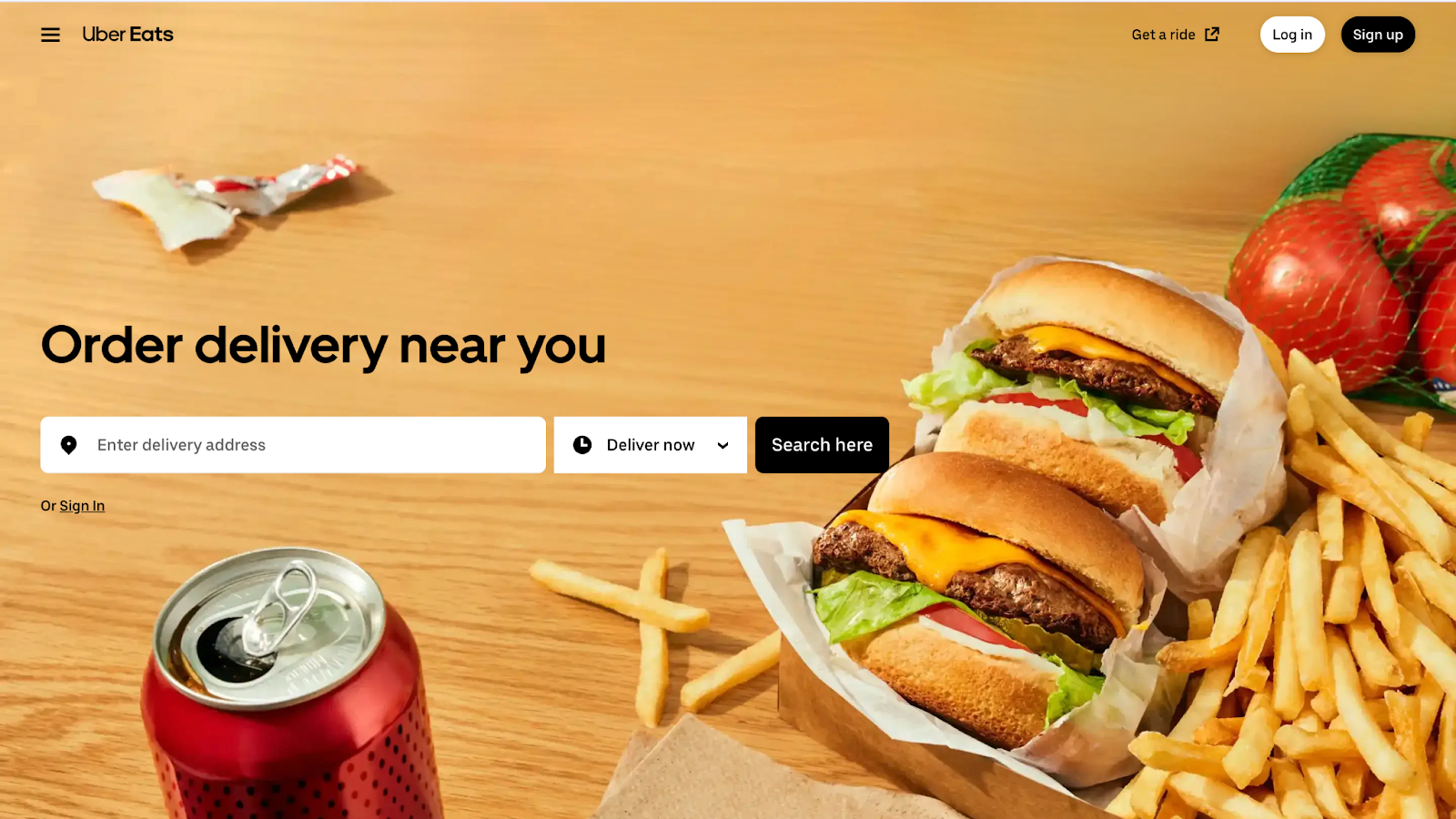
1. Uber Eat
Uber Eats, a subsidiary of Uber Technologies, has established itself as one of the largest and most popular food delivery services globally. Since its launch in 2014, it has rapidly expanded across multiple countries and is known for offering a wide variety of restaurant choices, ranging from local spots to fast-food chains. Uber Eats uses Uber's vast ride-sharing network, making deliveries swift and efficient, particularly in urban areas.
Key Features of Uber Eats
Global Reach: Available in over 6,000 cities across 45 countries.
Extensive Restaurant Partnerships: Partnered with restaurants of all sizes, from fast-food chains to local independent eateries.
Delivery Fleet: Uses Uber's existing network of drivers, which allows for quick delivery times.
Subscription Service: Uber Eats Pass, offering discounted delivery fees and exclusive perks for customers.
Integrated with Uber: A seamless experience for users who are familiar with Uber’s ride-sharing app.
Technological Innovations of Uber Eats
AI-Enhanced Menu Descriptions: Uber Eats utilizes AI to auto-generate menu item descriptions, saving restaurant staff time and ensuring consistency across listings.
AI-Powered Food Image Enhancement: The platform employs AI to improve low-quality food images by adjusting lighting and presentation, enhancing the visual appeal of the menu.
Automated Customer Review Summaries: AI analyzes customer reviews and provides restaurant owners with actionable insights, highlighting key feedback for service improvement.
Dynamic Pricing System: Uber Eats has implemented a dynamic pricing model that adjusts delivery fees based on factors like demand, weather, and traffic, aiming to optimize delivery efficiency and reduce wait times.
Real-Time Dispatching with Reinforcement Learning: The platform employs deep reinforcement learning to optimize order dispatching and fleet management.
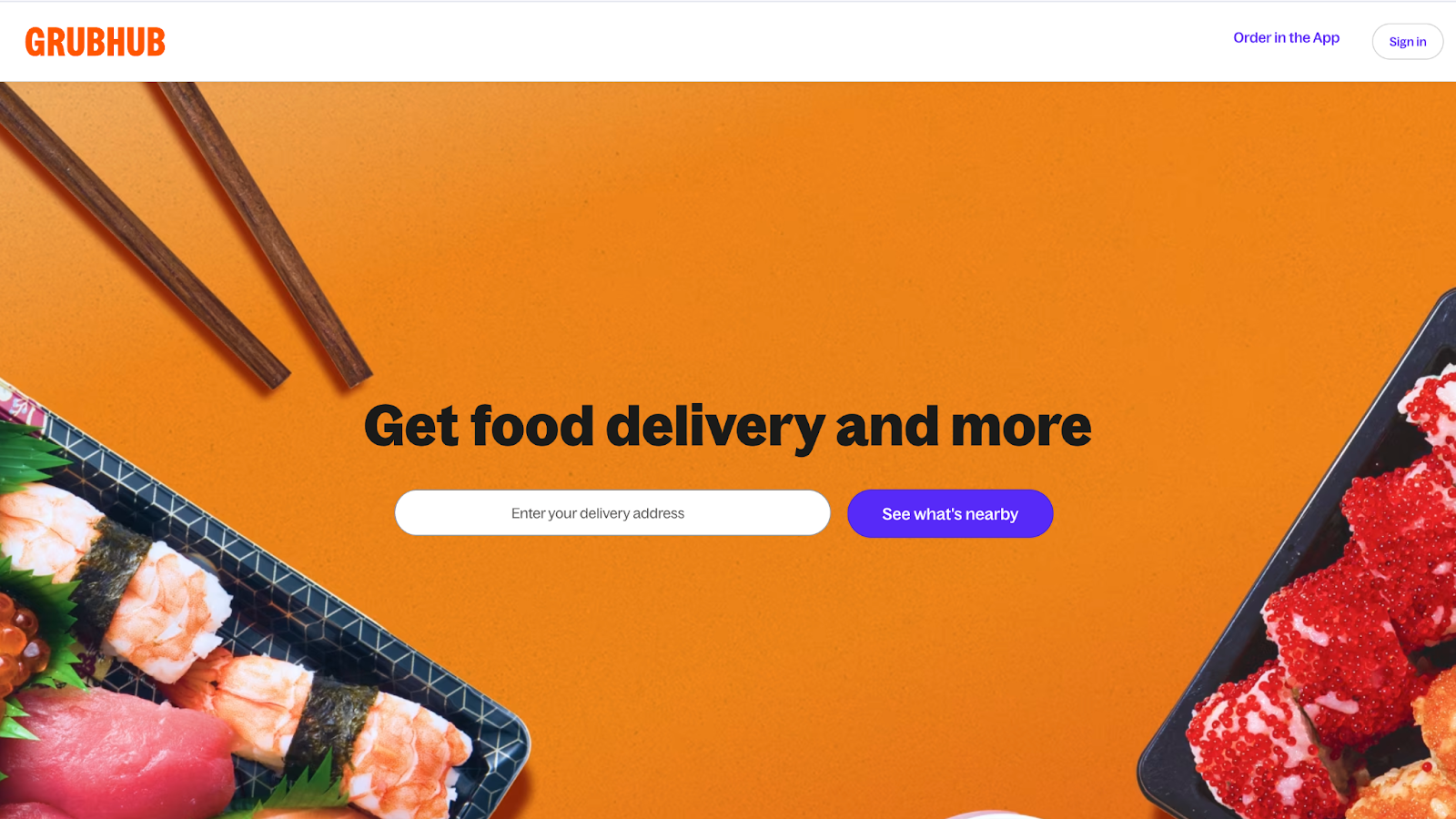
2. Grubhub
Grubhub, founded in 2004, is one of the pioneers in the food delivery space. It has a strong presence in the U.S. market and is known for offering a wide range of restaurants, including both local favorites and national chains. Acquired by Just Eat Takeaway, Grubhub's market presence has expanded, but it continues to face strong competition from platforms like DoorDash.
Key Features of Grubhub
Wide Restaurant Network: Over 300,000 restaurant partners across the U.S.
Multiple Ordering Channels: Customers can order via the Grubhub app, website, and even through integrated Google searches.
Subscription Service: Grubhub+, offering unlimited free delivery and other perks for a monthly fee.
In-App Marketing: Grubhub enables restaurants to run promotions directly within the app.
Commission Fees: Similar to Uber Eats, Grubhub charges restaurants 15-30% commission on orders.
Technological Innovations of Grubhub
AI-Powered Marketing: Grubhub uses AI tools to automate bidding, optimize targeting, and deliver detailed performance reports, improving restaurant ad campaigns.
Delivery Optimization: Grubhub partnered with Nash for smarter delivery orchestration, enabling efficient order management and a larger driver network.
Autonomous Delivery Robots: Grubhub launched autonomous delivery robots at select college campuses, reducing delivery costs and improving efficiency.
Enhanced Security: Grubhub has integrated Incognia’s fraud prevention technology to enhance platform security and customer safety.
Voice Assistant Integration: Grubhub integrated with voice assistants like Alexa, allowing users to place food orders through voice commands.
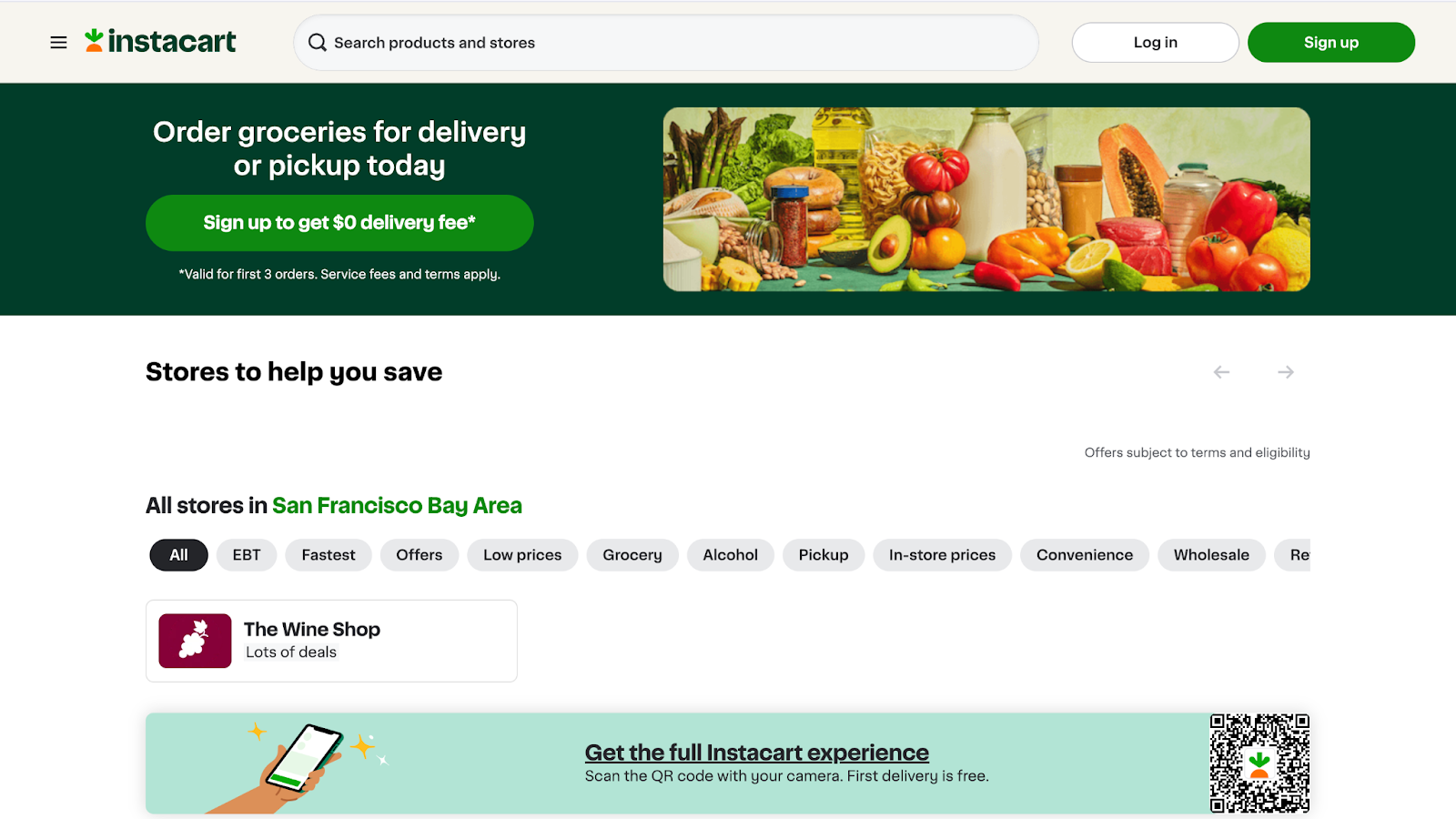
3. Instacart
Instacart is a leading online grocery delivery and pickup service operating across the U.S. and Canada. It partners with over 1,800 retailers, including major grocery chains, to provide customers with a vast selection of products delivered to their doorstep.
Key Features of Instacart
Wide Retailer Network: Access to products from over 80,000 stores, including Costco, CVS, and Target.
Same-Day Delivery: Offers delivery in as fast as one hour, depending on location and product availability.
Curbside Pickup: Allows customers to schedule a pickup time and have their order brought to their vehicle.
Instacart+ Membership: Provides benefits like reduced service fees and free delivery on orders over $35.
Real-Time Shopper Communication: Enables customers to chat with their personal shopper for updates and substitutions.
Technological Innovations of Instacart
Smart Cart Technology: Utilizes machine learning to suggest items based on past purchases and preferences.
AI-Powered Inventory Management: Helps retailers manage stock levels and predict demand more accurately.
Personalized Recommendations: Offers tailored product suggestions to enhance the shopping experience.
Advanced Search Filters: Allows users to find products by dietary needs, brand, or price range.
Order Tracking: Provides real-time updates on order status and delivery time.
Stop losing 20-30% of every order to third-party apps
The Restaurant Margin Playbook shows you how to build a direct ordering channel, own your customer relationships, and reclaim the margins delivery platforms are quietly taking.
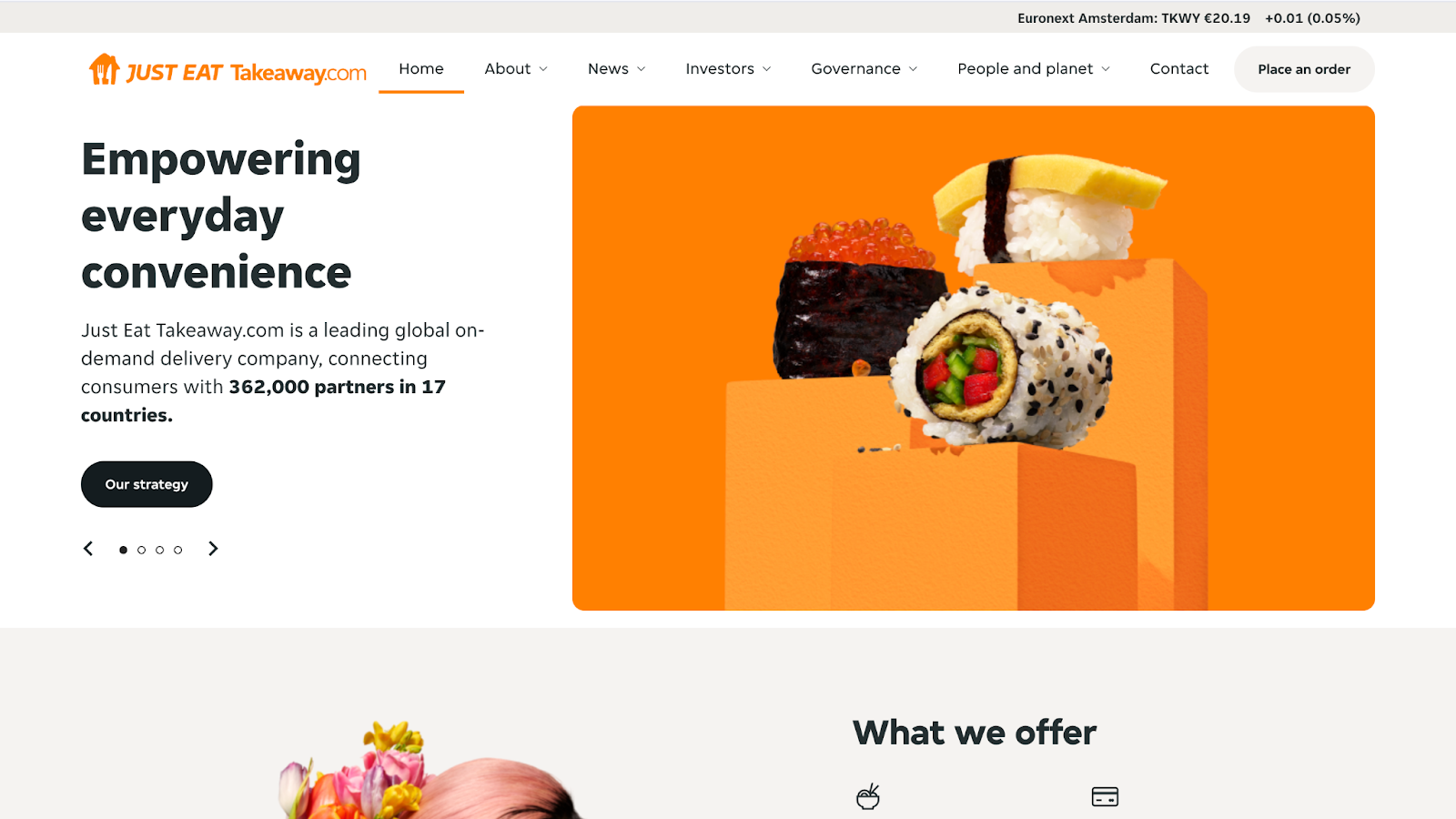
Just Eat Takeaway.com is a leading global online food delivery marketplace headquartered in Amsterdam. Formed in January 2020 through the merger of Just Eat and Takeaway.com, the company connects consumers with over 362,000 partners across 17 countries, including Canada, the UK, and several European nations.
Key Features of Just Eat Takeaway.com
Extensive Partner Network: Access to a vast array of restaurants and retail partners, offering consumers a wide variety of choices.
Hybrid Delivery Model: Combines marketplace and delivery service models to provide flexibility for partners with or without their own delivery capabilities.
Localized Branding: Operates under a single-brand identity in each country to effectively reach consumers.
Consumer Convenience: Empowers everyday convenience for consumers, partners, employees, and couriers through its platforms.
Technological Innovations of Just Eat Takeaway.com
JET 360 Dashboard: A custom-built interactive country and city performance dashboard that provides insights to improve local operations.
AI-Powered Delivery Solutions: Piloting drone deliveries in Ireland and autonomous ground robots in Switzerland to enhance delivery efficiency.
Data-Driven Insights: Utilizes aggregated data to optimize delivery routes, predict demand, and improve customer satisfaction.
AI Assistant for Ordering: Introduced an AI Assistant in Australia to help customers search, customize, and place orders via text-based chat.
5. SkipTheDishes
SkipTheDishes, often referred to as "Skip," is Canada's leading online food delivery service, headquartered in Winnipeg, Manitoba. Founded in 2012 by brothers Josh and Chris Simair, the platform connects customers with over 50,000 restaurant partners across more than 450 cities and towns nationwide.
Key Features of SkipTheDishes
Extensive Restaurant Network: Access to a diverse range of local and national chain restaurants.
Flexible Delivery Options: Customers can choose between delivery and pickup services.
Real-Time Order Tracking: Provides customers with live updates on their order status.
Multiple Payment Methods: Supports various payment options, including credit/debit cards, Apple Pay, Google Pay, and Skip gift cards.
Promotions and Discounts: Offers regular promotions to attract and retain customers.
Technological Innovations of SkipTheDishes
AI-Powered Customer Experience: Utilizes artificial intelligence to enhance customer service and optimize menu offerings.
Stripe Integration: Employs Stripe's machine learning technology to increase payment approval rates and reduce chargeback costs.
Courier App Redesign: Recently launched a redesigned courier app to improve efficiency and user experience for delivery partners.
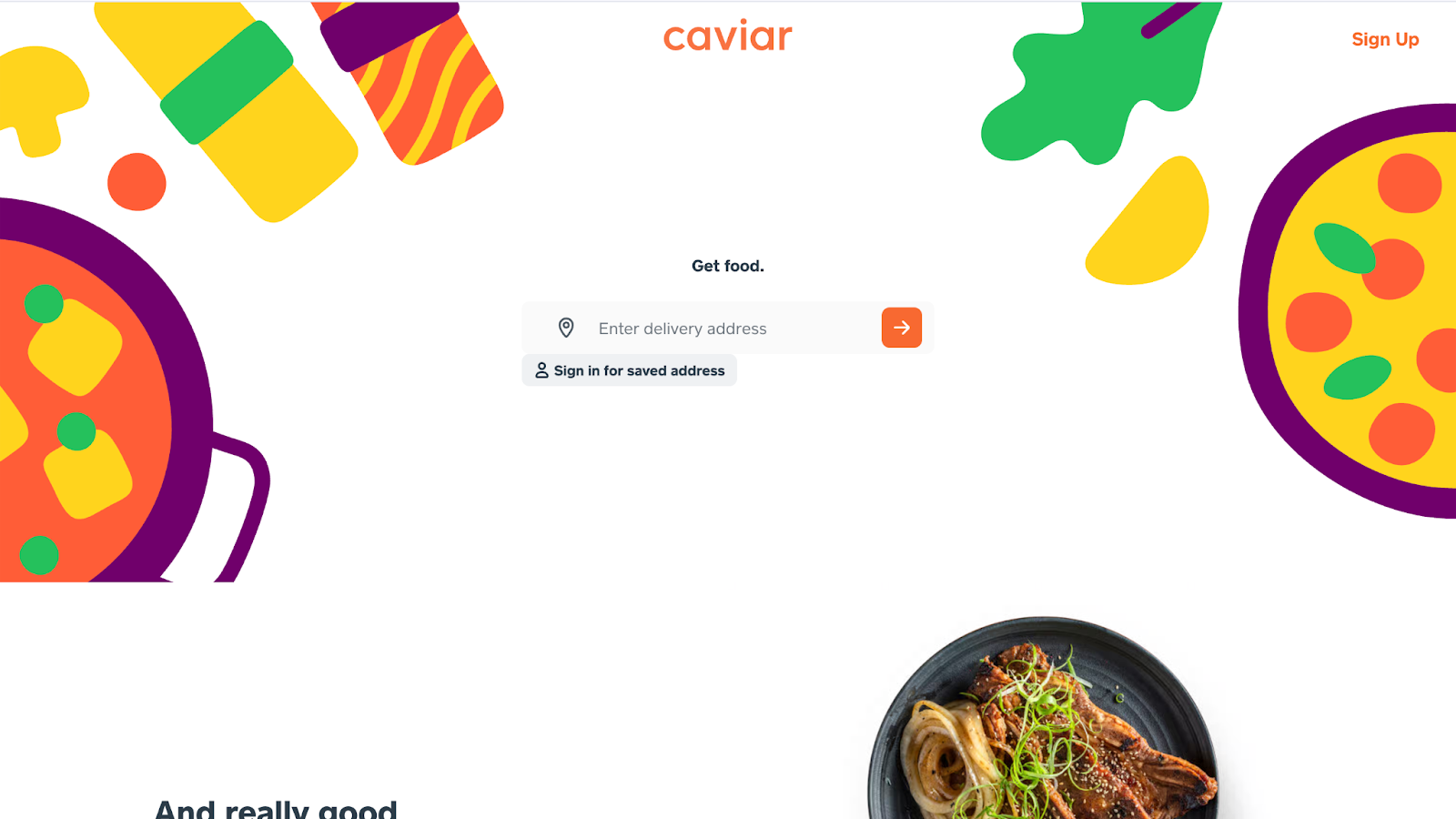
6. Caviar
Caviar is a premium food delivery platform that partners with a curated selection of high-end restaurants to offer quality dining experiences at home. Founded in 2012 and acquired by DoorDash in 2019, Caviar operates in over 25 U.S. cities, providing access to exclusive eateries not typically available on other delivery platforms.
For Restaurant Owners, partnering with Caviar allows restaurants to reach a clientele willing to pay a premium for quality dining experiences at home.
Key Features of SkipTheDishes
Curated Restaurant Selection: Offers a handpicked list of upscale and exclusive restaurants.
Flat Delivery Fee: Charges a flat delivery fee, often around $9.99, regardless of order size.
No Subscription Required: Does not require a subscription to access its services.
Real-Time Tracking: Provides real-time order tracking for customers.
No-Contact Delivery: Offers no-contact delivery options for safety and convenience.
Technological Innovations of SkipTheDishes
Integration with DoorDash: While Caviar maintains a separate app, it operates on the same platform as DoorDash, utilizing the same delivery infrastructure.
User-Friendly Interface: Features a clean and intuitive interface for both customers and restaurant partners.
Advanced Analytics: Provides restaurant partners with data-driven insights to optimize menu offerings and delivery operations.
7. Seamless
Seamless is a food delivery platform that connects customers with local restaurants, allowing users to browse menus, place orders, and track deliveries through the app or website. It operates primarily in New York City, offering a wide range of dining options from various eateries. Partnering with Seamless allows restaurants to reach a broader customer base through a well-established platform.
Key Features of Seamless
Extensive Restaurant Network: Provides access to a diverse selection of local restaurants.
User-Friendly Interface: Allows customers to easily browse menus and place orders.
Real-Time Order Tracking: Enables customers to track their orders from preparation to delivery.
Multiple Payment Options: Supports various payment methods for customer convenience.
Promotions and Discounts: Offers deals and discounts to attract and retain customers.
Technological Innovations of Seamless
Integration with Grubhub: Seamless operates under the Grubhub umbrella, benefiting from shared technology and infrastructure.
Advanced Dispatching Algorithms: Utilizes sophisticated algorithms to optimize delivery routes and reduce wait times.
Data Analytics: Employs data analytics to provide insights into customer preferences and ordering patterns.
Mobile Application: Features a mobile app that enhances user experience with features like order tracking and notifications.
8. Slice
Slice is a food ordering and delivery platform focused specifically on independent pizza restaurants across North America. The platform connects local pizzerias with customers through online ordering tools designed to help small businesses compete with large chains and major delivery marketplaces.
Key Features of Slice
Independent Restaurant Focus: Designed specifically for locally owned pizza restaurants rather than large chains.
Lower Fee Structure: Offers more cost-effective pricing compared to traditional third-party delivery marketplaces.
Online Ordering System: Enables restaurants to accept direct orders through web and mobile platforms.
Marketing Support: Provides promotional tools that help independent restaurants attract and retain customers.
Customer Loyalty Tools: Helps restaurants build repeat business through targeted engagement features.
Technological Innovations of Slice
Dedicated Pizza Ordering Infrastructure: Optimized ordering experience tailored to pizza menus and operations.
Integrated Payment Processing: Supports seamless digital payments for faster checkout and order management.
Data Insights for Operators: Provides restaurants with insights into customer behavior and ordering trends.
Mobile Ordering Experience: Offers a user-friendly mobile interface for customers to place and track orders efficiently.
Despite the impressive technological innovations and market reach of these established platforms, restaurants continue to face a challenge, which is maintaining control over their brand identity and customer relationships while paying substantial commission fees. This is where white-label solutions like iOrders promise to return ownership back to restaurant owners with its commission-free identity.
iOrders: A Commission-Free Delivery Solution for Restaurants
iOrders provides a White-Label ecosystem, meaning the technology stays "invisible" while your restaurant's brand stays front and center. Unlike marketplaces that sandwich your kitchen between a dozen competitors, iOrders gives you a dedicated space to grow your digital revenue.
0% Commission Model: Stop losing 15–30% on every ticket. iOrders operates on a transparent, flat-fee structure, ensuring that as your delivery volume grows, your profit margins actually widen.
Full Data Ownership: When a guest orders through iOrders, you get their email, phone number, and order history. This allows you to run targeted re-marketing campaigns, something DoorDash and Uber Eats strictly prevent.
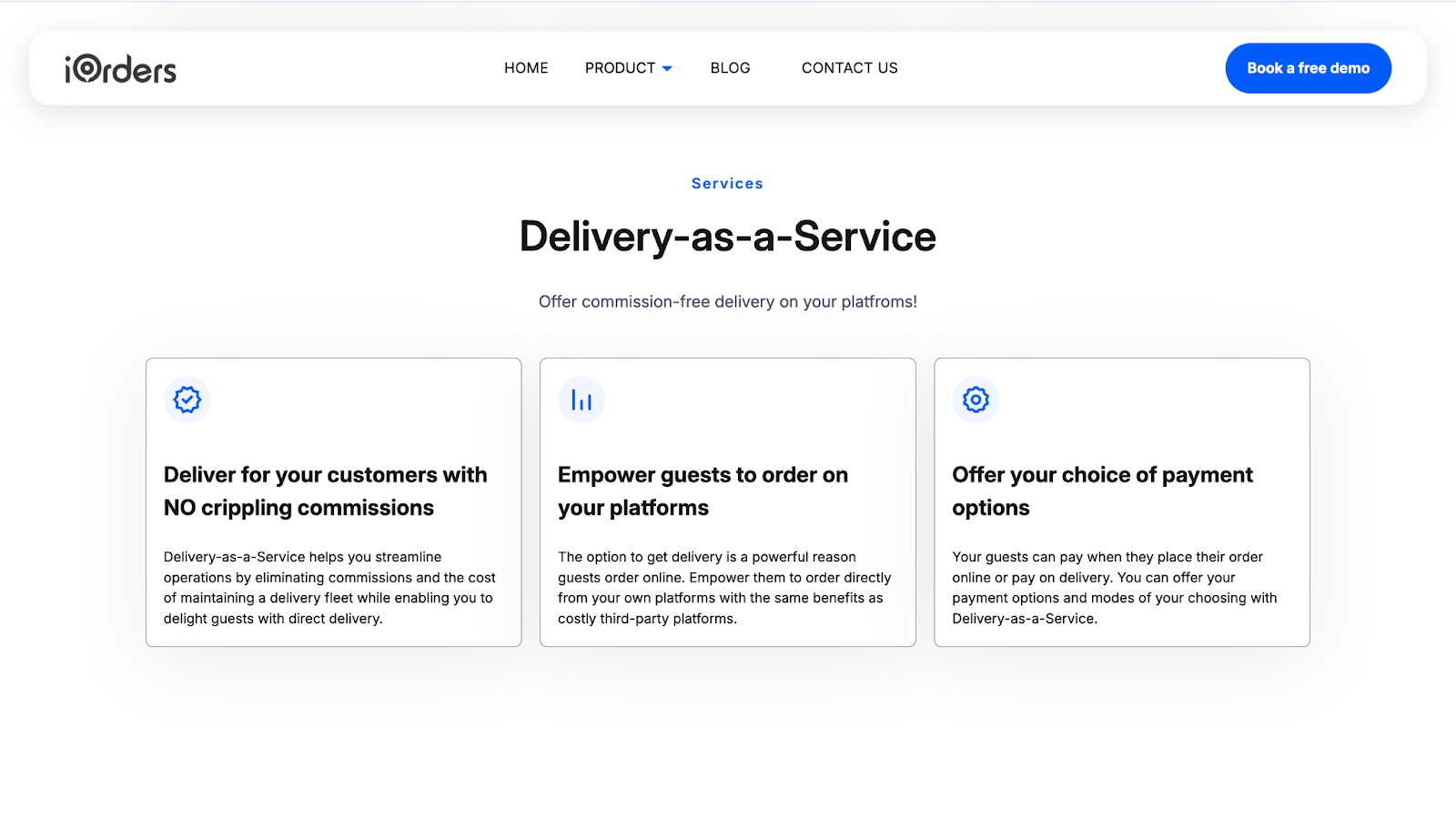
Delivery-as-a-Service (DaaS): You don't need your own drivers to leave the marketplaces. iOrders integrates with professional courier networks, allowing you to call a driver for a flat delivery fee only when you need one.
Unified Control Center: Manage your website, branded mobile app, and QR-code ordering from a single dashboard. Whether a guest is ordering from their couch or their table, the workflow is consolidated.
Technological Edge for the Modern Kitchen
In 2026, automation must be a partner, not a hurdle. iOrders builds that automation directly into your daily routine:
AI-Powered Review Management: Automatically monitor and respond to guest feedback across platforms, ensuring your reputation remains high without requiring hours of manual work.
Dynamic Menu Syncing: Update a price or mark an item as "sold out" once, and it reflects across your website, app, and kiosks instantly.
Custom Loyalty Engine: Unlike generic app rewards, iOrders lets you build custom "VIP" tiers that reward your most frequent direct-ordering guests, driving a higher Lifetime Value (LTV).
While marketplaces like DoorDash are useful for discovery, iOrders is the partner you need to turn those first-time diners into high-margin, loyal customers you actually own.
Conclusion
The food delivery market continues to evolve, with DoorDash maintaining a dominant presence while facing increased competition from a variety of platforms. From global giants like Uber Eats and Grubhub to more niche players such as Caviar and Bite Squad, each competitor offers unique features and technological innovations aimed at enhancing convenience, reducing costs, and optimizing customer experience.
If you’re looking to take control of your restaurant’s delivery system, iOrders offers a commission-free solution that allows you to manage everything directly from your own platform. Book a demo today to see how iOrders can streamline your operations and enhance your delivery service.
FAQs
1. What are the best DoorDash competitors in the U.S. and Canada?
Top DoorDash competitors in North America include Uber Eats, Grubhub, SkipTheDishes, Instacart, and Postmates. Each platform serves different restaurant and customer needs, depending on delivery focus and regional coverage.
2. Are DoorDash competitors cheaper for restaurants?
Most DoorDash competitors operate on similar commission-based pricing models. Costs may vary by plan or promotion, but long-term fees are often comparable across major platforms.
3. Which DoorDash competitors are most popular in Canada?
SkipTheDishes and Uber Eats are among the most widely used DoorDash competitors in Canada. Instacart is also popular for grocery and retail delivery services.
4. Do DoorDash competitors give restaurants control over customer data?
Most third-party delivery platforms retain control over customer data and the ordering experience. Restaurants typically receive limited access to customer insights for marketing or retention.
5. Are there commission-free alternatives to DoorDash?
While most DoorDash competitors charge commissions, some delivery solutions allow restaurants to accept orders directly through their own branded channels. These models help reduce dependency on third-party marketplaces.

.jpg)
.png)
.webp)