In today’s competitive restaurant scene, having a strong online presence is a must. Research shows that about 89% of people check online reviews before choosing where to eat. Also, 77% of diners visit a restaurant’s website before deciding to dine in or order out. This highlights how important it is to show up in search results when potential customers are looking for places to eat.
But many restaurants struggle with SEO. Without a solid strategy, your business can easily get lost in the shuffle, making it harder to attract customers. In this guide, we’ll break down the steps to help you improve your online visibility and stand out when it matters most.
Key Takeaways
Local Keyword Research is Key: Focus on location-specific terms to capture nearby customers searching for your restaurant. Tools like Google Keyword Planner and SEMrush help identify high-performing keywords.
Mobile Optimization Matters: With most customers searching from mobile devices, a responsive website helps to retain visitors and improve your Google rankings. Slow-loading sites lead to high bounce rates and missed opportunities.
Schema Markup Improves Visibility: Adding structured data, like menu details and customer reviews, increases the chances of appearing in rich snippets and makes your restaurant easier to find in search results.
Regular Content Updates Drive Engagement: Fresh content, such as updated menus, seasonal promotions, and customer stories, signals to Google that your site is active, which can improve rankings and attract more traffic.
Social Media Engagement is Essential: Consistently posting engaging content and interacting with followers builds a loyal community. High-quality images, behind-the-scenes posts, and reviews can increase a restaurant’s visibility.
What Is SEO for Restaurants?
SEO, or Search Engine Optimization, is the practice of optimizing your restaurant's online presence to improve its visibility in search engine results. This involves optimizing on-page elements, like content, keywords, and off-page elements, like building quality backlinks and a local SEO strategy, like optimizing the Google My Business profile.
For example, incorporating relevant keywords like "best sushi in [City]" or "family-friendly Italian restaurant near me" can attract potential customers searching for those specific terms.
But how do search engines determine which websites to display in search results?
Search engines use algorithms that evaluate numerous factors, including the relevance and quality of your content, the structure of your website, and the number of reputable sites linking to yours. Implementing the right SEO strategies can lead to better website traffic, higher online orders, and a stronger online reputation.
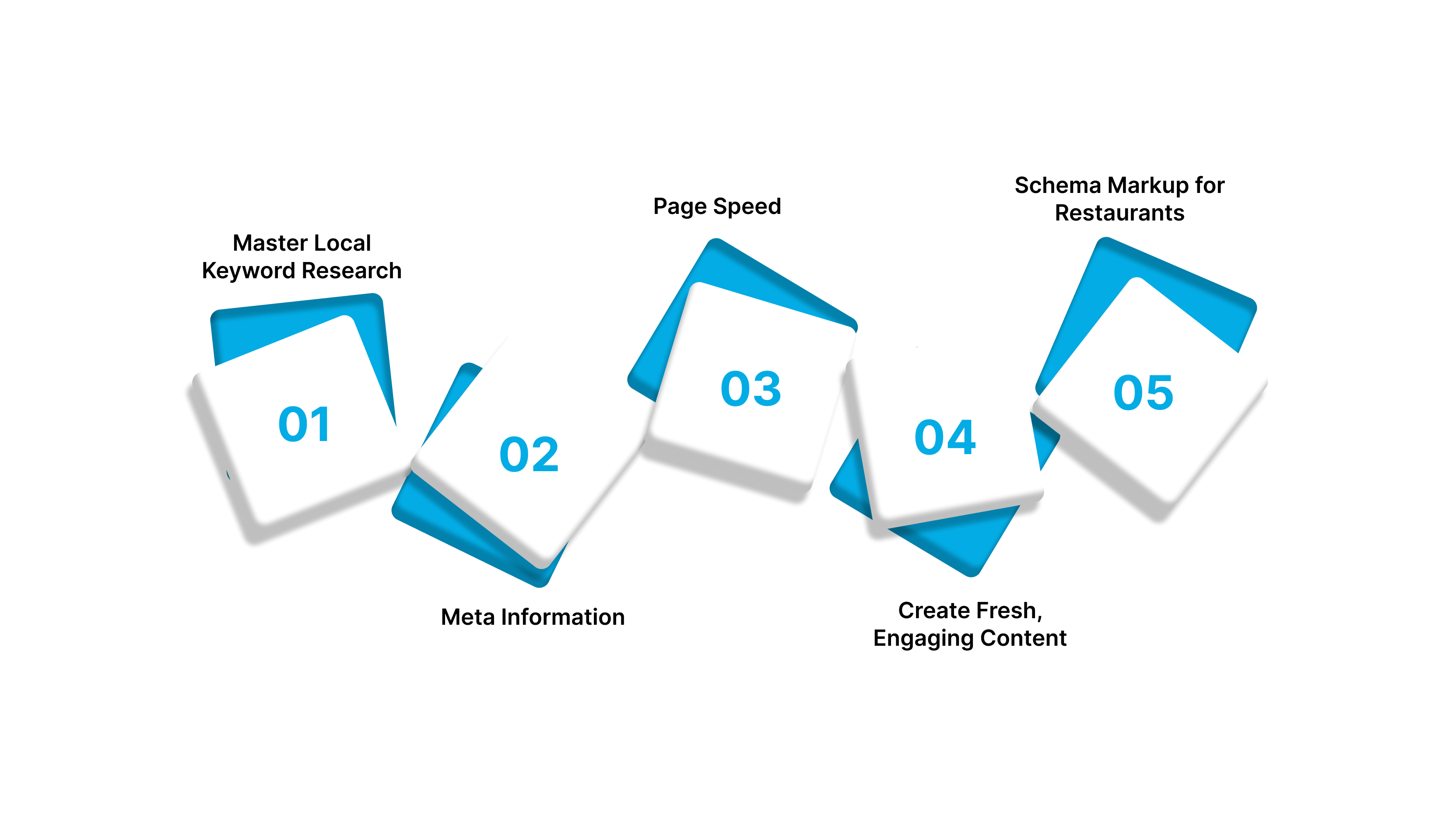
Top 5 On-Page SEO Strategies for Restaurants
A crucial part of optimizing your restaurant for Google is making sure that all on-page SEO factors on your website are properly addressed. On-page SEO involves all the elements you can control directly on your website to improve its search engine ranking and user experience.
1. Master Local Keyword Research
Local keyword research helps restaurants target the right audience by focusing on location-specific terms. This process involves identifying the keywords people in your area are searching for when looking for dining options. By using these keywords on your website, you increase the chances of appearing in search results when customers look for places to eat nearby.
Identify Core Services and Offerings: List your restaurant's main services, types of cuisine, and specialties (e.g., Italian, vegan, gluten-free options).
Add Location-Specific Terms: Use geo-specific terms like city names, neighborhoods, or landmarks (e.g., "Toronto vegan restaurant," "near CN Tower").
Use Keyword Research Tools: Check tools like Google Keyword Planner, Ubersuggest, and SEMrush to find relevant local keywords.
Check Competitor Keywords: Look at the keywords your competitors are targeting to find more ideas.
Create a Keyword Map: Match keywords to specific pages on your website to improve on-page SEO.
Track and Update: Monitor keyword rankings and traffic with Google Analytics and Search Console, making adjustments as needed.
2. Meta Information
Meta information, including title tags and meta descriptions, provides search engines and users with concise details about your web pages. Properly optimized meta tags can improve your restaurant’s visibility in search results and encourage more clicks from customers.
Title Tag: The title tag is a crucial part of on-page SEO. It should include your primary keyword and be concise, under 60 characters, so that it displays completely in the search results.
Meta Description: This brief description appears below your title in search results. It should summarize the content of the page in 150-160 characters, include target keywords, and encourage users to click through.
Alt Text: Alt text describes images for search engines and visually impaired users. It should be clear, concise, and include keywords to improve image search rankings.
Header Tags (H1, H2, etc.): Header tags structure your content for both users and search engines. The H1 tag should contain the primary keyword, and subsequent tags (H2, H3) organize content into easy-to-read sections.
URL Structure: URLs should be clean, concise, and include relevant keywords. Avoid long, complex URLs and use hyphens to separate words for better readability and SEO.
3. Page Speed
Page speed refers to the time it takes for a web page to fully load in a user's browser. For restaurants, a fast-loading website is essential to retain visitors and encourage actions like reservations or orders.
Impact on User Experience: Slow-loading pages can frustrate users, leading to higher bounce rates and lower engagement. Studies indicate that 53% of mobile users abandon sites that take longer than 3 seconds to load.
Effect on SEO Rankings: Search engines like Google consider page speed as a ranking factor. A delay in page load time can affect your site's position in SERP.
Conversion Rates: Faster websites tend to have higher conversion rates. For instance, Walmart reported a 2% increase in conversions for every one-second improvement in page load time.
Mobile Optimization: With a significant number of users accessing restaurant websites via mobile devices, a responsive design can improve user experience.
Image Optimization: Large, uncompressed images can slow down your website. Using appropriate file formats can improve load times.
4. Create Fresh, Engaging Content
Regularly updating your restaurant's website with fresh content helps improve search engine rankings and keeps your audience engaged. This could include seasonal menu updates, blog posts, and event announcements, all of which signal to search engines that your site is active and relevant.
Menu Updates and Seasonal Promotions: Keep your online menu up-to-date and feature seasonal promotions. This gives search engines fresh content to index while offering customers the latest options.
Blog Posts and Event Announcements: Share blog posts, behind-the-scenes stories, or updates about upcoming events like live music or special offers.
User-Generated Content: Encourage customers to share their dining experiences, and feature their content on your website. This promotes community and authenticity, making your restaurant feel more approachable.
5. Schema Markup for Restaurants
Schema markup is a type of structured data that helps search engines better understand your website's content. For restaurants, implementing schema markup can increase your visibility and user experience, especially through rich snippets.
Navigation and Breadcrumbs: Implementing breadcrumbs helps search engines understand your website's structure and improves the way your site appears in search results. It also makes it easier for customers to navigate your website.
Menu Indexing: Your menu should be in HTML format or structured data, not just a PDF. Google can't easily crawl PDFs, which means missed opportunities to rank for specific dishes.
Tip: Mark up your menu using schema to help search engines display your dishes, pricing, and nutritional information directly in search results. This can help attract more customers looking for specific items or dietary options.
Local SEO Strategy for Restaurants
Studies show that diners usually choose from the top 5 listings on Google Maps, and businesses with complete Google Business Profiles are more likely to be considered reputable.
Complete and Accurate Information: Your business name, address, phone number (NAP), website URL, and hours of operation should be accurate.
High-Quality Photos: Upload clear, high-resolution images of your restaurant's interior, exterior, and menu items. Listings with photos receive 42% more requests for directions and more click-throughs to websites.
Regular Updates: Post updates about special offers, events, or menu changes. This not only informs customers but also signals to Google that your business is active and engaged.
Enable Messaging: Activate the messaging feature to allow customers to contact you directly through your GMB. This facilitates real-time communication and can lead to increased bookings and orders.
Customer Reviews and Responses: Most customers trust online reviews, which is why it is critical to encourage them to leave reviews and respond promptly to all of them. Garnering positive reviews will also help to show up on the Google Maps listing.
iOrders' Smart AI-Powered Review System helps restaurant owners manage and respond to customer reviews from multiple platforms in one place. It uses AI to analyze customer sentiment and provide clear feedback, helping owners reply to reviews, thereby improving their online reputation and attracting more customers with positive reviews.
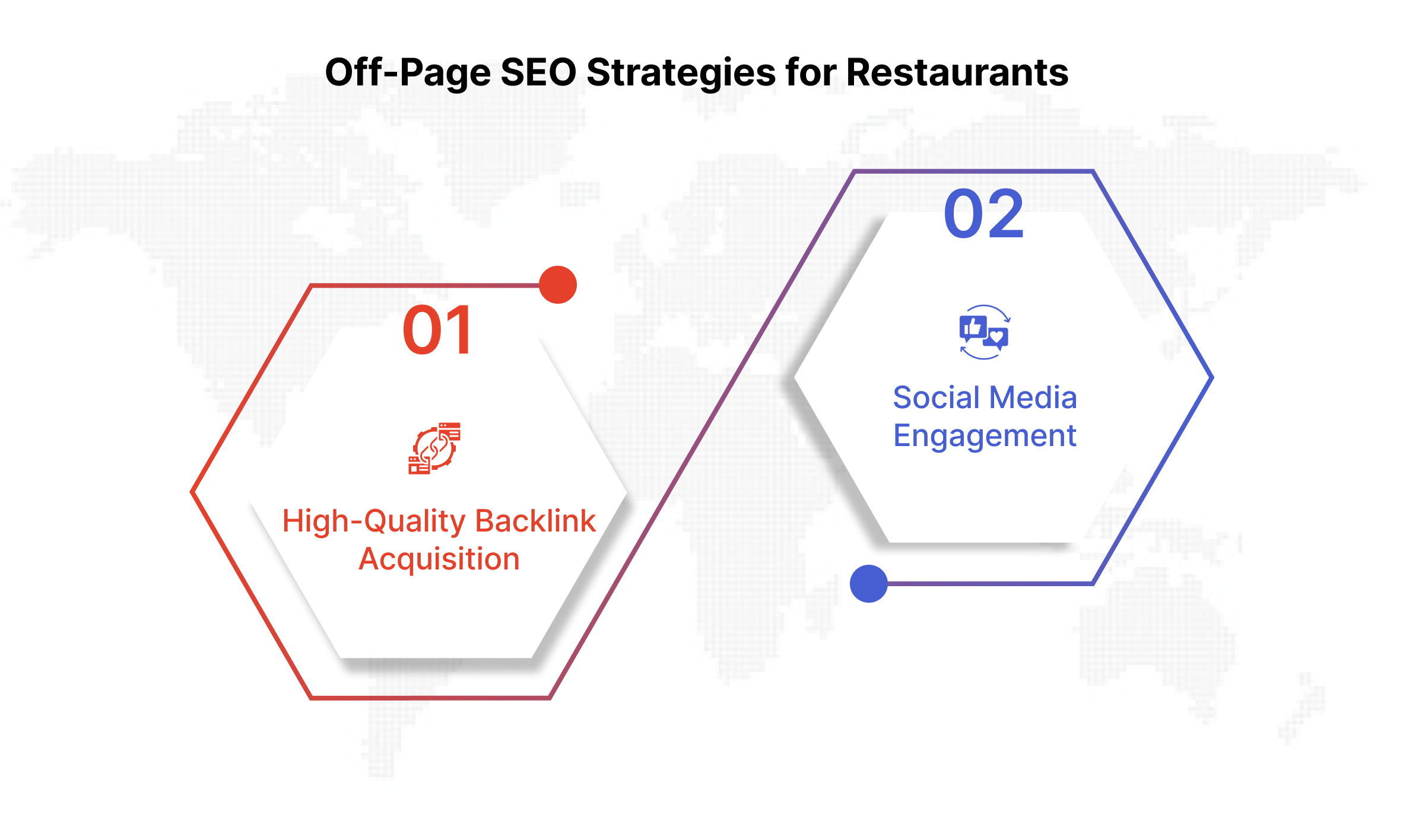
Off-Page SEO Strategies for Restaurants
Off-page SEO focuses on activities outside your website that can improve your restaurant's authority in search engines. This includes building high-quality backlinks, engaging on social media, and local partnerships to increase brand awareness and drive more traffic to your site.
1. High-Quality Backlink Acquisition
Acquiring high-quality backlinks is essential for improving your website's authority and search engine rankings. Backlinks from reputable and relevant sources signal to search engines that the content published in your restaurant business is trustworthy, further increasing visibility and attracting more customers.
Engage with Local Media and Food Bloggers: Collaborate with local journalists, food critics, and bloggers to feature your restaurant in their articles or reviews. For instance, mention of your restaurant in a local food magazine can boost your online presence.
Submit to Niche Directories and Review Sites: List your restaurant on industry-specific directories and review platforms like Yelp, TripAdvisor, and OpenTable. These platforms can drive traffic and improve your site's authority.
Create Shareable Content: Develop high-quality, engaging content like unique recipes, cooking tips, or behind-the-scenes stories. When your content provides value, other websites are more likely to reference and link back to it.
Build Relationships with Local Businesses: Partner with nearby restaurants for cross-promotions or events. For example, collaborate with a local winery for a wine-tasting event, and both businesses can link to each other's websites and benefit from shared traffic.
2. Social Media Engagement
Social media has become a pivotal platform for restaurants to connect with their audience, build brand awareness, and drive foot traffic. A strong social media presence can increase brand recognition and some busy weeks ahead.
Consistent Posting Schedule: Maintain an active presence by posting regularly. Aim for at least 3 posts per week to keep the diners engaged.
Platform Selection: Focus on platforms where your target audience is most active. Instagram and Facebook are popular choices for restaurants due to their visual nature and local reach.
Content Variety: Show high-quality images of your dishes and customer testimonials; the more variety, the better and more appealing.
Engagement with Followers: Actively engage with your audience by responding to comments, messages, and reviews. Encourage user-generated content by asking customers to share their dining experiences and tag your restaurant.
Hashtag Strategy: Use relevant and trending hashtags to increase the discoverability of your posts. Incorporate location-specific hashtags to attract local diners.
Analytics and Performance Tracking: Regularly monitor the performance of your posts using analytics tools provided by social media platforms. Analyzing metrics such as engagement rates and reach helps in refining your strategy.
How iOrders Helps Restaurants Improve Digital Presence
iOrders is a platform designed to help restaurants build and manage their own branded online presence without relying on third-party delivery services. By offering commission-free online ordering and a suite of integrated services, iOrders helps restaurant owners to take control of their digital operations and boost profitability.
Website and QR Ordering: Provide customers with the convenience of ordering directly from your website or by scanning a QR code. This feature supports dine-in, pickup, and delivery options.
Delivery-as-a-Service (DaaS): Offer branded delivery services without the need to manage a fleet. iOrders connects you with trusted third-party delivery partners, charging a flat fee per delivery instead of per-order commissions.
Managed Marketing Services: Engage with your audience through targeted digital marketing campaigns. Use tools for promotions, customer segmentation, and performance analytics to drive customer retention and acquisition.
Loyalty and Rewards: Implement customizable loyalty programs to incentivize repeat business. Offer personalized rewards and referral programs to convert first-time customers into regular patrons.
Smart Campaigns: Run automated marketing campaigns based on customer behavior and preferences.
White-Label Mobile App: Launch your own branded mobile app for ordering, loyalty tracking, and customer engagement. Provide a consistent experience for your customers, reinforcing brand identity.
Conclusion
Building a result-driven SEO strategy for your restaurant is essential to standing out in a competitive market. By optimizing your website, creating engaging content, and focusing on local SEO, you can increase visibility, attract more customers, and ultimately drive higher conversions. Using strategies like optimizing your Google Business Profile, improving page speed, and implementing schema markup can all contribute to a stronger online presence.
If you're looking to further streamline your restaurant's operations and improve customer engagement, iOrders.ca provides everything you need to manage your restaurant’s digital presence effectively. Ready to take your restaurant's digital presence to the next level? Book a demo with iOrders today!
FAQs
1. What are the 4 P's of marketing for restaurants?
The 4 P's of marketing for restaurants are Product, Price, Place, and Promotion. These elements help define the restaurant's offerings, set competitive pricing, ensure accessibility, and attract customers through effective marketing strategies.
2. What is the golden rule of SEO?
The golden rule of SEO is to focus on creating high-quality, relevant content that satisfies user intent. Search engines prioritize content that provides value and answers the questions or needs of searchers.
3. What is the best marketing strategy for restaurants?
The best marketing strategy for restaurants combines local SEO, social media engagement, and loyalty programs. Building strong customer relationships, showcasing authentic experiences, and using targeted promotions can drive repeat business and attract new customers.
4. Can I do SEO myself?
Yes, you can do SEO yourself by learning and applying strategies like keyword research, optimizing on-page elements, and building backlinks. However, for more complex strategies and consistent results, professional help can provide significant advantages.
5. How to make a restaurant viral?
To make a restaurant viral, create shareable content on social media, host unique events, and encourage customers to post about their experiences. Collaborations with influencers or running a trending campaign can also help generate buzz quickly.


.png)