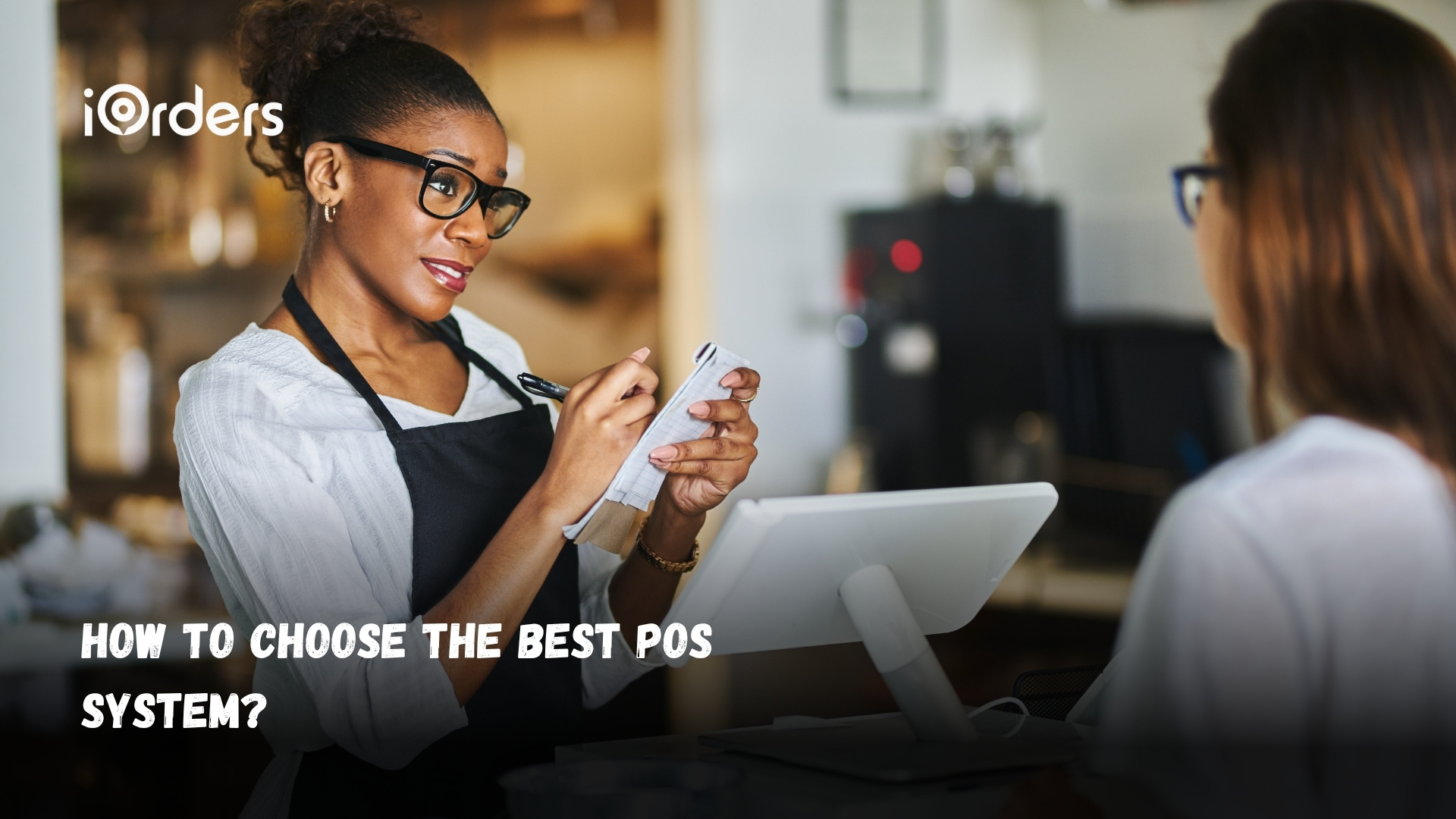
Choosing the best POS system can make a huge difference in how smoothly your business runs. A good POS system does more than just process payments; it helps manage inventory, track sales, and improve customer experiences. With so many options available, finding one that fits your business needs, size, and budget can feel overwhelming.
This blog will guide you through key factors to consider, from cost and security to mobility and integrations, so you can make an informed decision for long-term success.
Key Takeaways
A great POS must integrate seamlessly with Commission-Free Online Ordering to bypass third-party fees and boost profit margins.
Prioritize systems that offer Delivery-as-a-Service flexibility and robust, real-time Inventory Management to reduce food waste.
Data ownership is critical: The POS must enable you to control customer data for effective Restaurant Loyalty Programs and marketing campaigns.
Ensure the system meets current security standards, including PCI Compliance, EMV chip, and NFC payments.
Look beyond the initial cost; evaluate long-term reliability, third-party integration capabilities, and 24/7 reliable customer support.
6 Essential Step Process for Choosing Your Restaurant POS
To future-proof your business, avoid focusing solely on the lowest price. Instead, follow this structured process that prioritizes functionality, integration, and security—the hallmarks of a great POS.
1. Define Your Industry-Specific Needs and Workflow
Your POS must be tailored to your business model; a QSR needs speed, while a full-service restaurant needs detailed table management. Start by documenting your unique operational requirements.
Order Flow: Do you primarily handle counter service (QSR), delivery-only (Ghost Kitchen), or tableside ordering? Your POS must have an intuitive interface for that specific flow.
Menu Complexity: Look for easy menu customization, modifier management, and the ability to instantly sync menus across all channels, dine-in, website, and White-Label Mobile App.
Kitchen Operations: Ensure the system connects directly to a Kitchen Display System (KDS). This is non-negotiable for reducing manual errors and improving service speed, especially during peak hours.
Scalability: Choose a cloud-based system that can easily support new locations, mobile POS devices for line-busting, and self-service kiosks as your business grows.
This focus on operational efficiency leads us directly to the second critical factor: ensuring your new POS can communicate effectively with all the essential software that runs your modern digital business.
Provides flexible logistics (your staff or third-party couriers like Uber Direct) without paying commission on the order value.
iOrders’ Delivery-as-a-Service ensures a white-labeled customer experience.
Accounting
Links sales data directly to platforms like QuickBooks or Xero, simplifying tax season and eliminating manual data entry.
Look for pre-built or easy-to-configure API connections.
Staff Management
Connects to scheduling and payroll software to track employee hours, wages, and performance metrics efficiently.
Choose a system with built-in or integrated time clock and labor cost analysis.
Avoid being locked into proprietary solutions. A flexible POS, which works with multiple integrated partners, is essential for avoiding unnecessary costs and limitations.
Beyond integration, the next vital consideration is how securely and flexibly your system handles money.
3. Evaluate Payment Security and Flexibility (PCI Compliance)
These days, cyberattacks on small businesses are a growing threat. Your POS must meet the highest security standards while accommodating customer payment preferences to be considered a great POS.
PCI Compliance: The system must adhere to the Payment Card Industry Data Security Standard (PCI DSS). This protects sensitive cardholder data, shields you from liability, and is non-negotiable.
End-to-End Security: Look for features like end-to-end encryption and data tokenization. This ensures that payment data is protected from the moment the card is swiped until the transaction is complete.
EMV Chip Card Acceptance: Ensure the hardware accepts EMV chip card payments. This is the security standard in Canada and the US, reducing fraud risk significantly.
NFC and Digital Wallet Support: Choose a POS system that supports NFC payments for contactless transactions. Accepting popular digital wallets like Apple Pay and Google Pay meets customer expectations and speeds up the checkout process.
4. Demand Robust Inventory Management Integration
Running a Quick Service Restaurant on thin margins requires tight inventory control. Your POS should be the single source of truth for your stock.
Real-Time Tracking: The system must automatically update inventory counts based on sales processed through the POS and your online ordering channels.
Ingredient-Level Management: For food costs, you need the ability to track ingredients for each menu item (e.g., how much cheese is used per pizza). This prevents over-ordering and identifies food waste trends.
Smart Alerts: Look for features that trigger low-stock alerts and can even auto-generate purchase orders when supplies hit a preset threshold.
The right POS, coupled with clear order data from iOrders, helps you forecast demand with greater accuracy. This ensures you have the right stock, reducing spoilage and waste, which directly boosts your profit margins.
Now that we have covered core operations and security, the conversation must turn to the financial viability and reliability of the POS provider itself.
5. Assess the Cost, Subscription Model, and Customer Support
The true cost of a POS involves hardware, software, processing fees, and ongoing support. Analyze the total cost of ownership carefully.
Pricing Structure: Understand the difference between fixed monthly subscription fees and transaction-based pricing. Look for systems without high monthly subscription fees if your volume is lower, but be wary of excessive transaction fees.
Proprietary Hardware: Be cautious of vendors that require you to buy expensive, proprietary hardware. Mobile POS solutions that run on widely available devices (like iPads) often offer more flexibility and lower upfront costs.
Contract Terms: Check for long-term lock-in contracts. Prefer providers offering month-to-month plans, allowing you to scale up or down without penalty.
Customer Support: Ensure the POS provider offers 24/7 support through multiple channels (phone, chat, email). System downtime during a dinner rush is disastrous, so reliable customer support is essential for minimizing business interruption.
Ready to move to a fixed-cost model and avoid unpredictable fees? Book a demo with iOrders today to discuss your service needs.
6. Prioritize Data Ownership and Customer Retention Tools
A great POS helps you grow your customer base and loyalty—not just process payments.
Data Control: Ensure all data collected sales, customer contact details, order history, is owned by you, not the POS or an ordering platform.
Loyalty Programs: The system must support integrated Restaurant Loyalty Programs and referral tools. These programs encourage repeat visits, which iOrders clients have leveraged to achieve up to a 2X increase in purchase frequency.
Smart Marketing: The POS data should feed directly into a marketing tool that enables smart campaigns, like sending targeted promotions and personalized messages to your customers.
AI-Powered Feedback: Look for features that leverage customer data for better service. For instance, iOrders offers an AI-Powered Review System that helps you manage feedback effortlessly while gaining actionable operational insights.
Choosing a great POS system with these capabilities is a strategic investment that pays dividends in cost savings, operational efficiency, and customer loyalty. Don’t settle for a basic terminal; choose a system that empowers your brand to thrive in the North American market.
Ready to see how the right technology can increase your revenue?
Book a demo with iOrders today to learn how iOrders commission-free platform integrates with your POS.
Frequently Asked Questions
1. How does a great POS system help me avoid third-party delivery commissions?
A great POS integrates with a Commission-Free Online Ordering platform like iOrders. Orders placed through your branded website or app are routed directly through your POS. Since the order comes to you first, you only pay a flat fee to the logistics provider (Delivery-as-a-Service) or use your own staff, instead of the 15–30% commission charged by marketplaces like Uber Eats or SkipTheDishes.
2. Should I choose a cloud-based or on-premise POS system?
You should choose a cloud-based POS system. They offer lower upfront costs, automatically update software, and provide remote access to your sales and data from anywhere. This is crucial for Small to Midsize Businesses and multi-location management. On-premise systems require high upfront investment and manual maintenance.
3. What is the difference between EMV and NFC payments?
EMV (Europay, Mastercard, and Visa) refers to chip card technology. It requires the customer to insert their chip card into the reader. NFC (Near Field Communication) is contactless payment technology used by digital wallets like Apple Pay. Both are essential for modern, secure transactions.
4. Why is data ownership so critical for my restaurant?
Data ownership means you control your customer information (email, phone, order history). Third-party apps keep this data, limiting your ability to market to your own customers. Owning the data, supported by your POS and iOrders, lets you run effective Restaurant Loyalty Programs and Smart Campaigns to drive repeat business and revenue.
5. How can I ensure my staff adopts the new POS system quickly?
Select a system with a user-friendly interface and an intuitive design. Minimal training requirements are key, especially in high-turnover QSR environments. Test the speed and ease of order entry during the demo phase to ensure it won't slow down service during busy hours.


.png)